Between back-to-back meetings, school pickups, and endless to-do lists, finding time to exercise can feel impossible. Most busy professionals know they should work out regularly, but the reality of commuting to a gym, changing clothes, and fitting in a full session makes it easy to skip altogether. The result? Fitness goals get pushed aside week after week.
What if your living room wall could become your most effective piece of home gym equipment? Wall Pilates workouts offer a surprisingly powerful solution for people with packed schedules and limited space. By using a flat wall surface for support, alignment, and resistance, you can perform a full-body workout without a single bulky machine or a gym membership.
This guide breaks down everything you need to get started, from understanding the core principles of a wall Pilates workout to selecting the right foldable fitness gear, designing quick routines that fit into 15-minute windows, and even using AI-powered workouts to personalize your plan. Whether you have a dedicated home gym or just a spare corner, this approach adapts to your life, not the other way around.
Wall Pilates is a functional adaptation of traditional Pilates that uses a flat wall surface as both a prop and a training partner. Rather than relying on reformer machines or open floor space, each movement draws on the wall for feedback, support, and resistance. The core principles remain the same: controlled breathing, precise alignment, and deliberate muscle engagement. The wall simply makes those principles more accessible by giving your body a reference point during every rep.
The benefits stack up quickly. Regular practice builds deep core strength, corrects postural imbalances caused by long hours at a desk, and improves hip and shoulder mobility without placing stress on the joints. Because the movements are low-impact, a wall pilates workout suits beginners recovering from injury just as well as seasoned athletes looking for active recovery sessions.
What makes this approach genuinely practical for busy people is its flexibility with time. A meaningful session does not require an hour-long block. Research consistently shows that short, focused bouts of exercise, even 10 to 15 minutes, deliver measurable improvements in strength and flexibility when performed consistently. Wall Pilates is structured perfectly for that model. You can target your core during a lunch break, run through a posture-focused sequence before bed, or squeeze in a full-body circuit before the morning commute. No warm-up machine, no locker room, no commute. Just a wall, a small patch of floor, and intentional movement.
One of the biggest misconceptions about home workouts is that effectiveness requires a room full of machines. Wall Pilates flips that assumption entirely. Because the wall itself functions as your primary tool, the additional equipment you need is minimal, affordable, and easy to store. That said, a few well-chosen pieces can meaningfully expand what you accomplish in each session, turning a basic routine into a comprehensive strength and mobility practice.
For busy professionals working with limited square footage, the guiding principle is simple: every item you bring into your workout space should earn its place. That means prioritizing gear that serves multiple functions, packs flat, and can transition from a workout session to an out-of-the-way corner in under a minute.
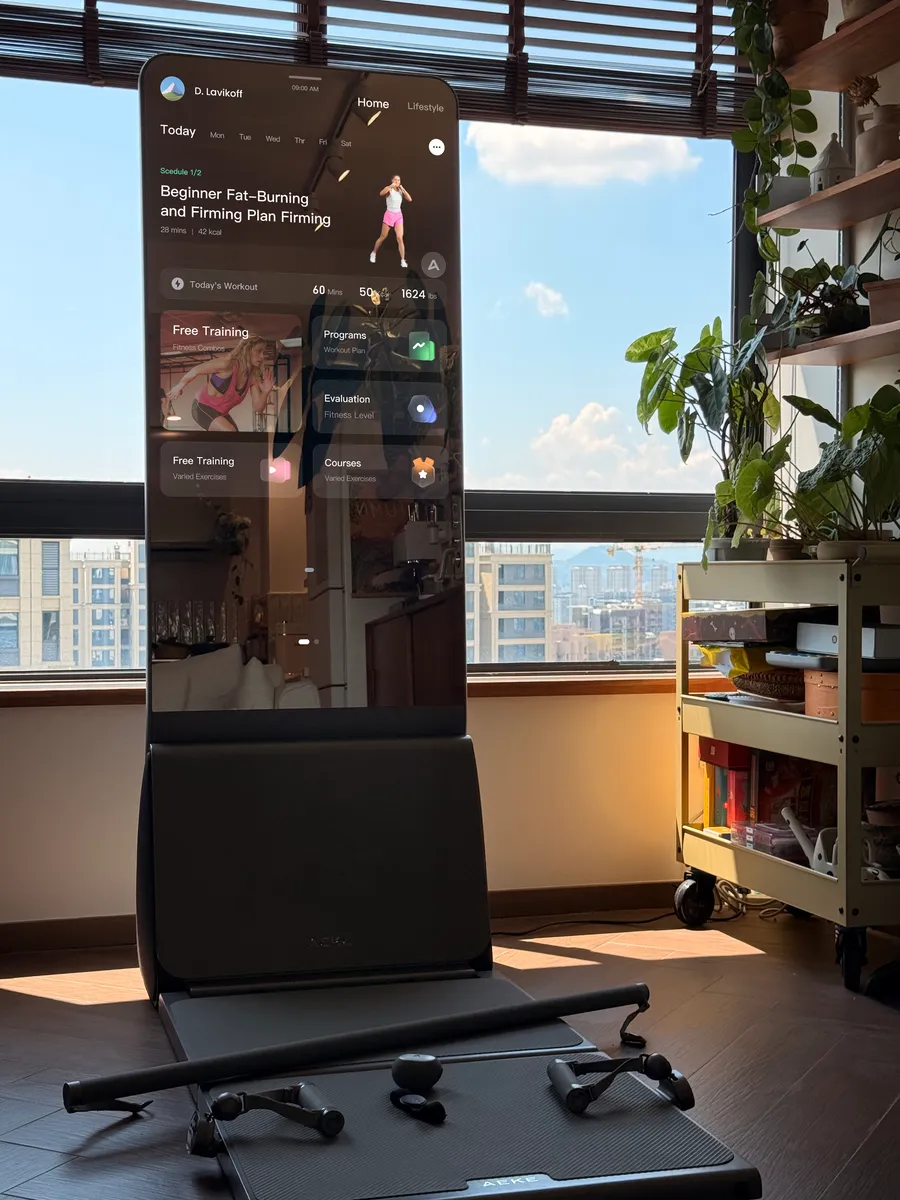
The foundation of any space-conscious setup is a high-quality, non-slip yoga mat that rolls or folds compactly. Beyond the mat, foldable fitness gear like collapsible foam rollers, flat resistance bands, and portable wall-mounted anchor straps round out a complete kit without consuming drawer space. Brands like AEKE design compact, multi-use fitness equipment specifically with small home spaces in mind, making it easier to assemble a capable setup without cluttering your living area. Resistance bands, in particular, are the unsung heroes of wall Pilates—they add variable tension to leg presses, arm circles, and lateral movements while folding down to the size of a sandwich. A small hanging organizer keeps everything visible and accessible, so setup time drops to seconds rather than minutes.
Adding resistance training to wall Pilates accelerates muscle development without compromising the method's low-impact nature. Light dumbbells, looped resistance bands, or ankle weights introduce progressive overload to moves like wall squats, standing leg lifts, and shoulder presses against the wall. Start with the lightest resistance that challenges your control without breaking form—the goal is deliberate muscle engagement, not momentum. As strength builds, increasing band tension or dumbbell weight keeps the routine productive and prevents the plateau that often derails home workout consistency.
The biggest barrier to consistent exercise isn't motivation—it's structure. Without a clear plan, even a 15-minute window disappears into scrolling or snacking. Designing your wall Pilates sessions around specific time slots removes that friction entirely. Think of your week in three tiers: micro sessions of 10 minutes, standard sessions of 15 to 20 minutes, and extended sessions of 30 minutes for slower days.
A 10-minute morning micro session might look like this: wall-supported cat-cow stretches for 90 seconds to wake the spine, followed by two minutes of wall squats with controlled breathing, two minutes of standing wall roll-downs targeting the hamstrings and lower back, two minutes of single-leg wall presses to activate the glutes, and a 90-second wall-assisted chest opener to counteract overnight posture. That sequence hits the core, lower body, and upper back before your coffee finishes brewing.
For a 15-minute lunch break session, layer in more deliberate work: start with wall planks held for 30-second intervals, transition into wall-supported lateral leg raises for hip stability, add wall push-ups with a slow four-count descent, and finish with a seated wall stretch targeting the hip flexors. Keep rest periods to 20 seconds between movements to maintain heart rate without sacrificing control.
On days with a full 30-minute block, combine both sequences back to back and add resistance band work—anchored rows, lateral pulls, and banded wall squats—to introduce progressive overload. Rotating between these tiers throughout the week ensures you're training consistently without waiting for the "perfect" hour-long window that rarely arrives.
Static workout plans eventually stop working because they don't account for how your body changes or how your schedule shifts week to week. AI-powered workouts solve this by learning from your input and adjusting in real time. Apps like Fitbod, Future, or dedicated Pilates platforms use data from your completed sessions—duration, difficulty ratings, and targeted muscle groups—to generate routines that match your current fitness level and the time you actually have available. If you log only eight minutes on a Tuesday, the algorithm recalibrates Wednesday's plan rather than stacking missed work. Many platforms also include progress tracking dashboards that visualize strength gains and mobility improvements over weeks, which reinforces consistency far more effectively than willpower alone.
Starting your first session is simpler than it sounds. The setup takes less than two minutes, and the entire sequence can be completed in the space between your couch and the nearest clear wall.
Step 1: Set up your space-saving home gym area. Clear a two-foot radius from the wall, place your non-slip mat perpendicular to the surface, and keep any resistance bands or light home gym equipment within arm's reach. Good lighting and a timer on your phone are the only other requirements.
Step 2: Warm up using the wall. Stand with your back flat against the wall and perform slow shoulder rolls for 30 seconds, then walk your feet six inches forward and gently press your lower back into the surface for a spinal decompression hold. Follow with 10 wall-assisted neck tilts to release tension accumulated from screen time.
Step 3: Move through core wall Pilates exercises. Begin with wall squats held for 20 seconds, focusing on neutral spine alignment. Progress to standing wall roll-downs—peel your spine away from the wall one vertebra at a time, then reverse the motion slowly. Add wall push-ups with a four-count descent to engage the chest and shoulders. For modifications, keep feet closer to the wall during squats to reduce knee load, or use a folded towel behind the lower back for additional lumbar support during standing movements.
Step 4: Cool down safely. Finish with a 60-second wall-supported figure-four stretch for the hips, then lie on your mat with both feet flat against the wall in a passive legs-up position for 90 seconds. This reduces lower-body swelling and signals the nervous system to shift into recovery mode. Incorporating resistance training tools like light ankle weights during leg lifts can extend the session's effectiveness without adding time.
A packed schedule is no longer a valid reason to skip exercise. Wall Pilates proves that effective, consistent training doesn't require a gym membership, expensive equipment, or an hour carved out of an already stretched day. With nothing more than a clear wall, a non-slip mat, and a few pieces of foldable fitness gear, you can build genuine core strength, correct postural imbalances, and improve mobility—all within the windows of time you already have.
The key takeaways from this guide are straightforward: start with the wall as your primary tool, layer in resistance training progressively, design sessions around your actual schedule using the three-tier time framework, and let AI-powered workouts handle the adaptive planning when life gets unpredictable. Each of these strategies compounds over time, turning scattered 10-minute efforts into measurable, lasting results.
The best moment to begin is the one right in front of you. Clear a small space, find the nearest flat wall, and run through even the simplest sequence from this guide. Consistency built on small, realistic sessions will always outperform the perfect workout that never happens. Start today, adapt as you go, and let your wall do more work than you ever expected.