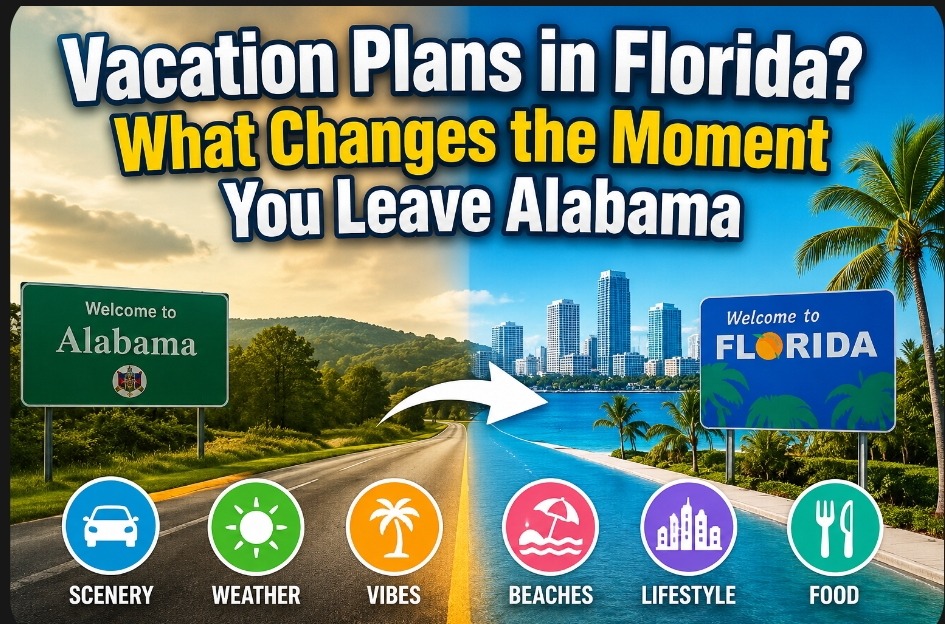
For many families across North Alabama, a Florida trip is almost a tradition. The car gets packed before sunrise, the playlist is set, and somewhere along the drive, pine trees start giving way to palm trees. It feels familiar.
But the moment that state line is crossed, a few things quietly shift, and not all of them are obvious.
At first, the drive into Florida doesn’t feel all that different. The highways look the same, the signs are familiar, and the pace seems manageable. Then, little by little, things start to shift, especially as beach traffic builds.
Speed and traffic flow tend to pick up. On major routes heading toward Destin or Panama City Beach, drivers often move faster and merge more aggressively. It’s common to see cars cutting across lanes late or accelerating quickly to avoid missing a turn. In many areas, highways are also wider, with more lanes and faster-moving traffic than what drivers are used to in North Alabama. Florida’s posted speed limits are often similar to Alabama's: typically up to 70 mph on interstates, but the overall flow of traffic can feel faster, especially in high-volume tourist corridors.
Leave extra space between vehicles and get into the correct lane earlier than you think. You may not get a second chance to merge safely.
Tourist-heavy driving patterns create a different kind of risk, especially around popular destinations like Destin, Panama City Beach, Pensacola, and Orlando. Some drivers slow down suddenly, miss turns, or stop without warning to check directions. Others rely on GPS and react at the last second. That mix of rushing and hesitation can catch people off guard. Stay patient and avoid driving in blind spots. Assume the car ahead might stop or turn unexpectedly.
One detail that isn’t visible but matters is how incidents are handled. Florida uses a no-fault insurance system, which means drivers typically turn to their own coverage first after a crash, regardless of fault. That’s different from Alabama, where fault plays a central role. When it comes to vehicle damage in a no-fault state like Florida, the at-fault driver is still usually responsible for paying. In Alabama, both injuries and car damage are generally handled based on who caused the crash. If something does happen, document the scene, exchange information, and seek medical attention early.
Motorcycles, bicycles, scooters, and golf carts are far more common. Many are operated by visitors who aren’t used to sharing the road with heavier traffic.
In beach areas, it’s not just cars. You’re sharing the road with pedestrians, bikes, and scooters. That changes how quickly things can go wrong.
What helps: check mirrors more often and give extra clearance when passing.
Toll roads and express lanes are another difference many Alabama drivers don’t expect. Some Florida roads, especially closer to major routes, use cashless tolling, meaning charges are billed through a transponder or by license plate. Rental cars often add service fees on top of those charges. Review your route or rental agreement ahead of time so you’re not surprised by fees after the trip.
Parking works differently, too. Beach towns often have tight lots, angled spaces, and steady foot traffic moving between vehicles. Parking is frequently paid, time-limited, and closely monitored. Tickets or even towing can happen faster than many visitors expect.
What helps: check posted signs carefully and keep track of time limits before leaving your vehicle.
Driving isn’t the only place where things feel a little different once you arrive.
Hotels and resorts can get crowded quickly, especially during peak travel seasons. Pool areas stay wet, walkways fill up, and maintenance doesn’t always keep pace with the volume of guests. Watch for slippery surfaces and report hazards early.
Rental cars can bring unexpected complications. Some travelers rely on credit card coverage or assume their personal policy fully applies, only to find gaps later. Check coverage details before driving off the lot, especially for liability and damage.
A Florida trip may feel like a break from routine, but these small differences can add up. Paying attention in the moment helps keep minor issues from becoming bigger problems later.