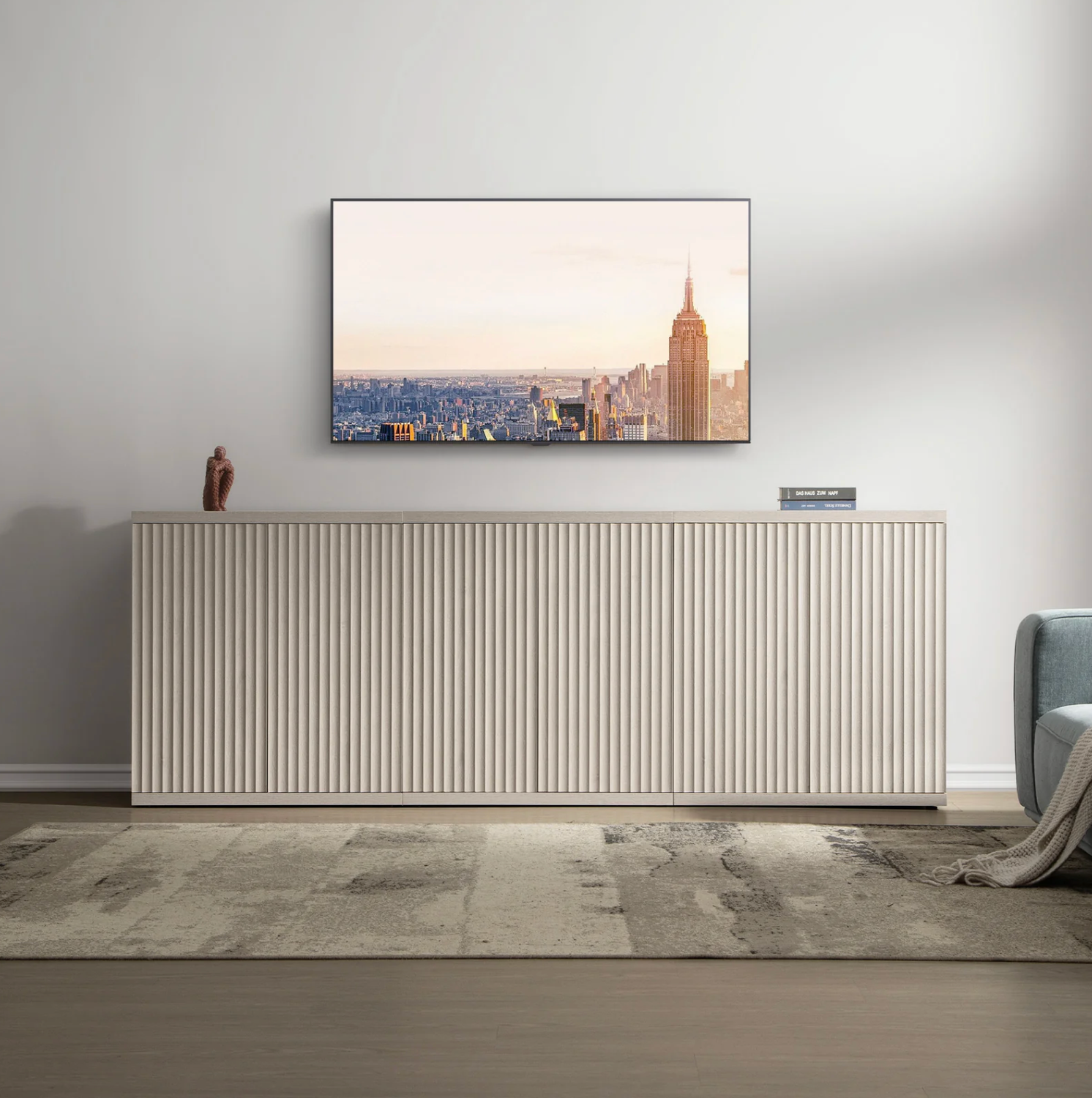
A modern living room can lose its clean look quickly when the TV wall becomes the home’s unofficial clutter zone. Cables gather behind the screen. Remotes disappear between cushions. Routers blink in plain sight. Gaming consoles, soundbars, books, toys, controllers, chargers, and small everyday items all compete for space around the same wall.
Well-designed homes avoid this not because people own fewer things, but because those things have better places to go.
Modern living room storage is not just about adding more cabinets. It is about choosing furniture that keeps the room visually calm while still making everyday life easy. The right TV stand, media console, or storage cabinet can make a living room feel cleaner, more balanced, and more intentional without changing the entire room.
The TV wall has become one of the hardest-working areas in the home. It is no longer just a place for a television. It often holds or hides the entire media setup: streaming devices, game consoles, routers, speakers, remotes, charging cords, DVDs, records, books, and sometimes children’s toys or living room extras.
That is why this area can become visually messy faster than any other part of the living room.
A clean living room is not a room without electronics. It is a room where electronics are supported by furniture that is designed to manage them.
The best living rooms do not separate storage from style. They make storage part of the design.
A well-designed living room usually has three layers:
This balance is what makes a space feel calm. Not everything has to be hidden, but the wrong things should not be on display. A few books, a ceramic vase, or a framed photo can look intentional. A pile of remotes, cords, game controllers, and manuals rarely does.
Closed storage gives the living room a cleaner foundation. Open shelves should be used carefully, not treated as a place for everything that does not fit elsewhere.
A TV stand is not background furniture. In many homes, it is the visual anchor of the living room. It sits under the largest screen in the room, holds the media setup together, and shapes the entire wall.
That means the TV stand needs to do more than fit the television. It needs to support the room’s proportions.
A good TV stand should:
In most cases, a TV stand should be wider than the TV itself. This creates a more stable and balanced look. A large TV sitting on a stand that is too narrow can make the whole wall feel awkward, even if the stand technically holds the screen.
Low, long TV stands often create a calmer horizontal line. Taller stands may be useful for bedrooms or specific layouts, but for living rooms, scale matters. The right proportions can make the TV wall feel designed rather than improvised.
Open shelves can look attractive in product photos, but in real homes, they are not always the easiest to maintain. Media items tend to multiply: cords, adapters, controllers, router boxes, batteries, instruction manuals, game cases, speakers, and streaming devices.
Closed storage gives those items a place to disappear.
For larger media walls, a piece like the Stria 100-inch TV stand can help create a wider, more grounded setup while giving consoles, cables, and everyday living room items a cleaner place to stay out of sight.
The value of closed storage is not just that it hides mess. It also makes the living room easier to reset. When everything has a defined place, cleaning the room is faster. The TV wall no longer becomes a permanent display of every device and accessory the household owns.
For homes with kids, roommates, guests, or multiple entertainment devices, this can make a major difference.
Cables can ruin an otherwise well-designed living room. Even thoughtful furniture and considered decor cannot fully overcome the look of tangled cords running across a wall or floor.
That is why cable management should be treated as part of the furniture decision.
A good media setup should make it easy to manage:
Look for back-panel openings, cable cutouts, or compartments that allow cords to pass through cleanly. If a TV stand has closed cabinets, make sure devices that generate heat still have enough ventilation.
A few small habits help too:
Cable management may sound technical, but visually it is one of the fastest ways to make a living room feel more polished.
A TV stand should fit both the screen and the room. Buying only by TV size can lead to a piece that feels too large for the room or too small for the wall.
The stand does not need to be oversized, but it should create visual balance. If the stand is much narrower than the screen, the setup may look unstable. If it is too large for the room, the furniture can overwhelm the space.
Also consider viewing height. A TV placed too high can make the room uncomfortable. A stand that is too low may not work well depending on the seating layout. The best setup keeps the screen comfortable to watch while keeping the room visually grounded.
Open shelves are not the enemy. They simply need a clear purpose.
Use open shelves for items that look good and are easy to keep tidy:
Use closed storage for items that are practical but visually messy:
The mistake many people make is treating open shelving as overflow storage. That usually makes the room feel busier. A few intentional objects can make open shelves look designed. Too many random objects make them look like clutter.
Small living rooms need storage as much as large ones, sometimes even more. The difference is that storage furniture has to feel visually lighter.
A bulky unit can make a compact room feel crowded, even if it holds a lot. A clean-lined TV stand with doors or drawers can provide useful storage without making the room feel overfilled.
For smaller living rooms, consider:
A small living room does not need to be empty to feel spacious. It needs furniture that keeps the visual field calm.
Modern living room storage needs to work in real homes, not only in styled photos. It should hide everyday clutter, support modern media setups, and still look warm enough to belong in the room.
For shoppers trying to keep media equipment organized without making the room feel bulky, browsing TV stands with storage can help compare cabinet layouts, finishes, and sizes for different living room setups.
Brands such as Sicotas furniture fit this modern storage-first approach by offering coordinated pieces designed for real homes, real routines, and realistic budgets.
That kind of furniture is useful because most people are not redesigning their entire home at once. They are improving one room, one wall, or one problem area at a time. A TV stand with better storage can be the first step toward a living room that feels cleaner and more complete.
The right storage piece should solve the problem you actually have. If your living room looks messy because of electronics, focus on closed media storage. If it feels visually heavy, focus on lighter finishes and clean lines. If the TV wall looks unbalanced, focus on width and proportion.
A modern living room does not stay clean because nothing happens there. It stays clean because the room has a system.
Cables, consoles, remotes, routers, books, toys, and everyday items all need somewhere to go. When those items are hidden, organized, or displayed intentionally, the whole room feels more designed.
The right TV stand does more than support a screen. It anchors the room, hides media clutter, manages cables, and creates a calmer visual foundation for daily life.
Well-designed homes are not clutter-free by accident. They are planned around how people actually live. That is what modern living room storage should do: make the room look better, feel better, and work better every day.