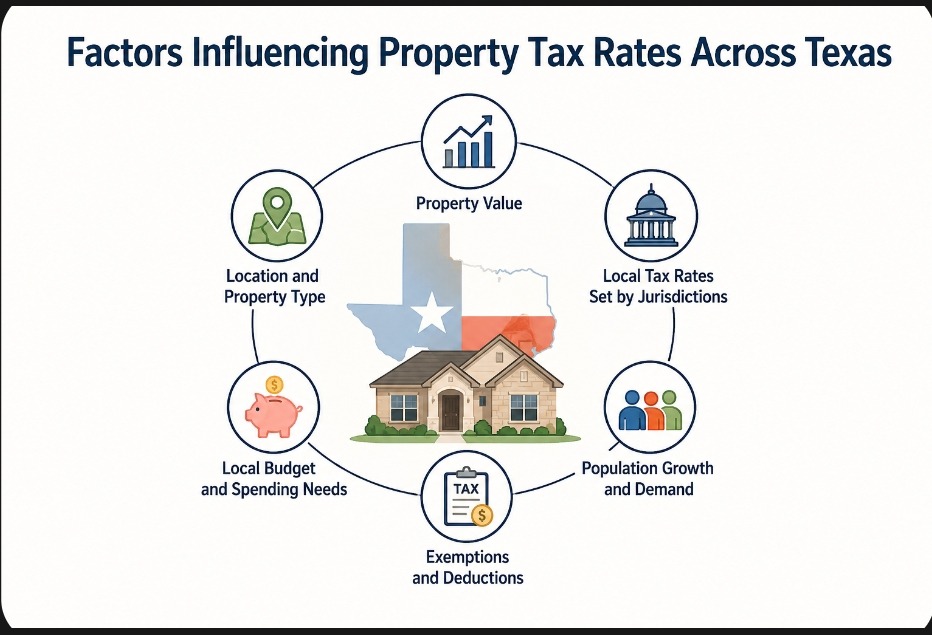
Texas property taxes are set at the local level, which means rates can vary a great deal from one county to the next. Several key factors come together to shape what a property owner owes each year. Local governments, school districts, and state rules all have a direct hand in the final tax bill.
Each factor carries a different amount of weight, and some matter more than others based on the area. This article covers the main factors that determine the property tax rate in Texas that a homeowner or commercial property owner can expect to pay.
Roads, bridges, water systems, and emergency services all require steady revenue to stay in good repair. Local governments must account for these costs when they set annual budgets, and that directly shapes the property tax rate for communities. When a county or city takes on debt to fund large capital projects, that debt must be repaid through property tax revenue. The mix of services a community chooses to fund has a lasting effect on what property owners pay year after year.
Every city, county, and special district must fund its annual operations through tax revenue. The total amount a local government needs to collect directly affects the tax rate it sets each year. When a county faces a budget shortfall or needs to expand public services, the tax rate goes up to cover those costs. A solid grasp of the property tax rate in Texas starts with how local governments build and approve their budgets.
School districts receive a large share of their revenue from property taxes, which makes them one of the top drivers of local tax rates. The more a district spends per student, the higher the tax burden tends to be on local property owners.
Several key factors shape how much a school district collects:
Texas uses market value as the base for all property tax calculations, so shifts in real estate prices have a direct effect on tax bills. When home values across a county go up fast, property owners see their assessed value rise even if the tax rate stays flat.
A higher appraised value means a larger tax bill, even without any rate change from local governments. Property owners who feel their assessed value is too high have the right to protest that value with their local appraisal district.
State law sets clear boundaries on how local governments can raise and use property tax revenue. These rules create a structure that every taxing unit must follow, no matter the size of the district. State law caps how much an appraisal can rise each year for homesteads, which limits sudden tax increases for primary residences.
Property tax rates in Texas reflect a mix of local decisions, state rules, and real estate market conditions. Each factor plays a distinct role, and no single element tells the whole story. Property owners who take time to understand how appraisal values, school district needs, and local budget cycles connect are far better placed to manage their tax exposure. A formal protest of an assessed value is one of the most direct steps an owner can take to reduce what they owe each year.