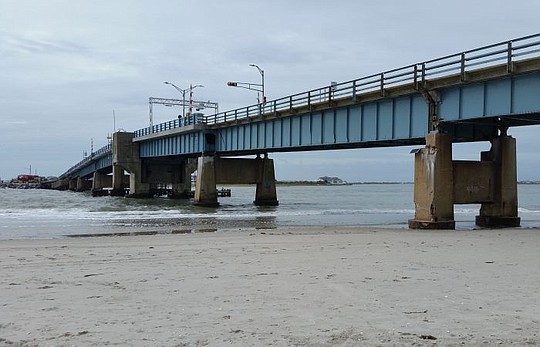
Ocean City sits at one end of a long story about resort towns that grow faster than the people who live in them year round. The permanent population sits a little above eleven thousand, and the summer surge pushes the daytime headcount past one hundred and fifteen thousand on a steady July weekend. Those are the numbers that make the boardwalk feel alive in August and the side streets feel quiet in February, and they have started a hard conversation in resort communities on the other side of the Atlantic. The Canary Islands, the Spanish archipelago that draws roughly seventeen million annual visitors against a resident population of about two and a quarter million, ended up on the Fodor's 2026 No List in January, the second of eight destinations the travel publisher flagged for overtourism strain. The reckoning in Tenerife and Gran Canaria is not identical to the one taking shape on the Cape May County peninsula, but the pattern is close enough that Shore residents who think hard about their town's future would be wise to read it carefully.
The English-language press in the Canaries has been tracking the local debate in detail, and the long-running weekly publication Canarian Weekly has covered the housing protests, the Fodor's listing, and the response from regional officials throughout 2025 with the kind of shoe-leather reporting only a year-round local outlet can produce. The details map onto the Jersey Shore in ways that go beyond the obvious resort comparison. Both economies depend on a visitor season that dominates wages, prices, and available housing. Both have residents who feel squeezed by short-term-rental conversions of family homes.
Fodor's added Tenerife, Gran Canaria, Lanzarote, and Fuerteventura to its annual No List in January 2026, ranking the archipelago second among eight destinations the publisher flagged for travellers to reconsider. The editors did not call for a tourism boycott. They called for shoulder-season visits, less crowded islands, and a more even spread of the visitor calendar. The trigger was not a single policy failure. It was the cumulative weight of a tourism economy that delivers more than thirty-five percent of regional gross domestic product and more than forty percent of employment, and the strain that ratio places on housing, water, and the daily life of the two and a quarter million people who live on the islands year round. The regional tourism minister pushed back and argued that pressure on a few resort zones does not describe the archipelago as a whole, but the designation has moved the conversation. Travel writers, planners, and regional officials are now discussing visitor caps, shoulder-season incentives, and housing rules in a way that would have read as fringe a decade ago.
Strip away the policy language and the numbers read as a familiar resort story in another language. Roughly seventeen million annual visitors land on islands whose permanent population sits at about two and a quarter million, a ratio of almost eight visitors for every full-time resident across the year. Ocean City sits in the same family when the summer surge is averaged across twelve months, with hundreds of thousands of visitors during the warmer half of the year and single July weekends topping a hundred and fifteen thousand on the ground. Housing Pressure and the Short-Term Rental Question
The protests on Tenerife and Gran Canaria in 2024 and the follow-up actions through 2025 settled on housing as the central grievance. Local residents argued that the conversion of family homes into short-term vacation rentals had pushed long-term rents out of reach and turned working-class neighbourhoods into seasonal corridors that emptied out for half the year. Housing supply did not vanish. It changed shape, into stock that earns more on a weekly Airbnb cycle than on a twelve-month lease to a teacher or a server. Ocean City has been wrestling with a softer version of the same tension. Median home values on the island have moved well above the New Jersey median, second-home ownership fills entire streets that go quiet in November, and the community is still negotiating how to balance the tax revenue from high-value seasonal property against the workforce-housing concerns that surface every spring when summer staffing comes up at City Council. The Canaries have moved toward rental caps in some municipalities. The Shore has taken a slower path with rental ordinances and zoning adjustments that try to preserve the seasonal economy without freezing the year-round community out.
The clearest live example of how a Shore town processes a development decision under tourism pressure sits at the foot of the Ocean City Boardwalk in 2026. The proposed redevelopment of the former Wonderland Pier site has divided the community, and the OCNJ Daily coverage of the Boardwalk hotel debate dividing Ocean City walks through how the issue surfaced in the recent mayoral debate. The candidates agreed on little except that the city had reached a moment that called for compromise rather than conflict, and that the Wonderland question should have been settled long before it became a defining campaign issue. The underlying tension is the one every resort community knows. A new hotel adds rooms, tax base, and visitor capacity. It also shifts the character of the boardwalk and changes the calculation for nearby homeowners who bought into a particular kind of street. How Ocean City resolves the Wonderland decision will tell residents more about the town's longer-term direction than any abstract overtourism debate. The Canaries have already learned that small choices, hotel approvals, short-term-rental licences, and shoulder-season campaigns, add up to a place's identity over a decade.
One of the most useful threads in the Canary Islands story for Jersey Shore readers concerns the off-season. The Canaries enjoy a structural advantage the Shore does not. The islands stay warm in February, and northern European visitors keep arriving through the winter, which spreads the visitor load and delivers a steadier wage base for hospitality workers. Even so, regional officials are now pushing shoulder-season campaigns aimed at moving more visits into November and March, partly to ease summer pressure and partly to give year-round residents a more predictable rhythm. Ocean City runs the inverse problem. The off-season is genuinely quiet, which preserves a community feel residents prize, but it also delivers a steep wage cliff for restaurants, hotels, and rental managers who scale back to a skeleton crew between October and April. Recent investments in shoulder-season events, the Doo Dah Parade, the Pops summer concert series, and the patriotic drone shows planned for the America 250 anniversary all reflect a deliberate effort to widen the visitor calendar in a way that supports the year-round side of the local economy.
Water supply is the issue that has hardened the Canary Islands debate in a way that goes beyond the housing argument. Several municipalities have run drought protocols across recent summers, with tankers feeding hotels in some southern resort zones while inland villages dealt with rationing. A finite resource gets spread across a population that effectively triples during peak weeks, and the trade-offs land on the people who live there year round. Ocean City does not face the same water-stress profile, and the Cape May County aquifer system is well managed, but the broader infrastructure question rhymes. Sewer capacity, summer traffic on the Parkway and the causeways, lifeguard staffing, and the strain on the boardwalk during peak weekends all reflect a town built for one load and used for another. The Canaries' experience suggests the infrastructure conversation only gets harder when it is deferred. Towns that plan for the surge in advance, with explicit capacity targets and shoulder-season relief, tend to keep residents in better humour than those that paper over the gap and hope another summer goes well.
A No List entry does not technically deter most visitors, and the Canaries posted growth again through the first months of 2026 even after the Fodor's listing landed. The longer-term effect runs through the conversation rather than the booking numbers. Reuters coverage of the Canary Islands protests documented the October 2024 demonstrations under the Canarias tiene un limite banner, when tens of thousands of residents marched through Tenerife, Gran Canaria, Lanzarote, and Fuerteventura to push back on the development pattern Fodor's would highlight in early 2026. The wire-service framing matters for Shore readers because it shows how a resort destination can lose narrative control once the global travel press treats overtourism as a story. Ocean City has not faced anything close to that scrutiny. The lesson for Shore officials is to treat the local press relationship and the visitor-experience numbers as connected. A town that talks publicly about its limits, the way Cape May has done with parking caps, tends to control its own story rather than waiting for a travel writer to define it.
The Canaries comparison is most useful for full-time Ocean City residents and the families who hold the second homes that make up a large share of the tax base. The first practical lesson is to read any new development proposal through the lens of resident-to-visitor ratio rather than pure dollar value. A project that adds tax revenue and visitor capacity also adds load on the people who live nearby in February. The second lesson is to treat short-term-rental policy as a slow, deliberate conversation rather than a single ordinance fight, because the Canaries have learned that a complete licensing freeze is hard to reverse and a soft cap revisited every two years tends to produce more durable results. The third lesson is to invest in the shoulder seasons, because a steadier visitor calendar produces a steadier wage base for the people who keep the town running.
The Canaries enter 2026 with the Fodor's listing, a series of housing-policy adjustments at the municipal level, and a regional tourism office publicly committed to spreading visitors across the calendar. Whether the archipelago translates that policy energy into measurable change in the resident-to-visitor ratio will become clear over the next two summers. Ocean City and its Shore neighbours enter 2026 with a contested mayoral race, an unsettled boardwalk hotel decision, and a cluster of community events that lean into the year-round identity of the town. The Canaries operate at a scale Ocean City will never reach, and the policy machinery in Spain runs through layers of authority that have no analogue in Cape May County. The shared thread is the underlying question. How does a resort town balance the people who arrive for the season with the people who stay through February, and how does it do that without turning the place itself into a backdrop for a calendar that belongs to someone else?