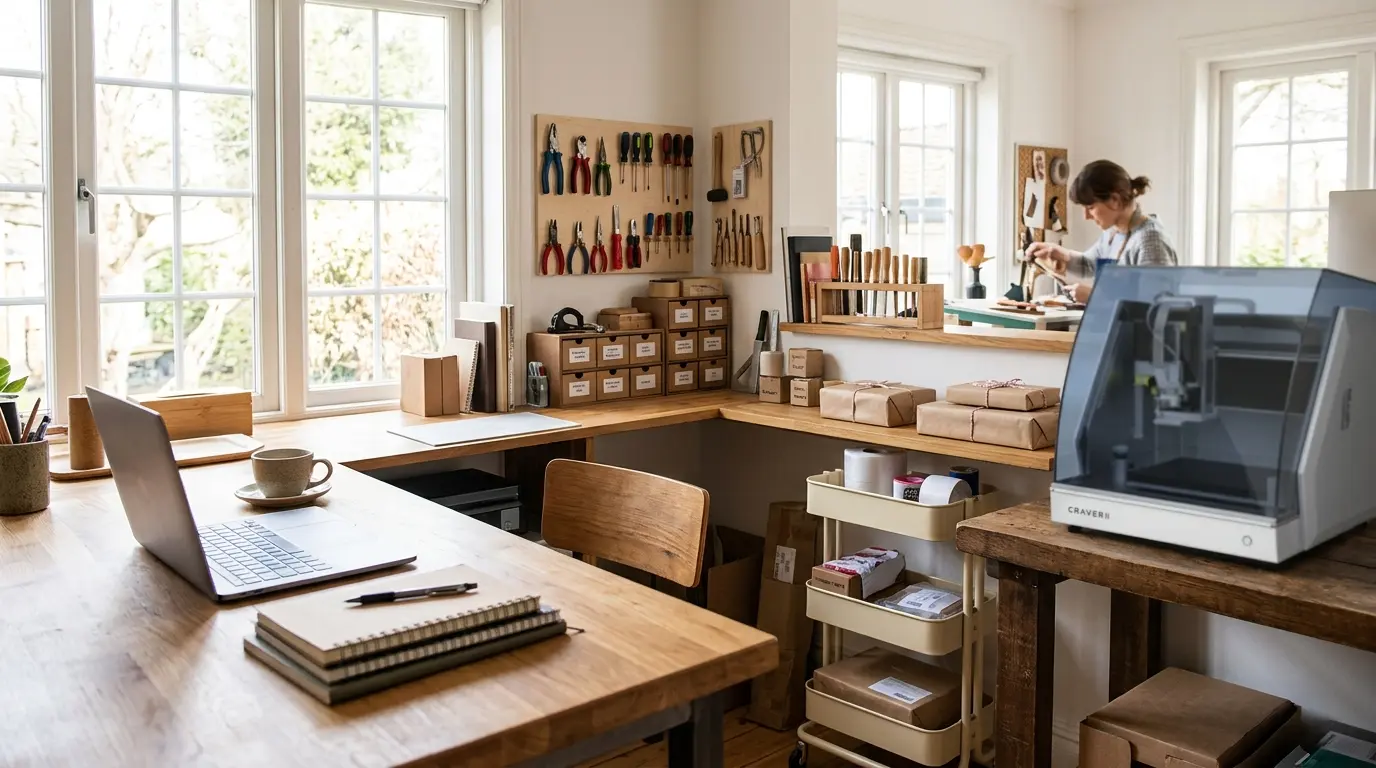
The rise of small-scale manufacturing is reshaping how individuals create, sell, and scale physical products. What once required factories, supply chains, and significant capital can now be achieved from a home workshop or even a spare desk. Platforms like Etsy, Shopify, and TikTok Shop have lowered the barrier to entry, but the real transformation lies in the tools powering this movement. Today’s creators are not just sellers—they are designers, engineers, and micro-manufacturers.
Traditional handmade goods still hold value, but the modern maker economy is increasingly driven by digital fabrication. Instead of relying solely on manual craftsmanship, creators now combine design software with precision tools to produce consistent, scalable products.
This shift offers two key advantages. First, it allows for repeatability—once a design is finalized, it can be reproduced with minimal variation. Second, it opens the door to customization at scale, where products can be personalized without significantly increasing production time.
This is where tools like CNC machines come into play. These machines translate digital designs into physical objects with high precision, enabling creators to work with materials like wood, acrylic, and even metal. For Etsy sellers, this means moving beyond one-off handmade items toward small-batch production that still feels personal but operates more efficiently.
Several factors are driving the growth of this new era:
For example, a creator selling engraved wooden signs can design a template once, then customize names or messages per order. This hybrid model blends automation with personalization—something that was nearly impossible at scale a decade ago.
One of the most significant enablers of this shift is the emergence of compact, user-friendly fabrication tools. The desktop CNC has become a cornerstone of modern side hustles, especially for creators working from home.
Unlike industrial machines, desktop versions are designed with accessibility in mind. They are smaller, quieter, and often come with intuitive software, making them suitable for beginners while still powerful enough for advanced users.
These tools empower creators to:
For content creators and digital marketers, this also opens up new storytelling opportunities. Behind-the-scenes production videos, process demonstrations, and product customization clips can all become engaging content that drives sales.
Many successful Etsy shops start as hobbies. However, the transition from hobbyist to profitable side hustle often depends on the ability to scale production without sacrificing quality.
This is where small-scale manufacturing tools make a critical difference. Instead of spending hours crafting each item by hand, creators can automate repetitive processes and focus on higher-value tasks like design, branding, and customer experience.
Consider a simple example: a seller making custom phone stands.
The second approach not only saves time but also ensures uniform quality, allowing the seller to handle more orders and grow revenue.
In today’s digital landscape, making products is only part of the equation. Selling them effectively requires compelling content. Fortunately, small-scale manufacturing naturally lends itself to visual storytelling.
Creators can document:
This content builds trust, showcases craftsmanship, and differentiates products in crowded marketplaces. For bilingual creators or those targeting international audiences, combining English and localized content can further expand reach.
While the opportunities are significant, small-scale manufacturing also comes with challenges:
To succeed, creators must think beyond tools and focus on building a brand. Unique design language, clear positioning, and consistent customer experience are just as important as production capabilities.
The line between creator and manufacturer will continue to blur. As tools become more accessible and software becomes more intuitive, more individuals will enter the space of digital fabrication.
We can expect to see:
In this new era, success is not defined by scale alone, but by agility, creativity, and the ability to connect directly with customers.
For anyone considering a side hustle in physical products, the barrier to entry has never been lower—but the potential has never been higher. The combination of digital tools, online platforms, and creative vision is unlocking a new generation of makers who are redefining what small-scale manufacturing can be.