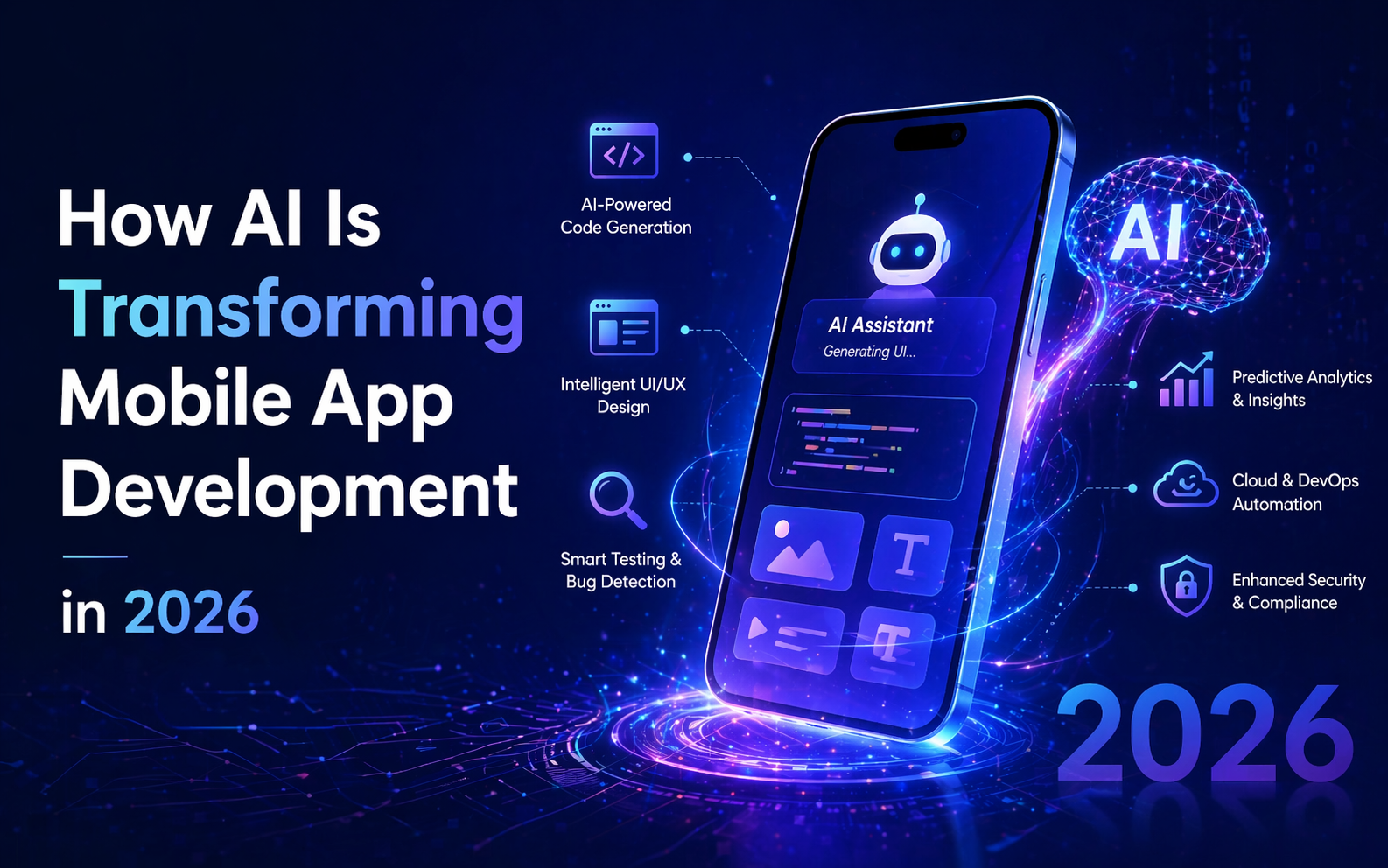
Not that long ago, adding AI to a mobile app meant dropping in a chatbot that could answer maybe ten pre-written questions and calling it an intelligent feature and most users could tell within two interactions that there was nothing intelligent about it. That version of AI in mobile apps is done. What has taken its place in 2026 is something that works at a completely different level, where AI is no longer sitting on top of the app as a separate feature but running through the entire experience, learning from how each user behaves, personalising content on the fly and making decisions in real time that used to need a product manager watching a dashboard and manually adjusting things every other week.
But what is actually driving this shift and why are businesses treating AI as an architectural requirement now rather than a nice-to-have feature? Well, the numbers tell that story clearly enough. Gartner's latest estimates show that over 80% of new mobile applications launching in 2026 will have some form of AI built into their core functionality and these apps are consistently outperforming the ones without it on almost every metric that matters, user retention, session length, conversion rates and lifetime value, so the question is no longer whether to add AI but how to do it properly without wasting budget on implementation that looks good in a demo but falls apart in production. This can be easily taken care of by an experienced custom mobile app development company.
The real change is not in any single feature, it is in what a mobile app is now capable of doing without someone on the product team having to configure it manually. Five years ago, personalisation meant putting users into groups and showing each group slightly different content and that was considered advanced. In 2026, the app itself is building an individual model for each user based on their behaviour, their preferences, the time of day they open the app, how they scroll, what they skip and what they come back to and it is adjusting the experience in real time without anyone writing a rule or setting up a trigger.
And that is not all. AI is now handling things across the entire development cycle that used to take weeks of manual work, let's break it down.
If there is one area that has reshaped mobile app development more than anything else over the last two years, it is generative AI and the impact is not limited to the consumer-facing chatbots that most people think of when they hear the term. On the development side, generative AI is now writing boilerplate code, generating UI components directly from design specs, creating test cases automatically and drafting API documentation, which means the engineering team spends less time on repetitive scaffolding and more time on the logic and architecture that actually makes the product different from everything else in the app store.
On the user-facing side, generative AI is powering things that simply were not possible two years ago, dynamic content creation, conversational interfaces that remember context across sessions, onboarding flows that adjust to each user's skill level in real time and intelligent summarisation of long-form content within the app itself. A generative ai app development company like AppZoro Technologies is building these capabilities into the app architecture from day one rather than layering them on as an afterthought before launch and that distinction matters because the apps where AI is woven into the foundation feel natively intelligent while the ones where it was added later always feel like something was bolted on.
The biggest mistake companies make when they decide they want AI in their mobile app is treating it as a feature to tick off a list rather than an architectural decision that affects everything from the data layer to the user experience. They hire a team, ask them to add a recommendation engine or a chatbot, ship it and then wonder why it is not moving any numbers and the answer is almost always the same, the AI was not connected to the data infrastructure, the UX or the backend in a way that lets it actually learn and get better over time.
AI that genuinely works inside a mobile app needs three things that most projects underinvest in. First, clean and structured data pipelines, because a model is only as useful as the data feeding it and most apps have their data scattered across analytics tools, CRMs and backend databases that were never designed to talk to a machine learning system. Second, on-device inference for anything that needs to run in real time without latency and that means planning for model size, memory limits and battery impact from the very first architecture discussion. Third, continuous learning loops that allow the AI to improve from real user interactions after launch rather than relying entirely on the training data it shipped with, because a static model inside a dynamic app is a model that gets worse every single month.
This is not theoretical anymore and the results are showing up in industries that most people would not immediately connect with cutting-edge AI implementation.
In healthcare, apps using AI for symptom triage and remote monitoring are reducing unnecessary emergency visits by up to 25% and that number alone is saving millions in system costs while improving patient outcomes at the same time. In retail and ecommerce, machine learning personalisation engines are lifting conversion rates by 15 to 35% compared to the old rule-based recommendation systems that every app was using three years ago. Financial services apps are running AI-driven fraud detection that catches anomalies in real time and has brought false positive rates down by over 60%, which means fewer legitimate transactions getting blocked and less manual review work for compliance teams who were already stretched thin.
In logistics and field operations, mobile apps with AI-powered route optimisation and predictive maintenance are cutting operational costs by 20 to 30% and that kind of return is paying back the development investment within the first year. These are the types of projects where working with a custom mobile app development company that understands both the AI side and the specific industry context makes all the difference, because building an AI feature is easy, building one that actually solves a real operational problem at scale is where most projects either succeed or quietly fail.
The frameworks, models and cloud platforms available for AI mobile development in 2026 are better and more accessible than they have ever been and honestly that is part of the problem, because when the tools are available to everyone the advantage shifts entirely to the team that knows how to use them well. Every competent developer can integrate a TensorFlow model or make an API call to OpenAI now, that is table stakes, the real question is whether the team understands how to design the data architecture, the user flows and the infrastructure so the AI actually delivers something the end user cares about rather than just existing as a line item on a features page.
AppZoro Technologies operates as both a custom mobile app development company and a generative ai app development company, building AI-native mobile applications for clients across healthcare, fintech, ecommerce, logistics and enterprise SaaS and the approach has always been to embed intelligence into the core of the app from the first sprint rather than treating it as something that gets added before launch when the budget allows.
The pace is not slowing down and the teams paying attention are already preparing for what the next 12 months will bring.
AI is not a feature anymore, it is the foundation and the businesses that have figured that out are shipping products that users stay with while their competitors are still going back and forth about which chatbot provider to integrate. The technology is there, the use cases are proven across every major industry and the ROI is documented well enough that the conversation has moved past "should we use AI" to "how do we make sure we use it properly."
That comes down to the team building it. AppZoro Technologies has been doing this long enough to know the difference between AI that demonstrates well and AI that performs in production and for businesses that want the second one, the conversation starts at appzoro.com.