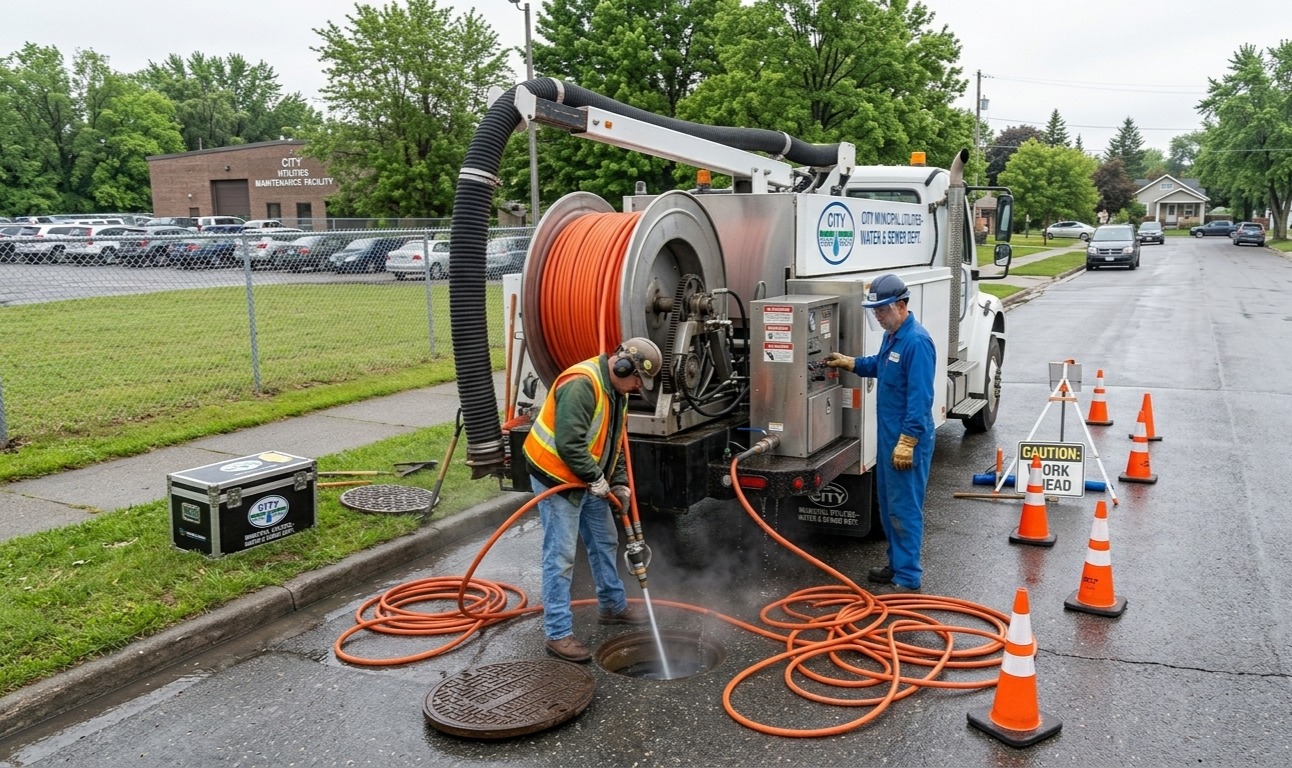
Sewer line cleaning is one of the most physically demanding and liability-heavy trades in the utility contractor space.
Companies in this field work with hazardous materials, confined spaces, high-pressure equipment, and unpredictable underground conditions all on a daily basis.
Standard general liability policies were not built for that level of exposure. This article breaks down why off-the-shelf coverage falls short, what risks actually define this industry, and what specialized protection looks like for sewer line businesses.
Not all utility work is the same. Sewer line cleaning companies face a specific combination of risks that most insurers -- and most standard policies -- are not equipped to handle.
Here is what sets this trade apart:
That last point trips up a lot of contractors. Many assume their general liability policy covers sewage-related incidents. Most do not. Pollution exclusions in standard commercial policies are broad, and sewage qualifies as a pollutant under most policy language.
A general liability policy gives your business a foundation. But for sewer line cleaning, it is rarely sufficient on its own.
Consider what a typical GL policy will not cover:
So, what fills those gaps? That depends on the structure of your coverage. The short answer: you need a policy built around what actually happens in this industry, not one retrofitted from a general contractor form.
That is exactly where insurance for sewer line cleaning becomes a separate conversation from standard business insurance. Purpose-built programs account for the exposures that are unique to utility line operations, including water, sewer, and gas line construction and maintenance.
Good coverage for a sewer line cleaning company is not just about the volume of policies in a package. It is about whether the right exposures are addressed.
This is non-negotiable.
Your GL policy needs either a built-in pollution endorsement or a standalone contractors pollution liability (CPL) policy. Without it, a single sewage incident could become an out-of-pocket catastrophe.
Confined space and sewer work carry elevated workers' comp rates for a reason. Misclassification can void coverage or result in a massive audit adjustment. Your insurer needs to understand exactly what your crews do on the job, not just a vague category.
Sewer jetting trucks, CCTV inspection equipment, and high-pressure hoses represent significant capital. Standard commercial auto policies do not cover equipment mounted on vehicles while in use. Inland marine or equipment floater coverage fills that gap.
If your trucks haul equipment or transport crews to job sites, you need commercial auto coverage that reflects the actual use and exposure -- not a personal auto policy or a passenger vehicle rate.
Here is where many sewer line cleaning companies make a costly mistake: they buy insurance from a carrier that does not understand the industry.
When a claim comes in, the underwriting decisions made months earlier suddenly matter. A carrier unfamiliar with utility contractor operations may:
Fast, accurate claims handling is not just a customer service feature. For a small or mid-sized sewer cleaning business, a delayed or underpaid claim can disrupt cash flow, strain crew retention, and even threaten operations.
Carriers with deep experience in the utility contractor space understand the job. They know what sewer trucks are worth, what confined space incidents look like, and how to move efficiently when something goes wrong.
Specialized insurance programs for utility contractors are built differently from the ground up. They are not adaptations of commercial package policies. They reflect the actual risk profile of companies doing this work.
What that typically includes:
This matters especially as the sewer line cleaning industry grows. Municipal infrastructure is aging, demand for inspections and cleaning is rising, and the workforce is expanding. Companies that outgrow their basic coverage often find out at the worst possible time.
At minimum, a sewer line cleaning company needs general liability with pollution coverage, workers' compensation with accurate job classifications, commercial auto, and inland marine for equipment. Many operations also need contractors pollution liability as a standalone policy to cover environmental incidents involving sewage.
Not typically. Most standard general liability policies include broad pollution exclusions, and sewage qualifies as a pollutant under most policy language. To cover sewage-related incidents, companies need either a pollution endorsement added to their GL policy or a separate contractors pollution liability policy.
Sewer line work involves confined spaces, hazardous gas exposure, and high-pressure equipment, all of which carry elevated risk classifications. Misclassifying workers under a lower-risk category can void coverage, result in a large audit penalty, or leave injured employees without proper benefits.
Inland marine, or equipment floater, coverage protects tools and equipment while in transit or on a job site. For sewer cleaning companies, this means jetting trucks, CCTV inspection cameras, and associated gear are covered even when in use, which standard commercial auto and property policies typically exclude.
Look for carriers or programs with documented experience in utility contractor operations. Ask about their claims handling timelines, how they value specialized equipment, whether their coverage forms include pollution endorsements, and how long they have been writing this class of business.