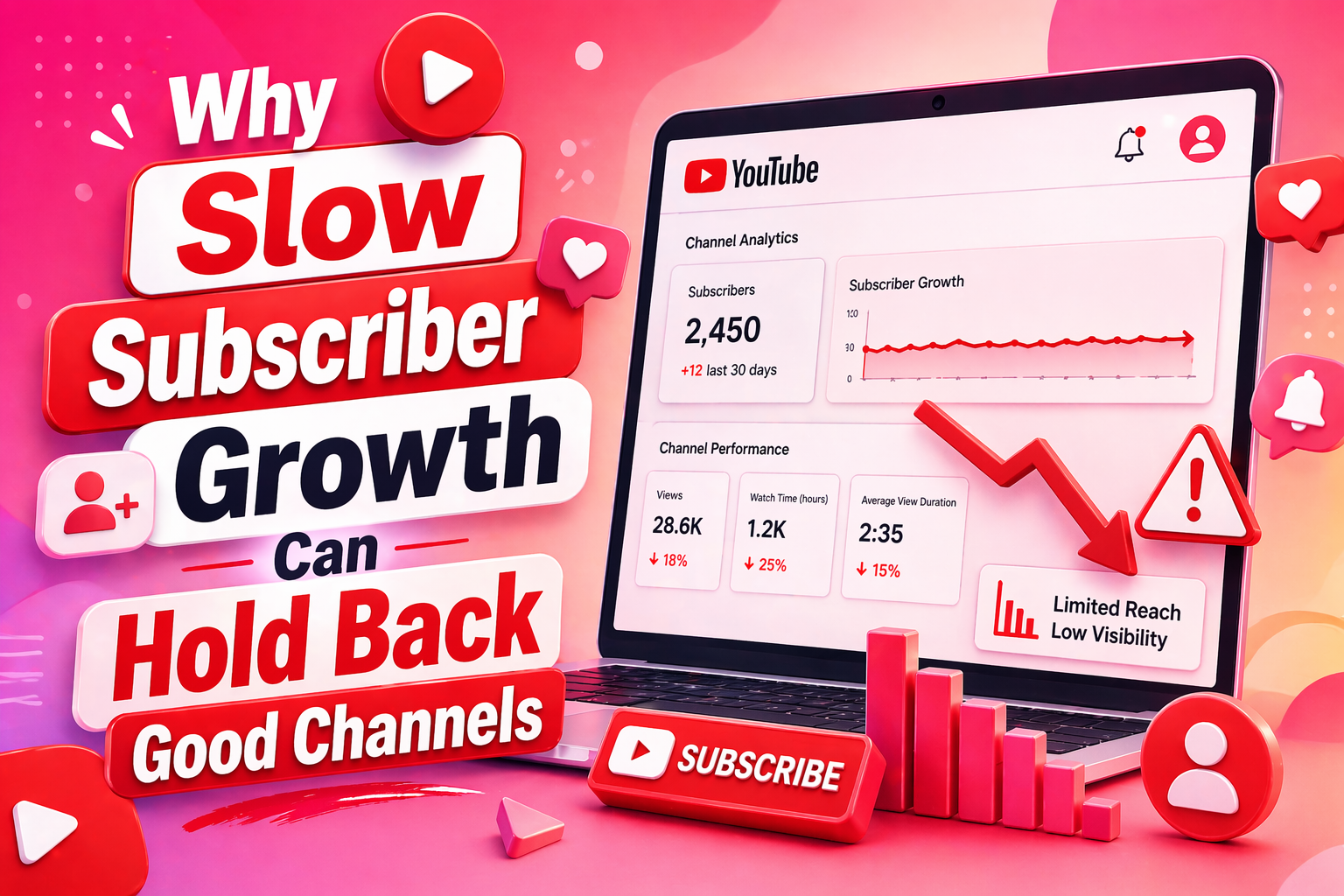
A lot of creators love saying subscriber count does not matter anymore.
They will say views matter more. Or watch time matters more. Or that people only care about content now. That sounds nice, but it is not how YouTube actually works when real people are choosing what to click.
Subscriber count still shapes first impressions. A lot.
I say that as someone who understands what it takes to grow a YouTube channel from the ground up. People do not arrive at your channel with perfect logic. They do not sit there and fairly judge every creator on content alone. They scan. They assume. They make quick decisions based on what looks credible.
And subscriber count is one of the first things that feeds that judgment. Does that mean a high number automatically makes a channel good? Obviously not.
But does it affect how people see you before they even watch properly? Yes. Absolutely.
If you are trying to grow on YouTube, especially early on, you need to understand that instead of pretending numbers are just vanity.
This is the part some creators do not want to hear.
When someone lands on your channel or sees one of your videos, they are not starting with some deep, open-minded analysis. They are making a quick call. Thumbnail. Title. Channel name. Profile image. Subscriber count. That is the first impression.
And it happens fast. Before the viewer knows whether your content is genuinely useful, funny, smart, or worth following, they are already deciding how seriously to take you. Subscriber count helps shape that.
A channel with stronger numbers usually feels more established right away. It feels like other people have already decided this creator is worth following. A lower number can create doubt, even if the viewer does not say it out loud.
That doubt matters. On YouTube, small hesitation is enough to lose the click. People have too many options. If your channel feels uncertain and another one feels safer, a lot of viewers will go with the safer option without thinking twice.
That is why subscriber count keeps mattering. Not because it proves quality, but because it affects perception before quality has had a chance to prove itself.
At its core, subscriber count is social proof.
It tells the viewer that other people saw something in this channel and decided to stick around. That alone changes how a creator is perceived.
This is not unique to YouTube. People trust restaurants with crowds, products with lots of reviews, and accounts that already look popular. Humans read visible support as a signal. That has always been true, and it is still true now.
YouTube works the same way. If a channel has subscribers, it feels less random. Less untested. Less risky. It gives the impression that the creator has already passed some level of approval from other viewers.
And yes, that approval can influence new people.
They may not think, “This creator has 20,000 subscribers, so they must be great.” It is usually more subtle than that. They just feel more comfortable. More curious. More willing to give the content a chance.
That is how social proof works. It lowers resistance. A weak-looking subscriber count does the opposite. It can make a channel feel early, uncertain, or easy to ignore. That is frustrating, but it is real.
This is one of the hardest things about growing a channel from scratch.
You can make a genuinely good video and still lose people before they give it a fair shot. Not because the video is weak, but because the channel around it does not look convincing yet.
That happens all the time. A lot of small creators assume poor performance always means poor content. Sometimes that is true. But sometimes the bigger issue is that the channel still looks too small to create trust right away. People are judging the package before they judge the substance.
That is brutal, but that is the game.
Subscriber count does not only affect ego. It affects how viewers approach your content. A stronger number makes people more open. A weaker number makes some people more skeptical. Even if the actual video quality is the same, the reaction can be different because the context feels different.
That is why small channels often have to work harder to get the same respect. The content has to fight through more doubt before it even gets a fair chance.
You do not need millions of subscribers to make a solid first impression. You just need enough visible support for the channel to feel alive.
That is the real difference. When people check out a channel, they are trying to figure out whether this creator feels active, real, and worth paying attention to. Subscriber count helps answer that question quickly. It tells them whether the channel looks like it has momentum or whether it still feels empty.
That sense of momentum matters more than people admit.
A channel with stronger visible numbers feels more stable. More serious. More like a creator who is already building something. That can make new viewers more willing to watch multiple videos, browse the page, or subscribe themselves.
It changes the mood around the channel. Instead of feeling like a gamble, the creator starts feeling like someone already on the way up. That alone can improve how people behave once they land there.
And on YouTube, better behavior leads to better growth.
Whether that is fair or not, it happens constantly.
When viewers see a creator with more subscribers, they often assume that creator probably knows what they are doing. They assume the content is more likely to be useful, entertaining, or worth listening to. The number creates a feeling of authority before the creator has fully earned it through the actual video.
That effect gets even stronger in certain niches. If you make tutorials, commentary, reviews, education, or advice-based content, viewers are always asking one basic question in the background: why should I listen to this person?
Subscriber count is not the only answer, but it definitely influences that judgment. A creator with more visible support looks more validated. A creator with very low numbers often has to overcome extra skepticism, even if the information is good.
Again, this is not always logical. But first impressions are not built on perfect logic. They are built on shortcuts.
And subscriber count is one of the easiest shortcuts viewers use to estimate credibility.
It is not just casual viewers paying attention to subscriber count either. Brands notice it. Potential collaborators notice it. Other creators notice it.
When someone checks out your channel for a possible sponsorship or collab, they are not only watching one video. They are looking at the overall picture. Subscriber count becomes one of the fastest ways for them to judge how established you are.
Yes, smart people also look at views, engagement, audience quality, and niche relevance. Of course they do. But first impressions still matter in business too.
A creator with a stronger subscriber count often looks more credible before deeper analysis even begins. That can affect whether someone keeps looking or moves on. It can affect whether they see you as a real opportunity or just another small creator still figuring things out.
That is why saying subscriber count does not matter is too simplistic. It clearly affects how your channel is read by more than just your audience.
This is the part people sometimes get weird about, but it is still reality.
If subscriber count shapes first impressions, then creators are naturally going to care about how their channels look early on. They know that a channel with stronger visible support usually gets judged more favorably than one that looks completely empty.
That is one reason some creators look into safe sites to buy youtube subscribers as part of a broader channel growth strategy.
The thinking is simple. A channel that looks less empty feels more credible. More credible channels usually get more trust. More trust can lead to more clicks, more attention, and better momentum while the creator keeps improving the actual content.
That does not mean subscriber count should be the whole strategy. It should not. If the videos are weak, numbers alone will not carry the channel for long. But from a first-impression standpoint, visible support still matters. Creators know that, even if they do not always say it directly.
This is the balance that matters most. Subscriber count cannot make bad content good. If your videos are boring, sloppy, or useless, people will leave. A bigger number might get you a little more initial attention, but it will not create long-term trust by itself.
But that does not make subscriber count unimportant.
What it does is change the lens people use when they approach your content. A solid video from a very small channel may get less patience and less trust. That same level of quality from a more established-looking creator may get more clicks and more respect right away.
That difference matters. Because YouTube is not just about content quality in a vacuum. It is about how that content gets perceived the moment someone sees it. Subscriber count helps shape that perception.
It influences whether viewers feel open or doubtful. Curious or dismissive. Ready to trust or waiting to be convinced.
And those reactions affect performance more than many creators want to admit.
At the end of the day, YouTube is crowded and people move fast.
They are not carefully evaluating every creator on equal terms. They are using shortcuts to decide what feels worth their time. Subscriber count is one of those shortcuts.
That is why it still matters so much.
It affects social proof. It affects credibility. It affects authority. It affects whether a channel feels active or empty. It even affects how brands and collaborators see you.
None of this means small creators cannot win. They absolutely can. Plenty of channels grow from nothing. But pretending subscriber count has no impact on first impressions is just not honest.
It does. The smarter way to think about it is simple: subscriber count is not the whole game, but it is part of the atmosphere around your channel. It changes how people approach you before they know you.
And on YouTube, that first approach can shape everything that comes after.