The National Disability Insurance Scheme, commonly known as the NDIS, has transformed the way people with disability access support in Australia. One of the key areas covered by the NDIS is mobility equipment. For individuals with physical disabilities, having the right mobility equipment can dramatically improve independence, safety, and overall quality of life. However, navigating the NDIS process to obtain equipment can sometimes seem complicated. Understanding how to access mobility equipment through the NDIS ensures that participants receive the right support in a timely manner.
Understanding the Role of the NDIS
The NDIS is a government initiative that provides funding and support for Australians under the age of sixty-five who have a permanent and significant disability. Its goal is to help participants achieve their goals, improve daily living, and participate in community life. Mobility equipment is considered essential for achieving these outcomes, as it supports physical independence and access to activities that enhance health, wellbeing, and social engagement.
Before requesting mobility equipment, it is important to understand how the NDIS works. Each participant has an individual plan that outlines goals, needs, and funding arrangements. Mobility equipment can fall under different support categories, including assistive technology, daily living supports, or home modifications depending on the participant’s requirements.
Getting Started with Your NDIS Plan
The first step in accessing mobility equipment is to have an NDIS plan. If you are not already an NDIS participant, you will need to apply and provide evidence of your disability and functional limitations. This typically includes medical reports, assessments, and sometimes letters from allied health professionals such as physiotherapists or occupational therapists.
Once accepted into the scheme, participants meet with an NDIS planner to develop their individual plan. This plan identifies the supports needed to achieve goals and improve independence. When discussing mobility equipment, it is important to be clear about how the equipment will help you achieve daily activities, increase participation, and improve quality of life.
Identifying the Right Equipment
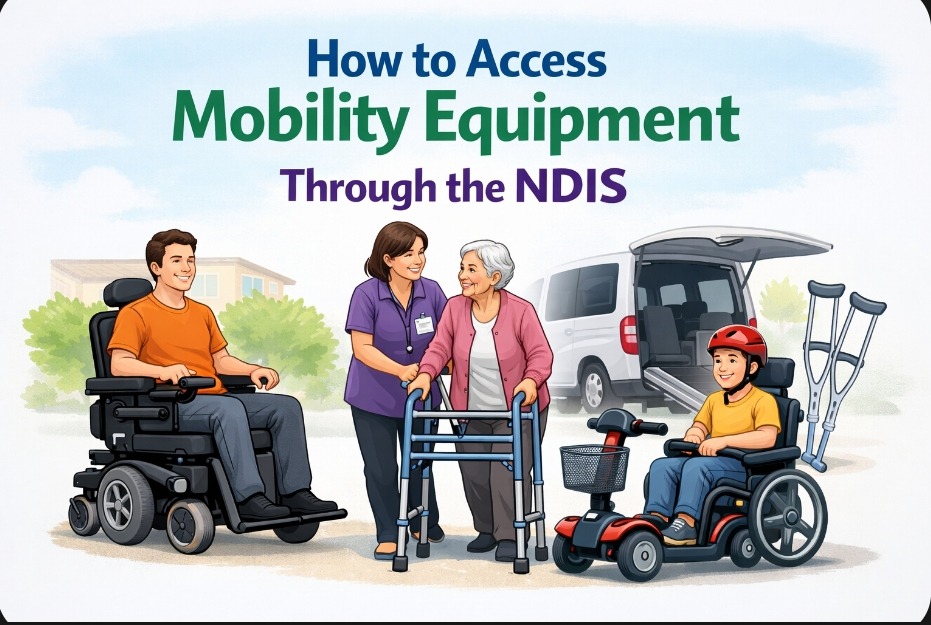
Before requesting funding, you need to identify the most appropriate mobility equipment for your needs. Mobility aids can include manual wheelchairs, electric wheelchairs, walking frames, scooters, specialised cushions, or supportive seating systems. An allied health professional such as an occupational therapist or physiotherapist can assess your physical needs and recommend the most suitable equipment.
These assessments are crucial because the NDIS requires evidence that the requested equipment is necessary, reasonable, and will support functional independence. The assessment should detail how the equipment will improve mobility, reduce risk of injury, support participation in daily activities, and enhance overall wellbeing.
Including Mobility Equipment in Your NDIS Plan
Once the equipment has been identified and assessed, it needs to be included in your NDIS plan. You can request funding during your planning meeting or when reviewing an existing plan. It is important to clearly explain the purpose of the equipment, how it relates to your goals, and why it is necessary for daily living.
NDIS planners consider whether the equipment is reasonable and necessary for your needs. They look at the impact on health and safety, the ability to participate in the community, and the potential to reduce ongoing care needs. Providing thorough documentation from allied health professionals strengthens your request and increases the likelihood of approval.
Choosing a Provider
Once funding for mobility equipment has been approved, the next step is to select a provider. The NDIS works with registered providers who supply a range of mobility aids. You can choose to use a registered provider or self-manage the funding, which allows greater flexibility in selecting equipment and providers.
When selecting a provider, it is important to consider their experience, reputation, and the range of products they offer. Many providers offer home assessments, equipment trials, and customisation services. Trying out the equipment before purchase ensures it meets your specific needs and preferences.
Customisation and Safety Considerations
Customisation is a key component of mobility equipment. Every participant’s needs are unique, and equipment should be tailored to provide maximum comfort, support, and functionality. Customisation may include adjusting seating, armrests, footrests, wheels, or adding specialised cushions and accessories.
Safety is equally important. Mobility equipment should be suitable for your living environment, stable and reliable, and meet all regulatory standards. Providers often offer guidance on maintenance, training, and safety procedures to ensure the equipment is used correctly and effectively.
Managing Funding and Budget
NDIS funding for mobility equipment is allocated according to your individual plan. It is important to understand what is covered and how the funds can be used. In some cases, the funding may cover the full cost of the equipment, delivery, customisation, and maintenance. In other cases, you may need to contribute or consider alternative sources of funding for specialised items.
Keeping accurate records of expenses and correspondence with suppliers is important, particularly if you are self-managing your plan. This ensures transparency and helps with plan reviews or any future adjustments.
Training and Support
Receiving mobility equipment is only part of the process. Proper training and support are essential to ensure that you use the equipment safely and effectively. Providers often offer training on propulsion, navigation, transfers, and maintenance. Occupational therapists may provide guidance on posture, seating adjustments, and strategies for daily living.
Training not only enhances safety but also builds confidence. Knowing how to use equipment correctly allows participants to engage fully in community life and maintain independence.
Reviewing and Updating Your Plan
Mobility needs can change over time due to growth, changes in health, or lifestyle adjustments. Regularly reviewing your NDIS plan ensures that your mobility equipment continues to meet your needs. If additional equipment is required, or modifications are needed for existing equipment, you can request a plan review to adjust funding accordingly.
Regular assessment by allied health professionals can provide evidence to support any changes. Updating your plan helps maintain comfort, safety, and functionality while ensuring that the NDIS continues to meet your individual goals.
Tips for a Smooth Process
To make accessing mobility equipment through the NDIS easier, it is helpful to be organised and proactive. Keep all medical reports, assessments, and correspondence in one place. Clearly outline your goals and explain how the equipment supports these goals. Engage with allied health professionals early in the process to ensure assessments and recommendations are thorough.
Communicate clearly with your NDIS planner and provider. Ask questions, seek clarification, and explore options for customisation and support. Being informed about your rights and entitlements under the NDIS allows you to make the best decisions for your mobility and independence.
Conclusion
Accessing mobility equipment through the NDIS can greatly enhance independence, safety, and quality of life for individuals with disability. By understanding the process, obtaining thorough assessments, and engaging with providers, participants can secure equipment that meets their needs and supports their goals.
Customisation, safety, and ongoing training are critical to ensuring that mobility aids are effective and beneficial. Regular review and adjustment of your plan ensure that the equipment continues to support functional independence as needs change over time.
With careful planning, clear communication, and the right support, the NDIS provides a pathway for individuals to access mobility equipment that empowers them to live more independently, participate in the community, and achieve their personal goals. The scheme removes barriers and provides opportunities for people to enhance their wellbeing, confidence, and engagement with life.