Quick Summary (What Students Should Know)
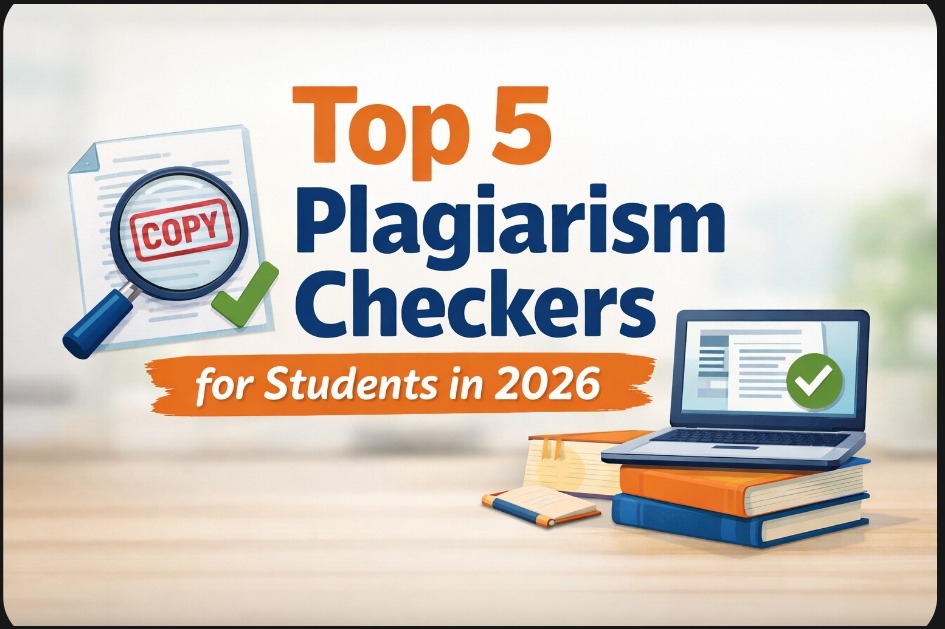
- The best plagiarism checkers for students are Quetext, Originality.AI, QuillBot, Duplichecker, and Copyleaks
- Quetext stands out with DeepSearch™ technology and detailed reports
- Originality.AI offers high-accuracy detection for complex plagiarism
- QuillBot is ideal for multilingual and quick checks
- Duplichecker is a simple free option for basic needs
- Copyleaks provides advanced detection across text, AI, and even code
Why Students Need a Plagiarism Checker Today
Plagiarism isn’t always intentional. Sometimes it’s:
- Forgetting to cite a source
- Rewriting content too closely
- Using online references without proper attribution
But regardless of intent, the consequences are serious, lower grades, failed assignments, or even academic penalties.
That’s why plagiarism checkers have become a must-have tool for students. They don’t just catch copied content, they help you write better, cite properly, and submit work with confidence.
The Top 5 Plagiarism Checkers for Students
1. Quetext: Best All-in-One Plagiarism Checker for Students
Quetext is one of the most widely used plagiarism checkers among students because it goes beyond basic matching and focuses on deep, contextual analysis.
Key Features
- DeepSearch™ technology for contextual and semantic analysis
- Detects both exact matches and paraphrased content
- AI Detector to identify AI-generated content with high accuracy
- Colour-coded feedback (ColorGrade™) for easy understanding
- Side-by-side comparison with source links
- Built-in citation generator to fix issues quickly
- Free plan available (limited word count)
- It has additional free tools like AI Humanizer, AI Summarizer, Grammar Checker and so on!
Quetext scans text across billions of web pages and academic sources, making it highly reliable for academic work
Why It Stands Out
Unlike basic tools, Quetext doesn’t just match words, it analyses context, helping
detect “fuzzy matches” where content has been slightly rewritten
Best For
- Essays, assignments, and research papers
- Students who want detailed reports and explanations
- Those looking for a balance of accuracy and ease of use
2. Originality.AI: Best for Detecting Complex Plagiarism
Originality.AI is known for its ability to detect advanced types of plagiarism, including paraphrasing and patchwork content.
Key Features
- Detects global, paraphrased, and mosaic plagiarism
- Claims up to 99.5% accuracy in plagiarism detection
- Shareable reports for transparency
- Also includes AI detection
It is particularly strong at identifying subtle plagiarism patterns that traditional tools may miss
Limitations
- More suited for advanced users
- Requires subscription for full functionality
Best For
- Research-heavy assignments
- Students working on dissertations or long-form content
3. QuillBot: Best for Multilingual Students
QuillBot is widely used by students not just for paraphrasing, but also for plagiarism checking.
Key Features
- Detects plagiarism across 100+ languages
- Provides detailed reports with missing citations
- Supports multiple file formats (PDF, DOCX, etc.)
- Monthly word limits with premium plans
It helps students identify where citations are missing and improve their writing accordingly
Limitations
- Requires paid plan for full plagiarism features
- Less detailed reporting compared to advanced tools
Best For
- International students
- Quick checks before submission
4. Duplichecker: Best Free Option for Basic Checks
Duplichecker is a simple, free plagiarism checker that works well for quick checks.
Key Features
- Free to use with basic limits
- Simple copy-paste interface
- Quick results for small documents
Limitations
- Limited accuracy compared to premium tools
- Smaller database
- Not suitable for academic research
Studies show many free tools detect only a portion of plagiarism, so results should be used cautiously
Best For
- Quick checks on short assignments
- Students on a tight budget
5. Copyleaks: Best for Advanced Detection and Accuracy
Copyleaks is an advanced plagiarism detection platform used in both academic and professional settings.
Key Features
- Detects paraphrasing, AI content, and even code plagiarism
- Scans across billions of web pages and academic sources
- Detailed, downloadable reports
- Google Docs integration
It uses AI to understand writing meaning, not just word matching, making it effective for deeper analysis
Limitations
- More complex interface
- May be overkill for basic student needs
Best For
- Advanced academic work
- Students needing highly detailed analysis
Comparison Table
Feature | Quetext | Originality.AI | QuillBot | Duplichecker | Copyleaks |
Detection Type | Contextual + semantic | Advanced AI- based | Standard + multilingual | Basic matching | AI-powered deep detection |
Paraphrase Detection | Yes | Strong | Moderate | Limited | Strong |
Database Size | Billions of sources | Large | Large | Limited | Trillions of sources |
Report Quality | Detailed + visual | Detailed | Moderate | Basic | Highly detailed |
Free Plan | Yes | Limited | Limited | Yes | Limited |
Best For | All-in-one student use | Advanced detection | Multilingual use |
Quick checks | Deep analysis |
What Students Should Look for in a Plagiarism Checker
Before choosing a tool, consider:
1. Accuracy Over Simplicity
Free tools are useful—but may miss deeper plagiarism.
2. Ability to Detect Paraphrasing
This is where most students get caught.
3. Clear Reports
You need to understand why something is flagged.
4. Citation Support
Tools that help fix mistakes are more useful than those that just flag them.
Why Quetext Is a Strong Choice for Students?
Most plagiarism tools either:
- Detect matches
- Or provide basic reports Quetext goes further by combining:
- Context-aware detection (DeepSearch™)
- Easy-to-understand visual reports
- Built-in citation support
This makes it especially helpful not just for checking work, but for improving it before submission.
Final Thoughts
The best way for you to avoid plagiarism is not only by using plagiarism checkers, but also by becoming a better writer as a result of using them.
Top performing students who use writing tools such as these do not rely on these tools to “find mistakes” at the end of their writing process, but instead use them at various stages of their writing process to:
- Refine their writing
- Make proper citations
- Build confidence before submitting their work
Regardless of whether you use Quetext, Originality.AI, QuillBot, Duplichecker, or Copyleaks, the goal remains the same:
Submit work that is truly your own.