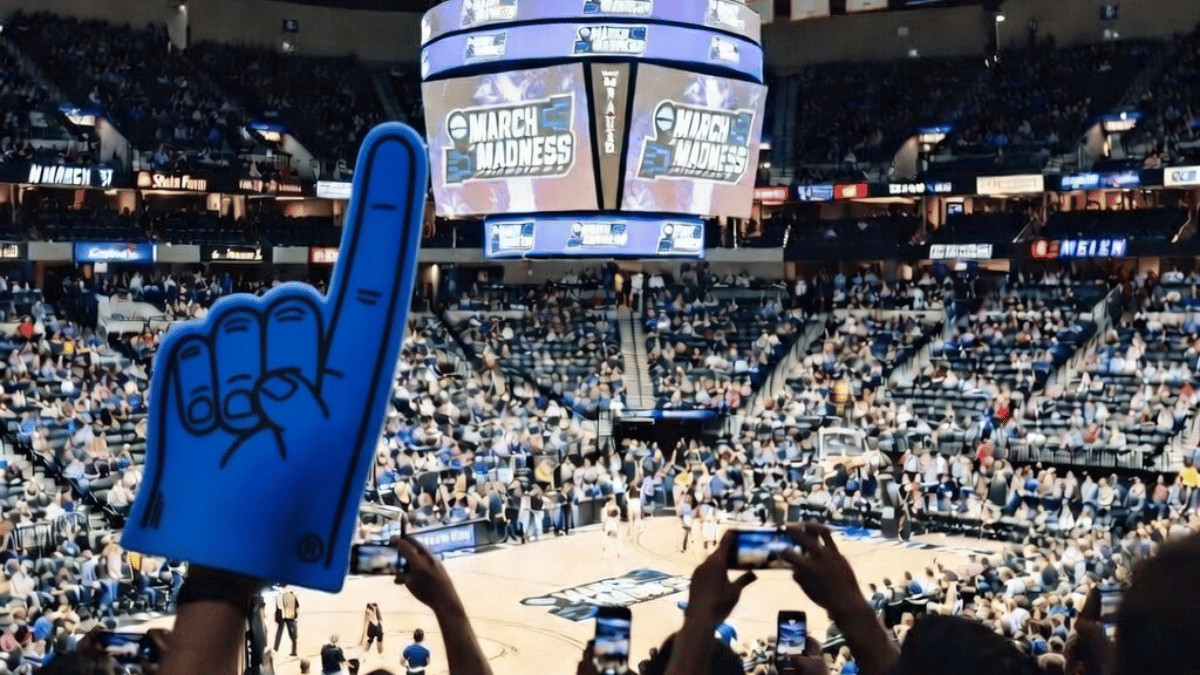
March Madness still brings us wild shots, busted brackets, and surprise stars. But this year, it’s also turning college athletes into brand targets almost instantly.
CBS, TBS, TNT & TruTV averaged 10.1 million viewers combined in the first week average of the men's NCAA Tournament -- which was the largest opening week average ever recorded. Brands were able to capitalize off of that number quickly.
Kentucky guard Otega Oweh hit a game-tying half-court buzzer-beater against Santa Clara. In just 24 hours he signed two different name-image-likeness (NIL) deals: one with TurboTax and another with Buffalo Wild Wings. Purdue guard Braden Smith became the all-time leader in NCAA Division I career assists. He then signed a partnership with State Farm. Arkansas freshman Darius Acuff Jr. was named the first-ever major US men's college player to receive a signature shoe from Reebok.
The new March formula is clear: big moment, social post, deal.
A successful tournament run has always raised a player’s profile. Today it also triggers an immediate sprint by brands eager to capitalize on that fresh national exposure. The shift accelerated last summer when a federal judge approved the House settlement, allowing schools to share up to $20.5 million per year directly with athletes. Even with that new revenue-sharing money, third-party NIL deals remain essential. They give athletes public visibility and personal brand value that campus checks alone cannot provide.
While traditional donor-backed collectives are continuing to fund the majority of guarantees for blue-chip talent, there are other platforms available, such as NIL Club by YOKE, that have opened up tremendous amounts of access for many student athletes. As of early March, NIL Club connected over 650,000 student athletes across approximately 2000 institutions and 20,000+ teams/organizations. Additionally, in August of 2025, NIL Club introduced its Brand Deals Marketplace, which enables student athletes to search and select endorsement opportunities through the app. By the end of September, over 50,000 student athletes had completed at least one partnership.
The ability to engage thousands or tens of thousands of athletes who have authentic followings at the local level creates significant scale during March.
Smaller programs and non-revenue sports are able to get involved in the marketplace as well as larger programs because of this ability to reach these athletes in local markets.
For major brands, attempting to navigate this landscape in-house is a logistical nightmare. Participating teams are completely up in the air until Selection Sunday, leaving marketers scrambling to prepare a national strategy just days before tip-off. However, campaigns routed through platforms that already have these athletes onboarded are solving this timing crisis.
Meta, for instance, has found immense success partnering with the NIL Club app to execute its tournament strategy. By relying on a platform with built-in scale, Meta joins other campaigns from brands like Amazon Prime Student, SoFi, and Subway that are driving millions of verified conversions and high engagement rates.
The sheer spontaneity of the tournament, where Cinderellas emerge and blue-bloods fall overnight, is a double-edged sword. It makes traditional, months-in-advance campaign planning nearly impossible. But when working with a nimble partner like NIL Club, which already has athletes locked in across those previously mentioned 2,000 institutions, that unpredictability becomes a massive asset.
Every March, the country stops to check their brackets. When brands can leverage an expansive roster to pivot in real-time as teams unexpectedly advance or face elimination, they generate highly organic content. A raw, authentic video titled, "Come with me to see what March Madness is like as a player..." captures the exact behind-the-scenes moments a captivated public is actively searching for, giving it incredible viral potential.
Of course, capitalizing on these viral moments at warp speed carries risks. The NCAA actively protects its marks ("March Madness," "Final Four," and "Elite Eight") and has recently filed suit against DraftKings alleging misuse of marks. Sports lawyers are telling brands to add strict review rules in NIL agreements about content created by athletes, to make sure that nothing suggests the school or NCAA is sponsoring the athlete's posts by accident.
So yes, March Madness still belongs to the teams chasing championships. But now it also belongs to the brands chasing big moments, and, more and more, to the platforms that help both sides connect before the next game starts.
The buzzer-beaters still matter. The Cinderella runs still matter. What’s new is that the business side of the game now moves almost as fast as the action on the court.