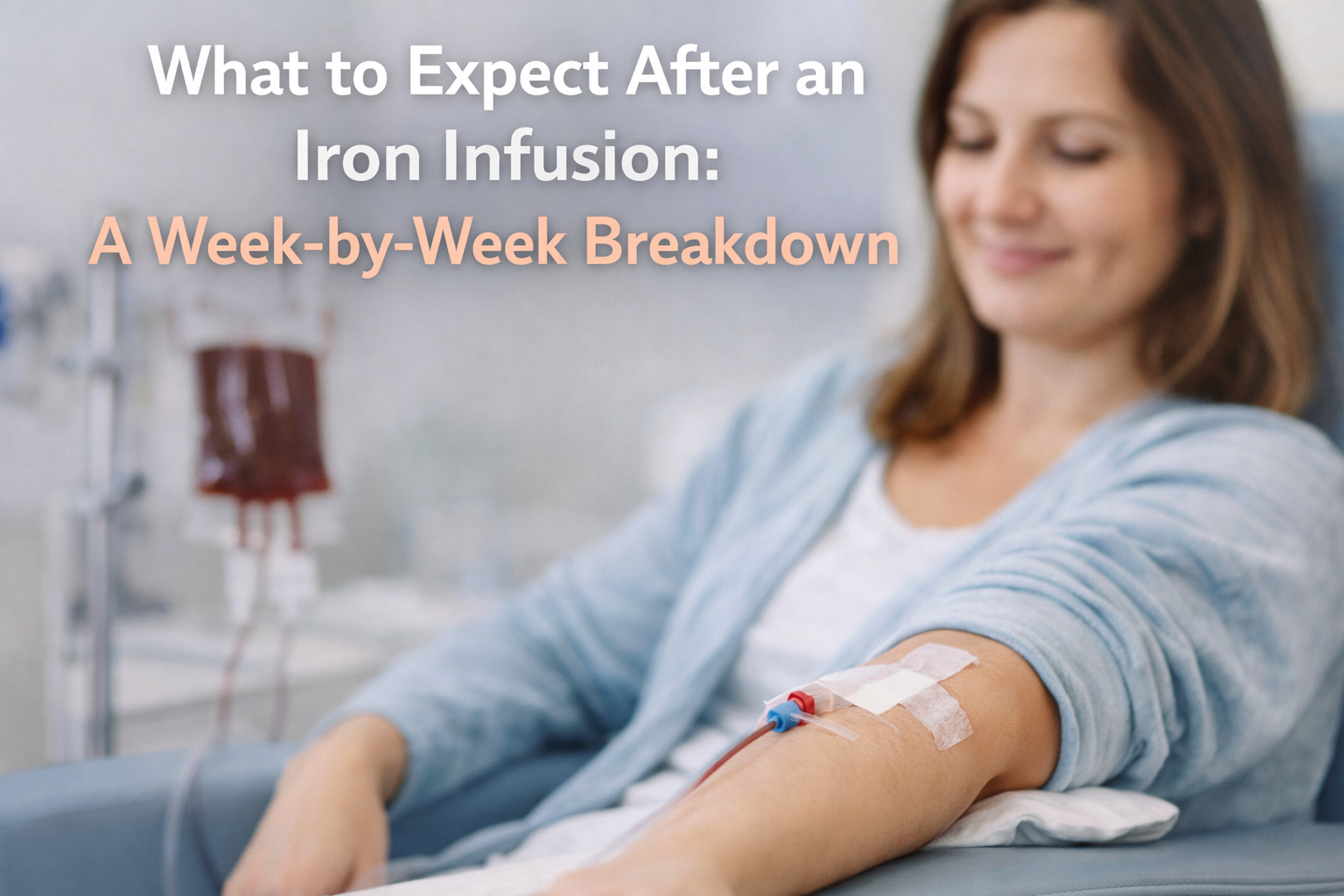
If you’ve been feeling constantly tired, lightheaded, or short of breath, an iron infusion may be part of your treatment plan. While the infusion itself is usually quick, your body's response afterward occurs gradually. Understanding that timeline ahead of time can make the process feel less uncertain and help you set realistic expectations for recovery.
This guide walks you through what most people experience after an iron infusion, week by week, so you know what’s normal and when improvements typically begin.
Most iron infusions are completed within one to two hours, followed by a short observation period. Once you’re cleared to leave, you can return to normal daily activities, though taking it easy for the rest of the day is often recommended.
You may notice:
These early effects are usually mild and short-lived. Still, they don’t indicate a problem or mean the infusion didn’t work. Instead, your body is adjusting to a rapid increase in circulating iron, which may cause temporary discomfort.
It’s also important to know that you probably won’t feel an immediate energy boost. Iron supports red blood cell production, and that process takes time, even though the iron is delivered immediately.
During the first week, iron is being stored and transported to areas where it’s needed most, especially the bone marrow. This is where new red blood cells are made, which explains why improvements can feel gradual rather than dramatic at this stage.
You might notice:
Some people still feel tired during this phase, and that’s completely normal. Your body is doing a lot of internal work, even if you don’t feel the results yet. Mild joint aches or flu-like symptoms may also occur but typically resolve within a few days without intervention.
By the second week, many people begin to notice more consistent changes. Hemoglobin levels may begin to rise, improving oxygen delivery throughout the body and supporting better overall function.
Common improvements include:
Sleep can also improve during this period, especially if iron deficiency was contributing to restlessness or poor recovery overnight. This is often when people start paying closer attention to their iron infusion results timeline, wondering whether their progress aligns with expectations. While some feel noticeably better by now, others may still be making progress, and both responses are normal.
Week three is when many people feel encouraged by tangible progress. Activities that once felt exhausting may require less effort, and recovery after physical exertion often improves.
You may notice:
If symptoms such as hair thinning or brittle nails are part of an iron deficiency, visible changes usually take longer to appear. Hair and nail growth follow slower cycles, so improvement in these areas often shows up weeks or months later rather than immediately.
By week four, improvements tend to feel more consistent instead of coming and going. Many people report that their energy feels steadier and more predictable, rather than limited to occasional “good days.”
Common changes include:
If your iron deficiency was severe, recovery may still be ongoing. In some cases, additional infusions or continued monitoring are needed to fully restore iron levels. Follow-up lab work around this time helps determine how well your body is responding.
During weeks five and six, iron levels often begin to stabilize. At this point, many individuals feel closer to their baseline and notice fewer fluctuations in energy.
This is when:
If symptoms haven’t improved as expected, your provider may look for contributing factors such as ongoing blood loss, absorption issues, or chronic conditions that affect iron metabolism.
Iron infusion recovery isn’t one-size-fits-all. How quickly you feel better depends on several factors, including how low your iron levels were to begin with, whether the underlying cause of deficiency has been addressed, and how your body processes iron.
Because of this, comparing your experience to someone else’s can be misleading. Even slow, steady improvement is still progress.
Serious side effects are uncommon, but you should seek medical advice if you experience:
These symptoms need immediate medical attention, even if they appear days after your treatment.
If you’re considering or recovering from an iron infusion in Miami, working with a provider who emphasizes education, monitoring, and follow-up can make the experience much smoother. Knowing what to expect helps you stay patient and recognize real improvement as it develops.
Iron infusions rarely offer instant results, but for many people, they provide meaningful and lasting benefits over time. With realistic expectations and appropriate support, you can focus on recovery rather than worrying about every small change.