Addiction has always been a health issue. But for a long time, the public story around addiction has been shaped by men. The warning signs, the treatment models, the media images, even the way families talk about substance use, all of it has often leaned toward a male experience.
That is changing.
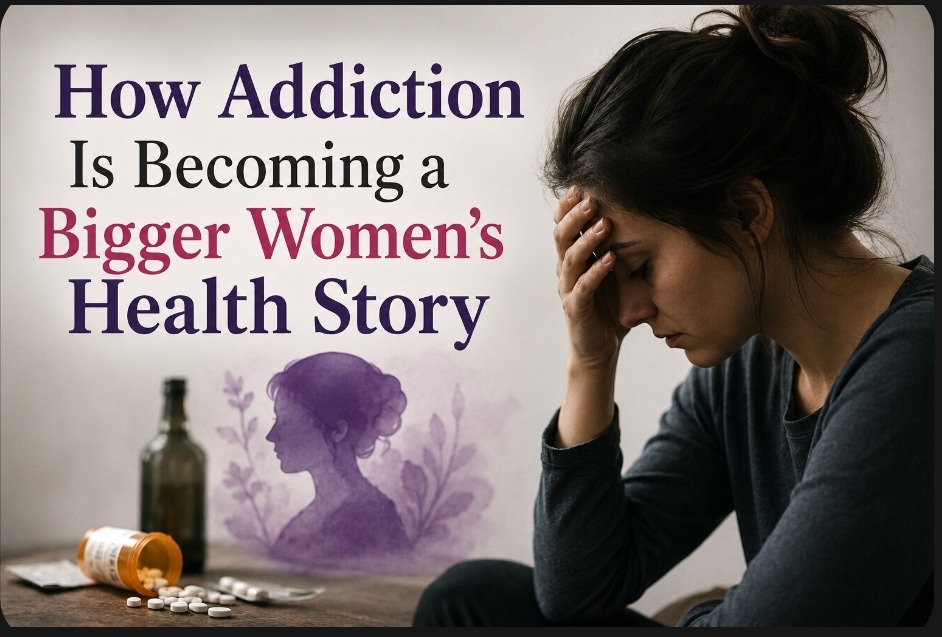
More people are starting to see addiction as a women’s health story too, and not in a vague or soft way. It is becoming part of serious conversations about trauma, hormones, caregiving, mental health, workplace pressure, family roles, and delayed treatment. Addiction does not always look like collapse. Sometimes it looks like a woman still showing up to work, packing lunches, answering emails, caring for a parent, hiding wine bottles, and telling everyone she is “just tired.”
Honestly, that is what makes it so easy to miss.
Addiction is often imagined as something obvious. Missed work. Broken relationships. Public crisis. A dramatic moment when everything falls apart.
But for many women, substance use hides inside routine. A glass of wine after the kids sleep becomes two. Prescription medication taken for pain or anxiety becomes harder to stop. Drinking alone becomes a way to take the edge off after a day that never really ends.
And because women are often expected to function through stress, the signs get explained away.
She is overwhelmed.
She is burnt out.
She is going through something.
She just needs a break.
All of that may be true. But it can also delay the moment when someone says, “Wait, this is becoming a problem.”
That delay matters. Addiction becomes harder to treat when shame, silence, and survival mode keep it hidden. Women often learn to mask distress well because many have had to do it for years. They keep the calendar moving. They keep the household running. They keep the face on.
You know what? Sometimes that “high-functioning” label is less of a compliment and more of a warning sign.
Caregiving is one of the biggest pieces of this story. Many women are still expected to care for children, partners, aging parents, relatives with health problems, and everyone in between. Even when women work full-time, the emotional labor often follows them home.
That pressure creates a strange kind of trap. Women are told to be strong, but not too needy. Helpful, but not exhausted. Present, but not resentful. Calm, but always available.
So where does the stress go?
For some, it goes into alcohol. For others, pills. For others, food, sleep aids, stimulants, or other substances that make daily life feel more manageable for a while. Not good. Not safe. But understandable in a painfully human way.
This is why addiction cannot be separated from the life around it. A woman’s treatment needs are often tied to childcare, housing, income, family safety, and whether she can step away from her responsibilities long enough to get help. If she cannot attend appointments because no one can watch her child, the “treatment plan” is already in trouble.
That is where gender-aware care becomes important. Support has to match real life, not an ideal version of it. Services such as Therapy For Addiction Recovery fit into this broader discussion because many people need emotional support that deals with both substance use and the pressure behind it.
There is also a cultural side to this. Alcohol has been packaged to women in a very specific way for years. Wine after work. Cocktails for self-care. “Mommy wine” jokes. Brunch drinks. The cute glass. The funny mug. The idea that being overwhelmed is normal, and drinking is just how women get through it.
It can sound harmless. Sometimes it is. But sometimes the joke becomes a shield.
The problem with hidden drinking is that it often looks socially acceptable from the outside. A woman drinking at home after work may not look like someone in crisis. She may look like someone relaxing. And if she is still doing her job, answering texts, and keeping her family together, people may not ask hard questions.
But bodies keep score. Sleep gets worse. Anxiety grows. Mood swings become harder to manage. Relationships feel strained. And the person may start needing alcohol not for pleasure, but for relief.
That shift is small at first.
Then it is not small.
Health professionals are paying more attention to how alcohol affects women differently too. Women can experience alcohol-related harm at lower levels of consumption than men because of differences in body composition and metabolism. That does not mean every woman who drinks has a problem. It means the risks deserve clearer, less sugar-coated discussion.
Here’s the thing: addiction is rarely just about the substance.
For many women, substance use is connected to trauma. That can include childhood abuse, domestic violence, sexual assault, grief, medical trauma, or years of emotional neglect. Sometimes the substance becomes a way to quiet memories. Sometimes it becomes a way to sleep. Sometimes it becomes the only thing that makes the body feel less on alert.
That does not make addiction simple. It makes it layered.
A woman who has experienced trauma may avoid treatment because asking for help feels unsafe. She may fear being judged, blamed, or not believed. If she has children, she may worry that admitting addiction will put her family at risk. If she is in an abusive relationship, she may not have the freedom to seek care at all.
This is where the health story becomes bigger than addiction alone. It becomes a story about safety. About trust. About whether care systems know how to listen without making someone feel small.
Treatment that ignores trauma can feel cold, even if it is clinically correct on paper. Treatment that understands trauma can help someone stay engaged long enough to heal.
Women often wait longer to seek help. Not always, but often enough that it deserves attention.
Why? Shame is one reason. Mothers, especially, face harsh judgment around substance use. A father with addiction may be seen as troubled. A mother with addiction is often seen as failing. That double standard keeps people quiet.
Money is another reason. Treatment costs, transport, time away from work, and insurance issues all create barriers. Then there is the fear of what other people will say. In smaller communities, privacy can feel impossible. Even in large cities, stigma travels fast.
And then there is denial, the very human kind.
“I’m not that bad.”
“I can stop when things calm down.”
“It’s just stress.”
“I only drink at night.”
These phrases can sound reasonable. They can also stretch a problem out for years.
By the time some women enter treatment, they are not only dealing with addiction. They are dealing with depression, anxiety, health problems, legal stress, family conflict, or financial pressure. The care needed becomes more complex, and the road back can feel steeper.
That is why early support matters. Not dramatic intervention. Not shame. Just earlier, clearer help.
Access to treatment also depends on where someone lives. A woman in a major city may have more choices, while someone in a rural area may have fewer clinics, fewer specialists, and less privacy. Transportation alone can become a deal-breaker. If getting help means driving hours, arranging childcare, and missing work, many people delay it.
There is also the question of fit. Not every treatment setting feels right for every woman. Some need outpatient care. Some need residential support. Some need trauma-focused therapy first. Others need medical detox, family support, or a program that understands pregnancy, postpartum mental health, or domestic abuse.
Location matters here. So does culture. So does trust.
For women seeking structured support in a specific region, options such as Rehab in California reflect how addiction care is often tied to place, availability, and the kind of environment someone needs to begin recovery.
And yes, that environment matters more than people admit. Recovery is not just a clinical process. It is also a setting, a rhythm, a daily routine, and a chance to breathe without being pulled back into the same pressures every hour.
Addiction belongs beside the bigger women’s health issues we already discuss: mental health, maternal health, reproductive care, chronic stress, domestic safety, workplace burnout, and access to care.
It is connected to all of them.
A woman dealing with postpartum depression may use alcohol to cope. A woman with chronic pain may become dependent on medication. A woman in an unsafe relationship may use substances to numb fear. A woman under constant work and family pressure may slowly lose control of drinking that once felt casual.
These are not separate stories. They overlap.
And that overlap is exactly why addiction is becoming a bigger women’s health story. It is not only about stopping a substance. It is about asking what pain the substance is covering, what support is missing, and what kind of care actually fits the person’s life.
The old image of addiction was too narrow. Too loud. Too male. Too focused on crisis after the damage was done.
The newer conversation is more honest. It sees the woman who is still functioning but barely. The mother hiding her drinking. The professional who looks fine on Zoom but is falling apart after dark. The survivor who does not know how to sleep without help. The caregiver who has carried everyone else for so long that she no longer knows how to ask for care herself.
That is the story now.
And it deserves to be treated like health, not gossip. Like care, not blame. Like something real, because it is.