If you have been following New Jersey's medical cannabis program over the last few years, you have probably noticed how much easier it has gotten to participate. The state has steadily reduced barriers, eliminated fees, and expanded access in ways that benefit year-round residents and seasonal homeowners alike. For Ocean City and the surrounding Cape May County area, where many residents are managing chronic pain, arthritis, anxiety, or post-surgical recovery, the program has become a more accessible option than it used to be.
Here is where New Jersey's Medicinal Cannabis Program (NJMCP) stands in 2026, including the recent free digital card option and the practical process for getting started.
In March 2024, the New Jersey Cannabis Regulatory Commission (NJ-CRC) introduced free digital Medicinal Cannabis Patient cards. Patients and caregivers now have the option to skip the $10 physical card fee entirely and receive a digital PDF card that can be saved to a phone or printed at home.
For new patients, renewing patients, and registered caregivers, the digital card carries the same legal weight as the physical version. Both are valid for two years, which is one of the longest validity periods of any state medical cannabis program in the country. Most other states require annual renewal, so the New Jersey two-year cycle is a meaningful convenience.
The digital option matters for practical reasons beyond the small fee savings. If you misplace a physical card, replacing it requires another application and another fee. A digital card sits in your phone's wallet or photos app and can be re-downloaded from the NJMCP portal whenever you need it. For seasonal homeowners who split time between Ocean City and another residence, this eliminates the question of which house the physical card is sitting in.
New Jersey has one of the more inclusive qualifying conditions lists in the country. The state recognizes a wide range of conditions, including:
Anxiety, chronic pain, cancer, migraine, post-traumatic stress disorder, multiple sclerosis, muscular dystrophy, inflammatory bowel disease (including Crohn's disease), HIV/AIDS, glaucoma, ALS (Lou Gehrig's disease), Tourette syndrome, dysmenorrhea, opioid use disorder, seizure disorders (including epilepsy), and terminal illness. Sickle cell anemia was added in January 2026 as the most recent expansion.
That list reflects significant expansion since the program first launched in 2010 under the Compassionate Use Medical Marijuana Act. The Jake Honig Compassionate Use Medical Cannabis Act, signed in 2019, broadened the eligible conditions and increased patient possession limits to up to three ounces per 30-day period. The 2021 CREAMM Act, which legalized adult recreational use, also reorganized the regulatory structure under the CRC.
For Ocean City residents, the most commonly relevant qualifying conditions tend to be chronic pain (often related to arthritis, back issues, or post-surgical recovery), migraine, and anxiety. New Jersey's explicit inclusion of anxiety as a qualifying condition is notable because several other states require that anxiety be paired with other diagnoses or treated through a more discretionary process.
Getting a New Jersey medical cannabis card involves three steps.
First, the practitioner certification. A New Jersey-licensed healthcare practitioner registered with the program (a physician, physician assistant, or advanced practice nurse) needs to confirm that you have one of the qualifying conditions. New Jersey allows this consultation to take place by telehealth, which has made the certification process much easier than it used to be. Practices that focus on cannabis certifications, including New Jersey medical marijuana doctors who handle the entire evaluation by video, have made certification accessible to patients across the state, including Cape May County residents who would otherwise need to travel to a clinical office.
Second, the state registration. Once your healthcare practitioner submits the certification, you receive a registry ID number and reference number. You log into the NJMCP portal, complete the application, upload required documents (proof of New Jersey residency, a photo, government-issued ID), and choose whether you want the free digital card or the $10 physical card.
Third, approval and dispensary access. The NJ-CRC processes applications within 14 to 30 days. Once approved, you can purchase from any licensed New Jersey Alternative Treatment Center (ATC) or dispensary. There are dispensaries throughout South Jersey, including locations within driving distance of Ocean City.
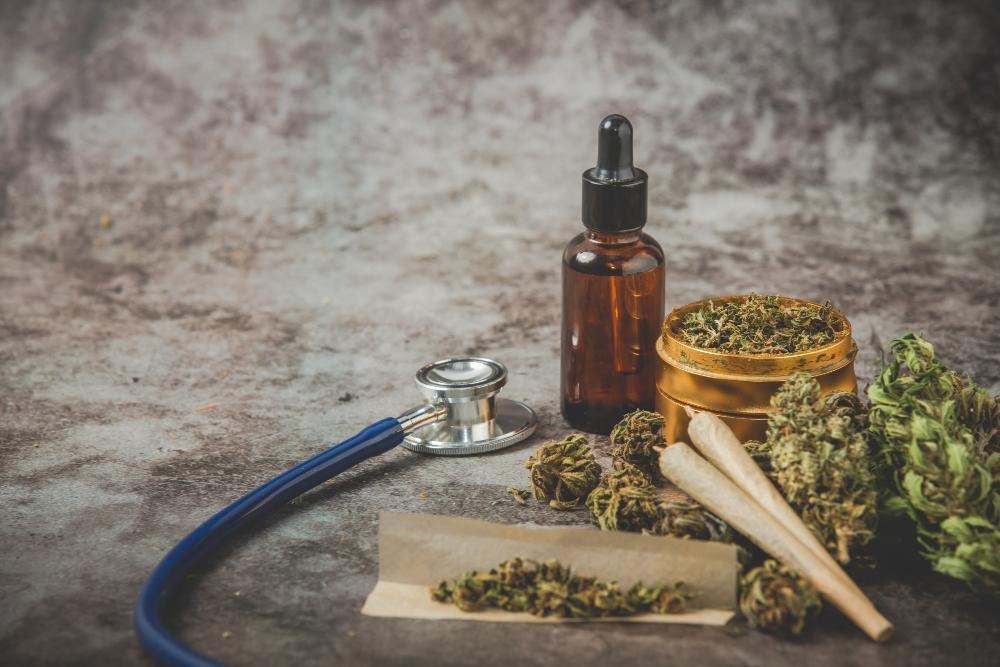
New Jersey's program permits a range of cannabis product forms: dry flower, pre-rolls, vaporizer cartridges, oils, tinctures, lozenges, and topicals. The 30-day possession limit is up to three ounces, which is one of the more generous limits among medical cannabis states. Patients can split their monthly allotment across multiple dispensary visits and product types.
Pricing is one of the practical advantages of having a medical card in New Jersey. Medical cannabis purchases are exempt from the state sales tax that applies to recreational cannabis, which can mean a 7 percent or higher savings on every purchase. Over the course of a year, those savings often offset the cost of getting and maintaining the card. The state also gives medical patients priority service at dispensaries that serve both medical and recreational customers, which matters during peak summer months when demand spikes.
Ocean City sees a significant out-of-state visitor population, particularly during the summer months. New Jersey accommodates medical cannabis patients from other states through a six-month nonrenewable temporary card. Out-of-state patients with active medical cards in their home state can apply through the NJMCP portal with their existing registry information and a New Jersey-licensed practitioner's reference number.
For Pennsylvania, New York, Delaware, and Maryland visitors who already hold medical cards in their home states, this is a useful option. The temporary card allows access to New Jersey dispensaries during stays at the Shore without requiring full New Jersey residency. The application process mirrors the new patient process but uses out-of-state registration documents instead of New Jersey residency proof.
Because New Jersey cards are valid for two years, the renewal cadence is much less frequent than in most other states. When the time does come, the renewal process essentially mirrors the initial application: a follow-up consultation with a registered practitioner, submission through the NJMCP portal, and approval. Patients who maintain a relationship with the same practice through their initial certification often find that the two-year renewal is a quick administrative step rather than a full re-evaluation.
The free digital card option applies to renewals as well, so patients can simply update their digital card every two years without paying the physical card fee. For patients who started under the old fee structure and want to switch to the digital option at renewal time, that switch can be made through the portal at the time of approval.
For Ocean City residents considering whether to apply for a New Jersey medical cannabis card, the process in 2026 is significantly more accessible than it was even three years ago. Telehealth certification through a New Jersey medical marijuana card provider can be completed in about 15 to 20 minutes, the state registration is online, the digital card is free, and the card lasts for two years.
The combination of free digital cards, two-year validity, broad qualifying conditions, generous possession limits, and the medical sales tax exemption has made New Jersey's program one of the more patient-friendly medical cannabis programs in the country. For residents managing chronic conditions and weighing whether the program is worth exploring, the practical case has gotten significantly stronger in the last few years.