Fast EV charging is often described in terms of minutes. In practice, it is a power-delivery problem.
A driver expects a vehicle to gain meaningful range in a short stop. A site operator, meanwhile, has to solve for grid capacity, transformer limits, demand charges, queue management, and uptime. Those are not small issues, and they become sharper as charging speeds rise. A single high-power charger may draw 150 kW, 250 kW, or more. A multi-bay charging hub can therefore behave less like a retail amenity and more like a compact industrial load center.
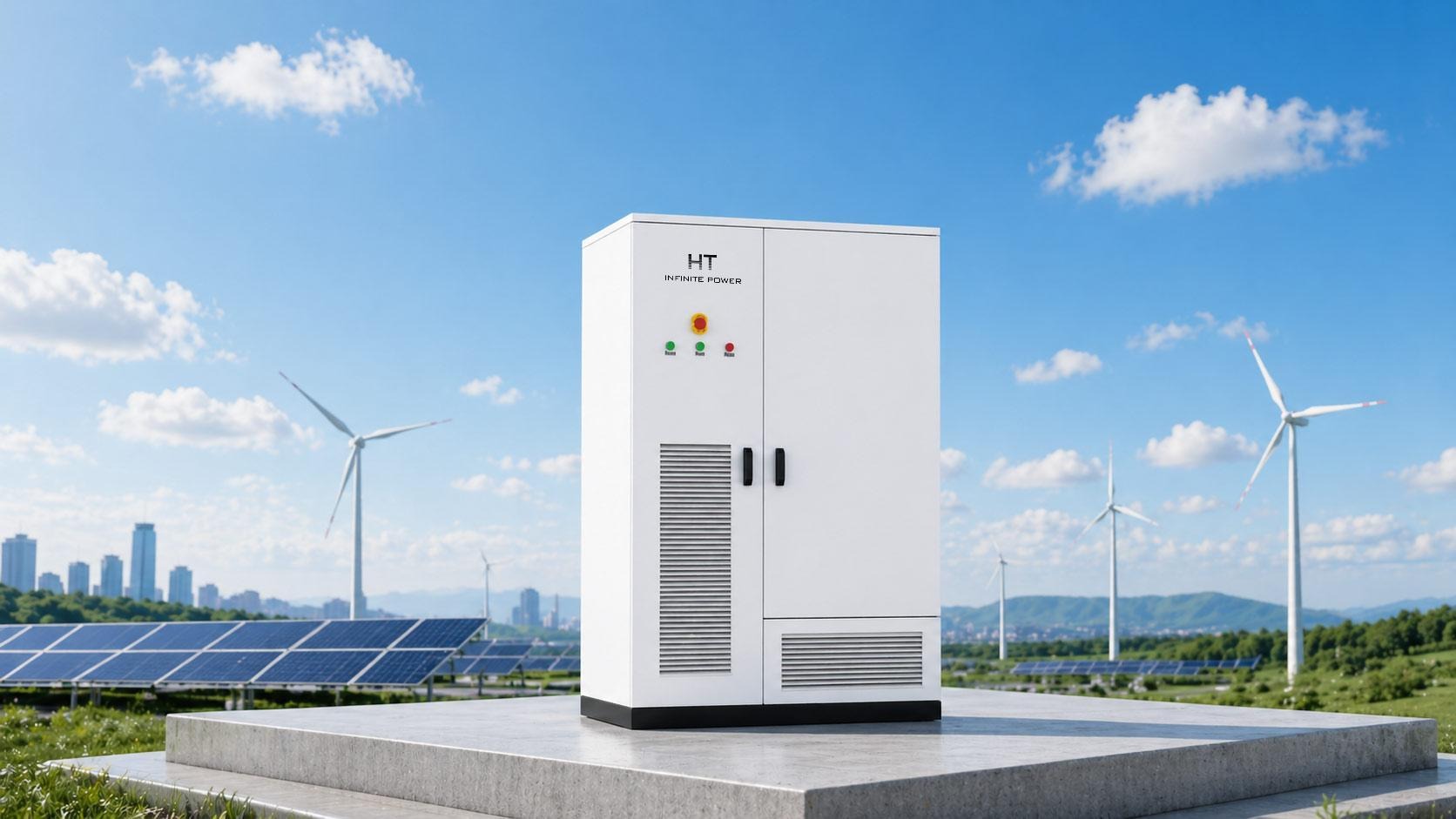
That is why a commercial energy storage system has become an important part of fast charging infrastructure. It does not replace the grid. It makes the grid workable for a load profile that is sudden, spiky, and expensive to serve directly. In that sense, storage is not just supporting EV charging; it is reshaping how charging hubs can be built and operated.
The first misconception about fast charging is that the main challenge is energy volume. It is not. The challenge is instantaneous power.
Utilities can often supply enough electricity over the course of a day. What they may not be able to do easily is deliver several megawatts at the exact moment multiple vehicles plug in. That kind of load can exceed feeder capacity, stress transformers, and trigger costly upgrades. In many locations, the physical grid is the limiting factor long before market demand is exhausted.
For developers, this creates a familiar problem: a charging site may have a strong business case, but the interconnection study reveals expensive upgrades or a long wait for utility reinforcement. Those delays can kill a project or force it into a smaller design that cannot support future demand.
A commercial energy storage system changes that equation by acting as a power buffer. The hub can charge its battery during lower-demand periods, then discharge quickly when EVs arrive. The chargers still operate at high output, but the utility sees a smoother load curve instead of a sharp spike.
That distinction matters. A smoother profile is easier to approve, easier to finance, and often cheaper to operate.
At the simplest level, the battery sits between the grid and the chargers. But the operating logic is more nuanced than “charge at night, discharge during the day.”
A well-designed system follows the site’s actual demand profile. It can pre-charge ahead of known peak periods, absorb renewable generation when available, and support rapid discharge during concurrent charging events. This allows the station to deliver high power without requiring the grid connection to be sized for every possible peak.
The benefit is not only technical. It is commercial.
Without storage, a site may need to pay for a larger interconnection, larger transformers, larger switchgear, and a higher contracted demand level. With storage, the developer can often build a hub faster and at lower initial infrastructure cost. The battery is effectively buying flexibility.
That flexibility also helps with utilization. EV charging revenue depends on station availability and throughput. If a site can support more chargers within the same grid envelope, it can serve more vehicles without waiting for a utility upgrade. That is especially valuable in corridor locations, fleet depots, logistics centers, and urban sites where real estate is expensive and power is constrained.
For many charging operators, the largest operating surprise is not energy cost. It is demand cost.
Demand charges are based on peak power draw over a billing period. Fast charging hubs are exactly the kind of load that can create expensive peaks. A few minutes of simultaneous charging can shape the bill for an entire month. In other words, a station does not need to draw high power all day to incur high costs. It only needs to do it once, at the wrong time.
A commercial energy storage system helps flatten those peaks. Instead of drawing all charging power directly from the utility during the busiest minutes, the site can use stored energy to cover the surge. The grid connection still supplies energy, but the maximum draw is capped.
This is where many projects realize the battery is not just an infrastructure expense. It is a financial control device.
For example, a site that sees repeated 600 kW spikes may be able to cap grid import at 300 kW or 400 kW, depending on the charger mix and battery size. That does not eliminate energy purchases. It shifts when and how they happen. Over time, that can reduce monthly operating volatility and improve project bankability.
EV drivers care about speed, but they care even more about whether the charger actually works when they arrive.
The problem with high-power charging hubs is that they are exposed to multiple failure modes: weak utility supply, transformer overload, voltage sag, rapid load swings, and abrupt changes in site demand. A battery system can stabilize many of these conditions.
Because batteries respond quickly, they can absorb short transients and help maintain voltage support during sudden charging events. That can reduce nuisance trips and improve the consistency of power delivery. It also creates a buffer during grid disturbances, which is important in areas with unstable supply.
For fleet operators, reliability is not a convenience. It is a scheduling variable. A delivery depot or transit yard cannot afford charging interruptions during a dispatch window. If vehicles leave late or undercharged, the operational impact spreads beyond the charging station itself. In that environment, a commercial energy storage system is part of the uptime strategy.
It is tempting to think of batteries only as backup assets. That is too narrow.
In fast charging applications, the storage system performs several roles at once: peak shaving, load shifting, ride-through support, grid constraint management, and sometimes even renewable integration. The result is a more flexible power architecture.
That flexibility is especially useful when a site grows in stages. Many charging hubs do not start at full build-out. They add chargers over time as vehicle adoption increases. A battery system allows the operator to launch earlier with a smaller grid connection and then expand capacity later without redesigning the entire electrical backbone.
This staged growth model is attractive because it reduces capital risk. Instead of overbuilding infrastructure on day one, the operator can scale in line with demand. That is often a better fit for commercial reality than waiting for a perfect utility upgrade that may not arrive on schedule.
Many charging operators want to pair fast EV charging with solar generation. The logic is sound: daytime charging lines up reasonably well with solar output, and the combination can improve the site’s carbon profile.
But solar alone is not enough. Cloud cover, evening traffic, and charger concurrency create mismatches. Solar production is variable; charging demand is opportunistic.
A commercial energy storage system solves the timing problem. It can absorb excess solar during the day and release it when drivers actually plug in. This improves self-consumption and reduces reliance on grid imports during high-price periods.
The result is not just cleaner electricity. It is a more controllable asset. Solar becomes more useful when paired with storage because the site can use the energy when charging demand exists, not only when the sun is shining.
Battery sizing for fast charging hubs is often misunderstood. Bigger is not automatically better. The correct size depends on the site’s charger count, concurrency pattern, utility limit, and operating strategy.
Three variables usually matter most:
Power rating
The battery must be able to discharge at a level that meaningfully offsets charging peaks. If the site can spike to 800 kW, a 100 kW battery will not solve the core problem.
Energy capacity
The battery must store enough energy to cover the expected discharge window. A high-power system that empties too quickly will not support sustained charging demand.
Control strategy
The system should be configured for the site’s real behavior. Some hubs need aggressive peak shaving. Others need load shifting plus renewable smoothing. Fleet depots may prioritize overnight charging and morning dispatch. Highway hubs may prioritize rapid turnaround and peak-event support.
A simplified design calculation looks like this:
Required battery energy (kWh) = Peak reduction target (kW) × support duration (hours) ÷ usable depth of discharge
That formula is only a starting point. Designers still need to account for inverter efficiency, battery aging, reserve margins, temperature effects, and future expansion. A site that works on paper can still fail in operation if it is not built around actual traffic patterns and utility constraints.
The best fast-charging sites are not just places with more plugs. They are carefully managed power systems.
A commercial energy storage system makes that possible by turning an otherwise rigid electrical load into something the site can control. It reduces the pressure on the grid, lowers demand exposure, supports reliability, and allows charging infrastructure to scale more intelligently. That is why storage is becoming central to the economics of fast EV charging, not just the engineering.
The market often talks about charger speed. The more important question is whether a site can deliver that speed repeatedly, profitably, and without depending on expensive grid reinforcements. Storage is one of the few tools that answers all three.
Fast EV charging hubs create a difficult power profile: sudden, concentrated, and expensive to serve directly from the grid. A commercial energy storage system addresses that challenge by decoupling charging demand from grid supply, reducing peak loads, and improving operational stability.
That makes fast charging more practical in constrained locations, more economical in high-demand markets, and more scalable as EV adoption grows. For developers and operators, storage is not a decorative add-on. It is part of the infrastructure logic that makes high-power charging viable in the first place.