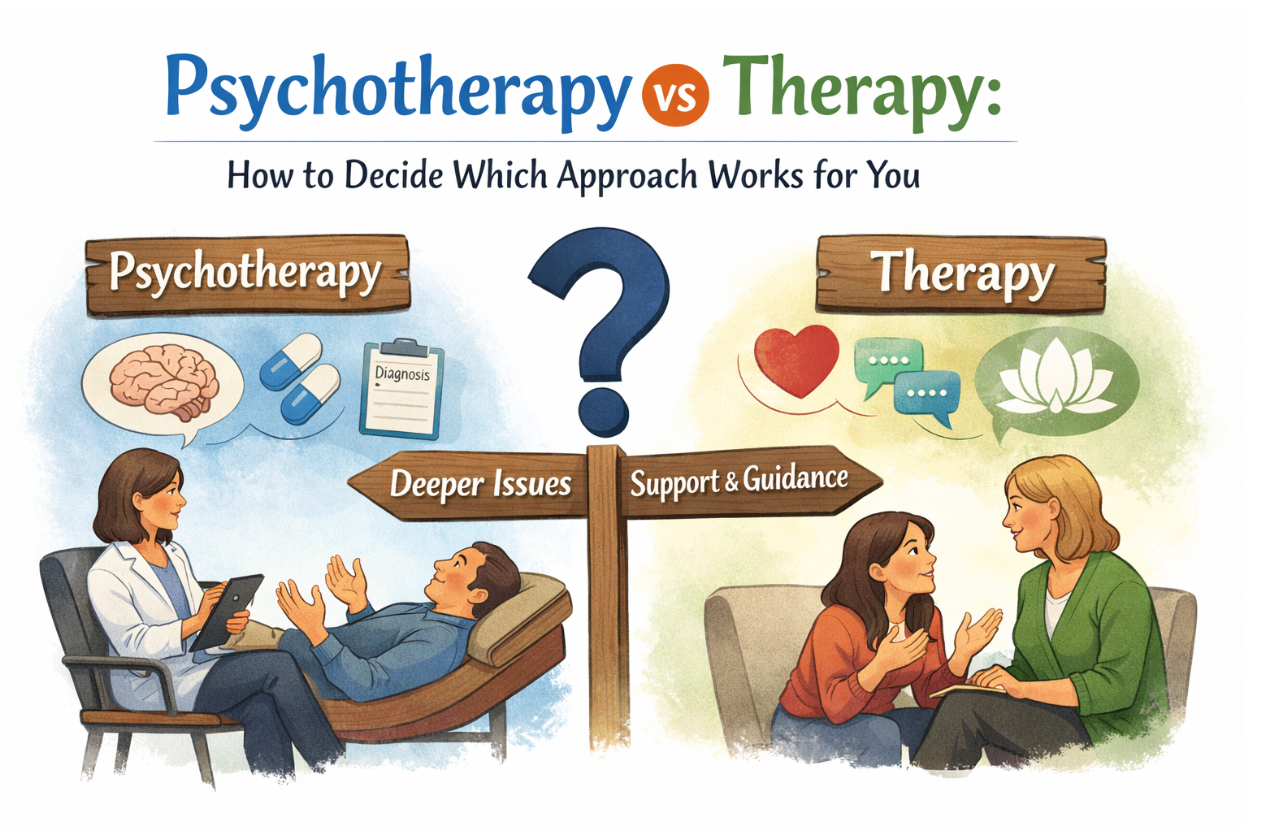
When searching for mental health support, you'll encounter terms like "therapy" and "psychotherapy" used seemingly interchangeably. This can create confusion about whether they're different services, require different qualifications, or suit different needs. Understanding the distinctions and overlaps between these terms helps you make informed decisions about your mental health care and find the right professional for your situation.
The confusion around psychotherapy vs therapy stems partly from how professionals and the public use these words differently. In many contexts, they refer to the same thing—professional mental health treatment. However, nuances exist in how practitioners define their work, what training they've received, and what approaches they use. This guide clarifies these differences and helps you determine what type of support matches your needs.
Therapy is a broad umbrella term for any treatment aimed at improving mental health, emotional well-being, or behavioral patterns. It encompasses many approaches, practitioners, and settings. When someone says they're "going to therapy," they might mean meeting with a psychologist, counselor, social worker, or psychiatrist.
The term feels accessible and less clinical than alternatives. Many people prefer saying they're in therapy rather than using more formal terminology. This casual usage has made "therapy" the default term in everyday conversation, even when discussing highly specialized psychological treatment.
Therapy can be short-term and focused on specific issues, or long-term and exploratory. It might target immediate crisis management, skill-building for particular challenges, or deeper investigation of patterns and past experiences. The flexibility of the term reflects the diverse nature of mental health treatment itself.
Psychotherapy represents a more specific and formal type of therapy. It typically refers to treatment based on psychological theories and delivered by professionals with advanced training in psychological principles. Psychotherapy involves structured approaches to understanding and changing thoughts, emotions, and behaviors.
The term carries a more clinical connotation. Professionals who use "psychotherapy" to describe their work often have specific training in theoretical frameworks like psychodynamic therapy, cognitive-behavioral therapy, or humanistic approaches. These practitioners usually hold graduate degrees and licenses requiring extensive supervised clinical hours.
Psychotherapy tends to involve deeper, more sustained work than some other forms of therapy. Sessions explore underlying patterns, historical influences on current functioning, and complex psychological dynamics. The process aims for lasting change through insight, skill development, and modification of core beliefs or behaviors.
One practical distinction involves the depth and length of treatment. Psychotherapy often implies longer-term work—months or years rather than weeks. It addresses root causes and patterns rather than just managing current symptoms. The process allows for thorough exploration of how past experiences, relationships, and beliefs shape present functioning.
Therapy used as a broader term might include brief, solution-focused work. Someone might attend therapy for six sessions to develop coping strategies for work stress, while psychotherapy might involve extended work examining why certain situations trigger strong reactions based on childhood experiences.
Psychotherapy explicitly grounds itself in psychological theories. Practitioners learn specific modalities—cognitive-behavioral, psychodynamic, attachment-based, or others—and apply these frameworks systematically. The theoretical foundation guides how the therapist understands problems and structures treatment.
Therapy in its broader sense might incorporate psychological theories but can also include less formalized supportive counseling, coaching-like approaches, or eclectic methods that borrow from various sources without adhering strictly to one theoretical model.
The training distinction matters when considering therapy vs psychotherapy. Psychotherapists typically hold advanced degrees (master's or doctoral level) in psychology, clinical social work, or related fields. They've completed extensive supervised clinical training and passed licensing exams,s demonstrating knowledge of psychological assessment and treatment.
"Therapist" as a title varies more widely. In some regions, it's not a protected term, meaning various professionals can use it. This includes highly trained psychologists and also counselors with less extensive training. Always verify credentials and licensing when seeking services.
Psychotherapy often aims for transformative change. Goals might include resolving longstanding patterns, healing trauma, gaining deep self-understanding, or fundamentally changing how someone relates to themselves and others. The work is ambitious and comprehensive.
Therapy broadly defined might have more modest or specific goals—managing anxiety symptoms, improving communication skills, adjusting to life changes, or developing healthier habits. These remain valuable outcomes but don't necessarily require the depth of psychotherapeutic work.
Understanding specific psychotherapy modalities helps clarify what psychotherapy vs therapy discussions actually reference:
Each approach has research supporting its effectiveness for particular concerns. Your choice might depend on your specific issues, preferences, and what resonates with you philosophically.
Consider what brings you to seek help. Acute crises, specific skill deficits, or situational challenges might respond well to focused, short-term therapy. Longstanding patterns, complex trauma, persistent relationship difficulties, or desire for deep personal growth often benefit from comprehensive psychotherapy.
Think about your symptoms' severity and duration. Issues present for years typically require more intensive work than recent difficulties. If you've tried brief interventions without lasting improvement, deeper psychotherapeutic work might prove more effective.
What do you hope to achieve? Managing immediate symptoms might not require extensive psychotherapy, while understanding yourself more deeply and making fundamental changes does. Your goals should guide whether you seek brief, targeted therapy or longer-term psychotherapeutic work.
Be honest about your readiness for different levels of work. Psychotherapy requires significant commitment—emotional energy, time, and often financial resources. If you're not ready for this investment, briefer therapy provides valuable support while you determine if deeper work makes sense later.
Time commitment matters. Can you attend weekly sessions for months or years? Psychotherapy typically requires consistent attendance for best results. If your schedule or life circumstances make regular appointments difficult, shorter-term therapy might fit better currently.
Financial considerations are real. Psychotherapy represents a substantial investment. Check insurance coverage, sliding scale options, and what you can sustainably afford. Brief therapy costs less overall, even if session rates are similar, simply because fewer sessions are needed.
When contacting potential therapists, ask about their training, theoretical orientation, and how they typically work. Someone who describes themselves as a psychotherapist should articulate their theoretical framework and explain their approach clearly.
Don't hesitate to ask what training they've received, what populations and issues they specialize in, and how they measure progress. Professional therapists welcome these questions and see them as signs of informed consumers making good decisions about their care.
Research consistently showsthat the relationship between client and therapist predicts outcomes better than specific techniques used. Whether you're pursuing therapy or psychotherapy, feeling understood, respected, and comfortable with your practitioner matters tremendously.
Many professionals offer brief phone consultations before scheduling appointments. Use these to assess whether someone's style matches what you need. Trust your gut—if someone seems like a poor fit, keep looking rather than forcing a mismatch.
Regardless of whether someone calls their work therapy or psychotherapy, verify they hold appropriate licenses for your location. Licensed psychologists, clinical social workers, professional counselors, and marriage and family therapists all receive legitimate training and regulatory oversight.
Check licensing boards in your state or country. These databases confirm credentials, show any disciplinary actions, and ensure the person is legally authorized to practice. This protects you from unqualified individuals using therapy-related titles without proper training.
The distinction between psychotherapy and therapy matters less than finding appropriate, effective support for your specific situation. While psychotherapy generally refers to more formal, theory-based, longer-term treatment, and therapy encompasses broader possibilities, both terms describe legitimate paths toward better mental health.
Focus less on terminology and more on finding a qualified professional whose training, approach, and style match your needs and goals. Whether you're seeking brief, targeted help or comprehensive psychological work, what matters most is that you're taking action to support your mental health and wellbeing.