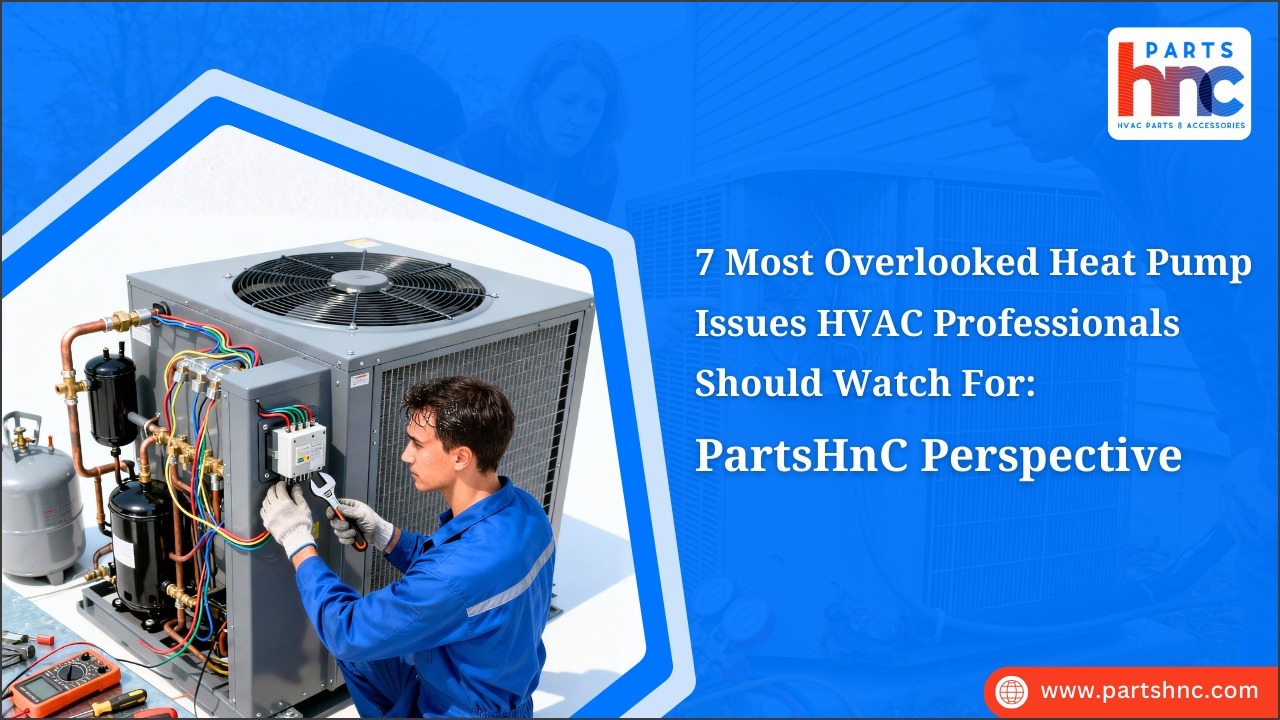
Heat pumps have become a cornerstone of modern HVAC systems thanks to their efficiency, dual heating–cooling functionality, and growing demand for energy-conscious climate control. However, even experienced HVAC professionals sometimes focus on the most obvious faults—compressor failure, refrigerant leaks, or thermostat malfunctions—while overlooking smaller issues that quietly degrade system performance.
From the PartsHnC perspective, many service calls reveal that the root cause of performance loss often lies in components that receive little attention during routine inspections. Identifying these hidden issues early can help technicians improve system longevity, prevent costly breakdowns, and ensure optimal energy efficiency for customers.
Below are seven commonly overlooked heat pump issues HVAC professionals should watch for when diagnosing or maintaining systems in residential and light commercial environments.
The reversing valve is one of the most critical components in a heat pump, responsible for switching the system between heating and cooling modes. While complete valve failure is obvious, partial malfunction often goes unnoticed.
Symptoms may include inconsistent temperature output, longer cycle times, or reduced heating capacity during winter operation. Because the system may still run, technicians sometimes overlook this issue during quick diagnostics.
From a service perspective, checking heat pump parts such as the solenoid coil and valve positioning during seasonal maintenance can help detect early wear before the valve fails completely.
Heat pumps operating in cold climates rely heavily on the defrost cycle to prevent ice buildup on outdoor coils. When the defrost control board becomes faulty, the system may either enter defrost too frequently or not activate it at all.
Both scenarios reduce efficiency:
HVAC professionals should verify defrost sensor readings, board timing logic, and wiring connections during inspections, as these issues often mimic refrigerant or airflow problems.
Contactors control power delivery to key components like compressors and condenser fans. Over time, electrical arcing can cause pitting or carbon buildup on the contact surfaces, leading to intermittent system operation.
Because the system may still start and stop normally during short testing periods, worn contactors are frequently missed.
Preventive replacement of aging heat pump parts like contactors during annual servicing can reduce unexpected shutdowns and compressor stress.
Technicians commonly check indoor filters but may underestimate outdoor airflow restrictions caused by debris, pollen buildup, or landscaping obstructions.
Blocked airflow around the outdoor coil can cause:
HVAC professionals should inspect coil cleanliness, fan blade condition, and clearance around the outdoor unit to ensure optimal airflow.
Proper outdoor maintenance can significantly improve system efficiency and reduce service calls related to performance complaints.
Modern heat pumps rely heavily on temperature sensors and thermistors to control system operation. Even small calibration errors can disrupt system performance.
Common sensor-related issues include:
Because sensors rarely fail completely, they often produce subtle inaccuracies that affect efficiency without triggering clear fault codes.
Verify sensor resistance values and placement during diagnostics to prevent misleading performance issues.
Another frequently overlooked issue involves expansion devices such as TXVs or fixed orifice metering systems. When these components become partially restricted or improperly adjusted, refrigerant flow becomes unbalanced.
This can lead to:
Technicians should evaluate superheat and subcooling values carefully rather than assuming refrigerant charge is the primary issue.
From the service viewpoint, diagnosing the metering device early can prevent unnecessary refrigerant adjustments or compressor replacements.
Many heat pump systems rely on auxiliary electric heat strips during extremely cold weather. However, misconfigured thermostats or relay faults can cause auxiliary heat to activate too frequently.
This results in:
HVAC professionals should review thermostat settings, relay functionality, and heat strip sequencing to ensure the auxiliary heat system operates only when required.
Heat pump performance issues are not always caused by major component failures. In many cases, minor but overlooked parts problems gradually reduce efficiency and reliability.
From the PartsHnC perspective, proactive diagnostics and routine inspection of smaller heat pump parts such as sensors, contactors, reversing valves, and defrost boards can significantly improve system longevity and reduce costly emergency repairs.
For HVAC professionals, paying attention to these subtle warning signs can make the difference between a quick fix and a recurring service call. By incorporating these checks into regular maintenance routines, technicians can ensure heat pumps operate efficiently, reliably, and consistently across all seasons.