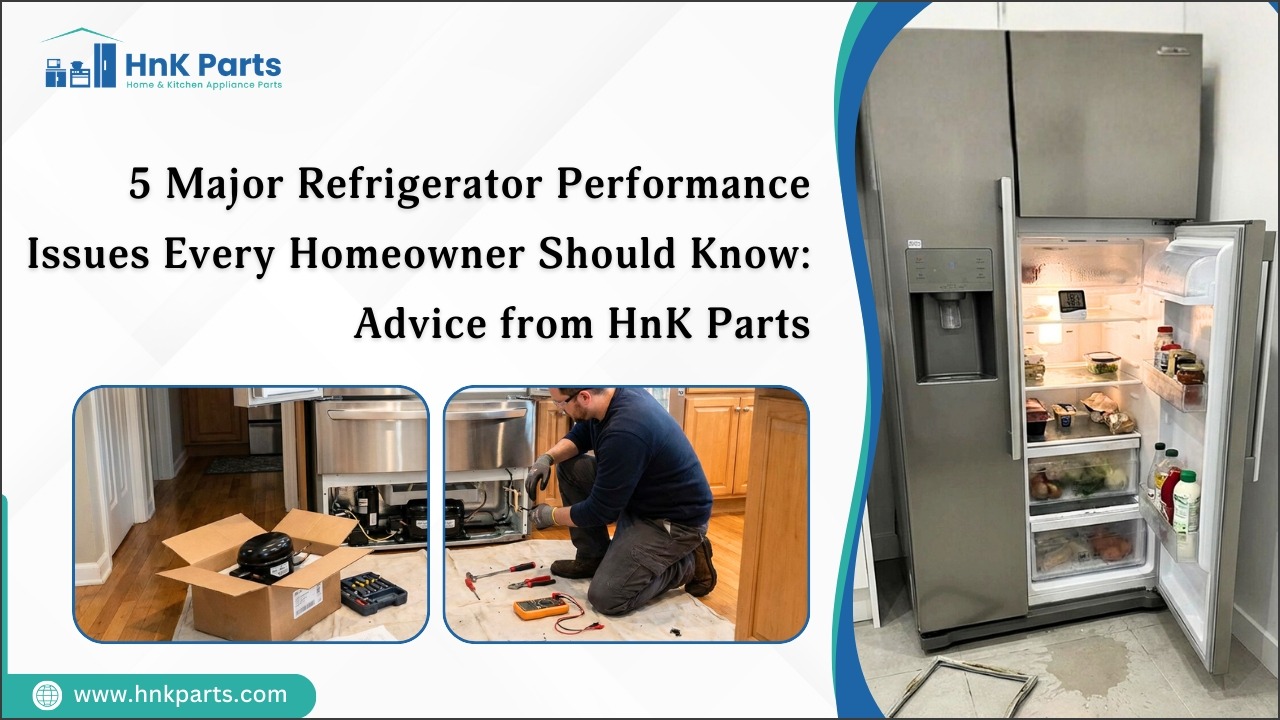
A refrigerator is one of the most essential appliances in any home, working around the clock to keep food fresh and safe. However, like any hardworking appliance, it can develop performance issues over time. Many homeowners notice problems only when food spoils faster, unusual noises appear, or the appliance struggles to maintain the correct temperature.
Understanding common refrigerator performance issues can help you identify problems early, prevent costly breakdowns, and extend the life of your appliance. While some minor concerns can be addressed with basic maintenance, others may require professional assistance or replacement components.
In this guide, the experts at HnK Parts highlight five major refrigerator performance issues every homeowner should be aware of and provide practical advice to keep your appliance running efficiently.
One of the most common and frustrating refrigerator problems is inadequate cooling. If your refrigerator is running but food is not staying cold enough, several underlying factors could be responsible.
Dirty condenser coils are often the main culprit. These coils release heat from the refrigerator, but when they accumulate dust and debris, they cannot dissipate heat efficiently. As a result, the appliance struggles to maintain the proper internal temperature.
Another possible issue is a faulty thermostat or temperature control board that prevents the compressor from cycling correctly. A worn-out door gasket may also allow warm air to enter the refrigerator, making it difficult to keep food properly chilled.
Regularly cleaning refrigerator parts like condenser coils and ensuring the door seals tightly can help maintain consistent cooling performance.
A small amount of frost in the freezer can be normal, but excessive ice buildup often signals a problem within the defrost system. Modern refrigerators use an automatic defrost system designed to prevent frost accumulation on the evaporator coils.
When components such as the defrost heater, defrost timer, or defrost thermostat fail, frost can quickly build up inside the freezer compartment. This layer of ice restricts airflow, forcing the refrigerator to work harder and reducing cooling efficiency.
Homeowners may notice reduced freezer space, uneven cooling, or a thick layer of ice forming on the walls of the freezer. In some cases, manually defrosting the appliance can provide temporary relief, but replacing faulty components may be necessary to restore proper operation.
Refrigerators typically produce a low humming sound during normal operation. However, loud buzzing, rattling, clicking, or knocking noises can indicate a mechanical issue.
One possible cause is a failing evaporator fan motor, which circulates cold air throughout the refrigerator and freezer compartments. When the fan becomes worn or obstructed, it may produce grinding or squealing noises.
Another source of noise could be the condenser fan, which helps cool the compressor and condenser coils. If debris blocks the fan blades or the motor begins to fail, the appliance may generate loud or irregular sounds.
Loose refrigerator parts, compressor problems, or uneven flooring can also contribute to unusual noises. Identifying the source early can help prevent more serious mechanical failures.
Finding water pooling around your refrigerator can be alarming for homeowners. This issue often results from a clogged or frozen defrost drain that prevents melted ice from flowing into the drain pan.
When the drain becomes blocked with debris or ice, water can accumulate inside the refrigerator and eventually leak onto the floor. Another potential cause is a damaged or misaligned water supply line connected to refrigerators with ice makers or water dispensers.
Leaking water may also originate from a cracked drain pan or improper leveling of the refrigerator, which can disrupt normal drainage.
Regularly inspecting the drain system and water connections can help homeowners prevent water damage and ensure proper refrigerator operation.
A refrigerator should cycle on and off throughout the day to maintain the correct temperature. If the appliance runs continuously or turns on too frequently, it may be struggling to maintain cooling efficiency.
Several factors can contribute to this issue. Dirty condenser coils can force the compressor to work harder than necessary. Poor door sealing may allow warm air to enter, increasing the workload on the cooling system.
Incorrect temperature settings can also cause excessive cycling, especially if the refrigerator is set colder than required. Additionally, a malfunctioning temperature sensor or control board may disrupt normal cycling patterns.
When a refrigerator runs continuously, it not only increases energy consumption but can also shorten the lifespan of critical components.
Refrigerators play a crucial role in maintaining food freshness and household convenience. Being aware of common performance issues can help homeowners detect early warning signs and take action before small problems turn into expensive repairs.
Regular maintenance of refrigerator parts, such as cleaning condenser coils, checking door seals, and monitoring unusual noises, can significantly improve refrigerator performance and efficiency. When home appliance replacement parts are needed, choosing reliable components from trusted suppliers is essential to restoring proper operation.
By staying proactive and addressing problems early, homeowners can ensure their refrigerator continues to operate efficiently for years to come.