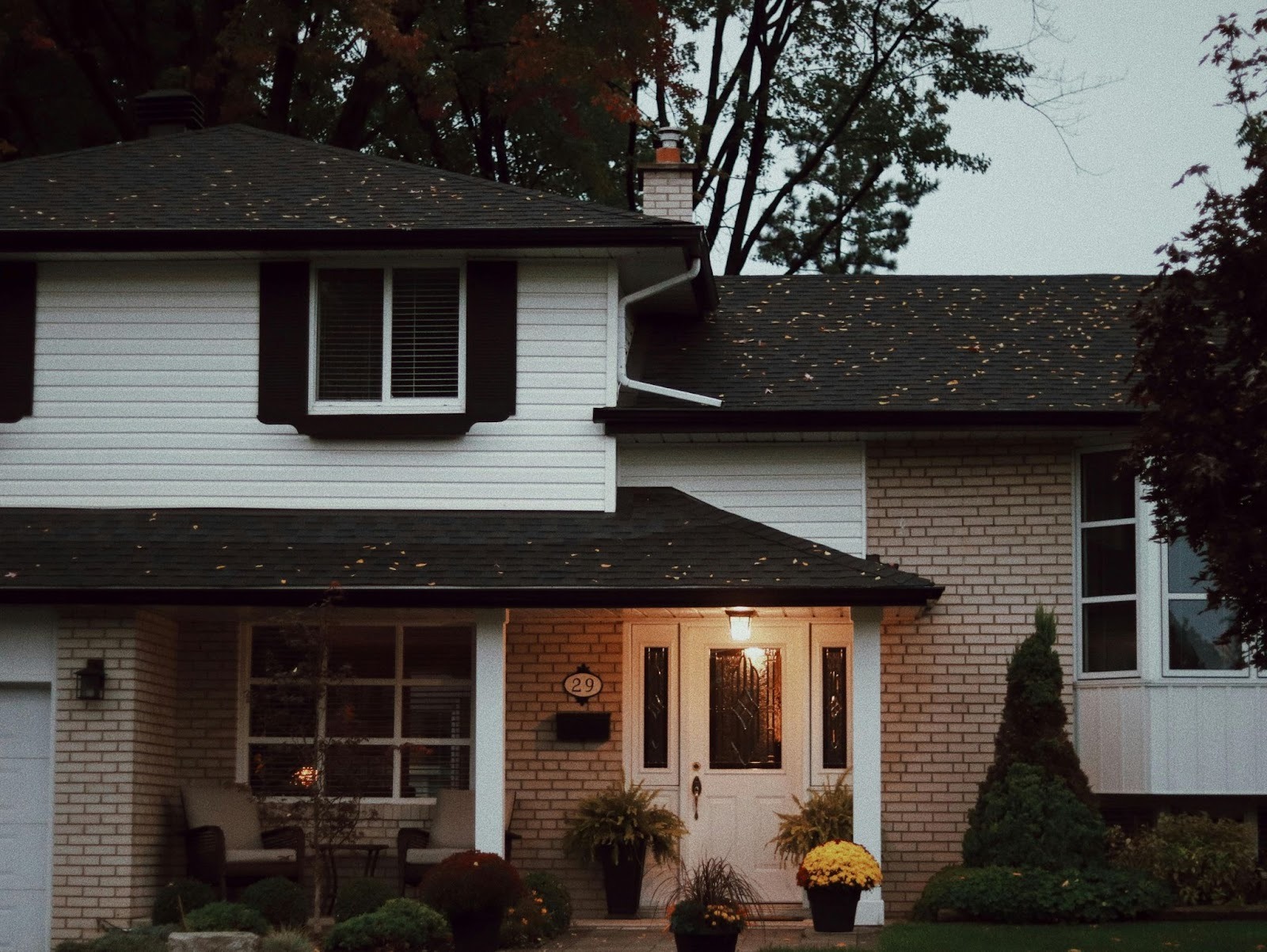
Choosing the best roofing shingles isn’t about picking a color or matching your neighbor’s roof. It’s about long-term performance, climate fit, and understanding how each material behaves once it’s exposed to heat, snow, wind, and time.
Photo by Dalia Al-Refai
Homeowners waste money when they buy based on looks alone, so the smartest move is to understand the actual differences between materials. Durability, impact resistance, cost, and maintenance demands vary wildly, and knowing what matters most to your home prevents expensive surprises later.
Asphalt shingles remain the go-to option for the majority of homeowners. They strike the strongest balance between cost, performance, and design flexibility. Three-tab shingles, architectural shingles, and premium designer shingles each serve a different purpose, and the right choice depends heavily on how long you plan to stay in the home and what weather conditions you deal with.
Three-tab shingles are still widely used for budget-conscious projects, rental properties, and homes in mild climates. They’re lightweight, straightforward to install, and cost-effective. But they’re also the least durable, offering lower wind protection and a noticeably shorter lifespan. Architectural shingles have become the modern default because they last longer, provide better structural strength, and offer more visual depth on the roof. They hold up better against storms, and they simply look more refined. Premium shingles push the look even further by mimicking slate or cedar shake, making them the go-to choice for homeowners who want a more upscale finish without jumping to natural materials.
Metal roofing shingles have gained popularity among homeowners who want a long-lasting roof that performs under pressure. They stand up exceptionally well to intense sunlight, hail, heavy snow, and wind-driven rain. Their reflectivity helps keep attics cooler in hot climates, and their lightweight structure is ideal for homes that can’t support heavier roofing materials.
For long-term value, metal is strong. The upfront cost is higher, but the lifespan often reaches 40 to 70 years with minimal maintenance. Noise can be an issue on older installations, but modern insulation and underlayments have solved that for most homes. When homeowners schedule Roof Replacement Services, metal roofing is often suggested as the “install it once and forget it for decades” option.
Wood shingles and wood shakes deliver an aesthetic that synthetic materials can’t fully replicate. Cedar is the most common choice because it naturally resists insects and decay, making it stronger than most other woods for roofing. Shingles are machine-cut and more uniform, while shakes are thicker and split by hand, giving them a rugged, textured look.
The appeal is undeniable. Wood provides a warm, organic feel that boosts curb appeal instantly. But homeowners must be realistic about the maintenance requirements. Wood requires periodic treatment to prevent mold, rot, and moisture damage. It’s also restricted in some regions with high wildfire risk. If you love the look and don’t mind the upkeep, wood can create a standout roof — but it’s not the easiest option for busy homeowners.
Slate is the highest tier of roofing material. The moment you install it, you’re adding long-term value to your property. Real slate is extremely durable, fully fireproof, and capable of lasting over a century when installed correctly. It’s the material historic buildings use for a reason: it simply doesn’t age the way most shingles do.
The tradeoff is weight. Slate is heavy so heavy that many homes need structural reinforcement before installation. It’s also costly, both in materials and labor, because only trained specialists can install it. Slate is not a casual project, but for homeowners committed to luxury and longevity, nothing else compares.
Synthetic roofing shingles were created to solve a problem: homeowners wanted the beauty of slate or wood without the enormous maintenance or cost. Made from polymer, rubber, or composite blends, these shingles are engineered to replicate the textures and colors of premium materials while remaining lightweight and impact-resistant.
Their big advantage is versatility. They perform well in various climates, resist mold growth, and rarely crack under temperature swings. Synthetic products also vary widely in appearance, so homeowners can choose anything from smooth modern finishes to realistic multi-layered textures. For homeowners planning Roof Replacement Services but not ready for the cost of slate or the upkeep of wood, synthetics often sit in the perfect middle zone.
Climate should guide your decision more than anything. Hot climates demand shingles with strong UV protection and reflective granules. Architectural asphalt and metal perform best here because they resist curling and cracking under intense heat. Cold climates benefit from materials with strong impact ratings to handle hail and heavy snow. Architectural asphalt, metal, and high-quality synthetics excel under freezing conditions.
Coastal homeowners face wind, salt, and moisture. This requires shingles with high wind-uplift ratings and corrosion resistance. Humid regions need shingles that resist mold and algae buildup. Many companies now offer algae-resistant granules and coatings that dramatically extend roof life in hot, damp environments. The more accurately you match the material to your region, the fewer problems you’ll face over the next decade.
Roofers see patterns every day. They know why certain roofs fail early and why others stay solid for decades. The biggest mistake homeowners make is assuming installation matters less than material but the opposite is true. A mid-tier shingle installed properly will outperform a high-end shingle installed poorly. Proper ventilation is another point homeowners underestimate. Without it, heat and moisture get trapped, weakening shingles and shortening their lifespan no matter the material.
Roof warranties also require careful reading. Many look generous at first glance, but improper installation or poor attic ventilation can void them immediately. Thickness, weight, and building structure all matter more than most homeowners expect. A smart choice is never based on appearance alone.
Some roofs can be saved with targeted repairs. If you’re dealing with a few missing shingles, a small leak, or localized damage, repair may be enough. But widespread curling, granule loss, sagging, or repeated leaks signal that the roof is past its useful life. If the roof is nearing the end of its expected lifespan or repairs keep piling up, full replacement becomes the financially smarter path.