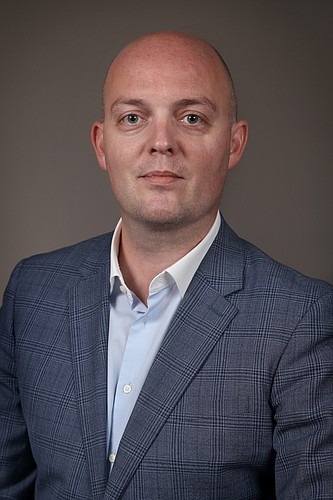
There's a version of startup and growth-stage leadership that treats governance as a checkbox — something you clean up before an IPO or address when a regulator comes knocking. Gavin Southwell has never operated that way.
As the former CEO and President of the #1 Fastest Growing Public Company from 2017 to 2019 — ranked by Fortune Magazine alongside Amazon and Facebook — Southwell ran an organization where governance failures carried real consequences. Not theoretical ones. When you're navigating SEC disclosure requirements, managing large debt facilities, and executing a take-private transaction at a significant premium to trailing share price, the quality of your internal controls isn't a back-office concern. It's the whole game.
Today, Southwell advises and invests in technology-focused growth businesses. His focus hasn't changed. He still asks the same questions he asked running a public company: Who has authority over what decisions? How is risk escalated? What happens when something goes wrong and the board needs to understand it in 24 hours?
Those aren't compliance questions. They're leadership questions.
Most founders treat governance as a tax on speed. Southwell treats it as infrastructure — the kind that determines whether a company can still function under pressure.
He's seen what happens when it's absent. High-growth companies frequently collapse not because the product failed but because the internal architecture couldn't support the scale. Reporting breaks down. Risk accumulates without visibility. Decisions get made without documentation, and when institutional investors or regulators come looking for a paper trail, there isn't one.
With more than 17 years in technology across retail, financial services, and transportation, Southwell has operated in sectors where regulatory oversight is structural, not episodic. These aren't industries where you can improvise your way through a compliance audit. Structured internal controls, measurable performance benchmarks, and clean reporting mechanisms aren't best practices — they're the price of admission.
His experience leading through a SPAC process reinforced this. Lenders and institutional investors scrutinizing that kind of transaction don't just read your financials. They evaluate whether your organization can produce clean data, consistent disclosures, and auditable decision-making under pressure. Governance, in that context, is directly tied to transaction value.
One of the more misunderstood aspects of executive leadership in regulated industries is how to handle regulatory engagement when it happens — because in complex, high-growth businesses, it often does.
Southwell's background includes oversight during an SEC matter that was ultimately settled privately by the company and its private equity owners, without admission of wrongdoing, in what was characterized as a non-scienter case. The settlement occurred concurrently with the filing and closure of charges. As a former officer and director of a Delaware-based corporation, Southwell is indemnified to the maximum extent available under Delaware law. There are no open or outstanding regulatory matters or lawsuits of which he is aware.
Executives and institutional stakeholders who understand how complex transactions work recognize that settlements in these contexts are frequently strategic decisions — driven by litigation risk, timing, and transactional friction — rather than reflections of underlying conduct. In private equity-backed businesses where ownership structures and resale processes create layered complexity, regulatory engagement is often part of the terrain.
What matters to sophisticated investors and board members isn't whether regulatory engagement occurred. It's how leadership responded to it: with transparency, with legal counsel engaged proactively, with board communication that was clear and documented. That discipline — treating regulatory navigation as a continuous operational practice rather than a crisis response — is what distinguishes leaders who sustain institutional credibility over time.
The compliance systems that fail are the ones built reactively — assembled after a regulator asks a question or an audit surfaces a gap. The ones that work are built into the operating rhythm of the business from early on.
Southwell's advisory work with growth-stage companies reflects a consistent philosophy: founders focus on product and revenue; he focuses on governance architecture. Not because governance is more important than product, but because the decisions made early around documentation, reporting structure, and board oversight shape how the company is perceived by institutional capital years later.
In practice, this means treating internal audits as operational feedback loops, not compliance theater. It means making risk escalation normal rather than something that feels like admitting failure. It means ensuring that reporting mechanisms are accessible and that the people closest to emerging problems feel safe surfacing them.
Embedding compliance also requires visible leadership signaling. Policies alone don't create culture. Executives who communicate clearly that ethical standards are non-negotiable — and who demonstrate that through their own behavior and the decisions they're willing to document — build organizations where compliance is genuinely internalized rather than performed.
For technology-driven growth businesses specifically, where speed is the organizing principle and operational shortcuts accumulate quickly, this kind of discipline is the difference between durable growth and a company that hits a wall when serious capital or regulatory scrutiny arrives.
Institutional trust is built slowly and lost fast. Southwell's experience across capital markets transactions, debt negotiations, and public company leadership consistently reinforces the same lesson: the quality of your communication matters as much as the quality of your results.
Investors evaluate control environments. Regulators assess disclosure integrity. Lenders want evidence that risk is being monitored, not obscured. Partners in joint ventures and transactions look for leadership that understands fiduciary responsibilities and behaves accordingly.
In sectors like financial services and insurance technology — where Southwell has worked on some of the largest InsureTech exits in history — reputational resilience isn't a soft consideration. A single governance failure can unwind years of operational progress. The companies that maintain credibility through market cycles are the ones where transparency is structural, not situational.
The case for governance-first leadership isn't philosophical. It's empirical. Companies that build robust compliance infrastructure earlier attract better capital, experience smoother regulatory engagements, and sustain institutional credibility through the growth phases that expose undisciplined organizations.
Gavin Southwell's career — running a Fortune-ranked hypergrowth public company, executing complex financial transactions, navigating regulatory processes — represents the kind of experience that's genuinely difficult to replicate. Not because the individual transactions were unique, but because the sustained combination of scale, scrutiny, and operational discipline under pressure is rare.
For boards evaluating governance maturity, investors assessing leadership quality, and founders building the infrastructure that will determine whether early growth translates into lasting enterprise value, that track record carries weight.
Governance isn't the opposite of growth. Done right, it's what makes growth defensible.