
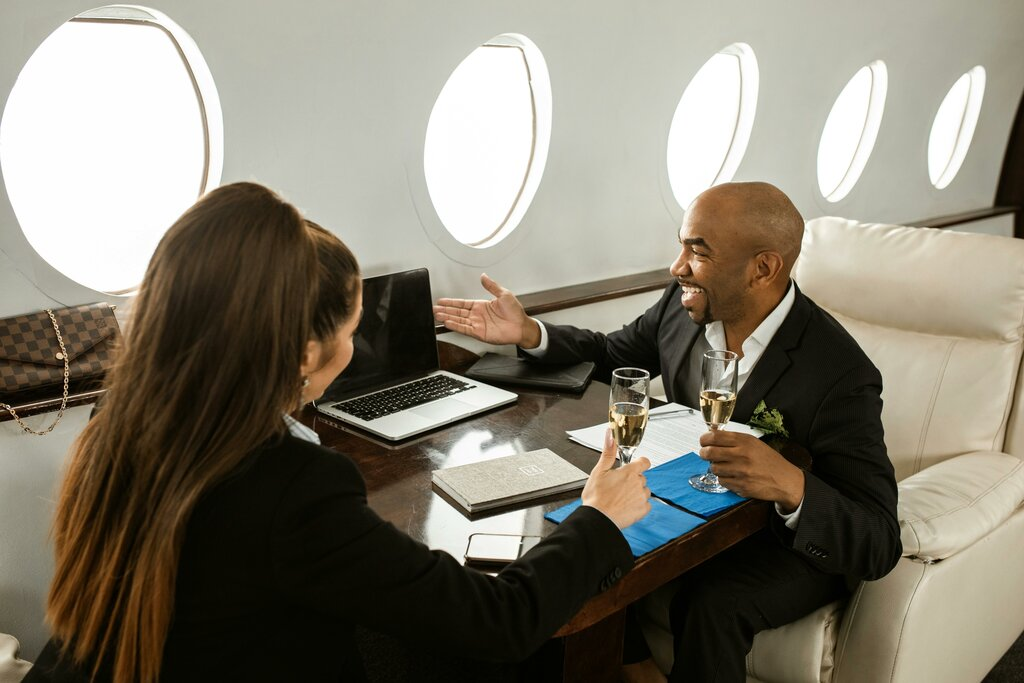
A well known fact is that not long ago, business class was reserved almost entirely for corporate executives and government travelers. Leisure passengers rarely considered it an option because prices were simply too high. A round-trip ticket in a premium cabin often cost several times more than economy, with little flexibility for budget-conscious travelers. Today, that picture has changed. Business class is still a premium product, but it is no longer unreachable for many travelers who know how the system works. This change did not happen by accident. It is the result of how airline economics, technology, and competition have reshaped the way premium seats are sold.
Airlines make most of their long-haul profit from business class, but those seats are also the hardest to fill. Unlike economy seats, where demand is constant, premium demand fluctuates sharply by season, day of week, and route.
A half-empty business class cabin represents lost revenue. Once a flight departs, any unsold seat is worthless.
To solve this, airlines began using more advanced pricing systems. Instead of offering one fixed fare, they now release multiple layers of pricing for the same seat:
This system allows airlines to protect high prices for business travelers while quietly selling extra seats at lower rates through specialized channels.
Competition also plays a major role. On routes like New York-London or Los Angeles-Paris, several airlines fight for the same passengers. When one carrier lowers pricing, others often follow. This creates windows where business class becomes much more affordable than most travelers expect.
The result is a market where price differences of 30-50% for the same seat on the same flight are now common.
One common misunderstanding is that a cheaper business class ticket means a lower-quality product. In reality, price and quality are often completely separate.
When you buy a discounted business class ticket, you still receive:
The difference is not the seat , it is the distribution channel.
For example, a traveler might pay $4,000 for a business class seat on an airline website, while another traveler pays $2,200 for the exact same seat through a specialized channel. Both sit in the same cabin and receive the same service.
This is where platforms like Business SKies that specialize in cheap flights on business class become important. They access negotiated and consolidator fares that airlines do not publish openly, while still offering full-service premium cabins.
Modern aircraft have also improved the value of business class. Many airlines now operate:
This means today’s discounted business class is often better than full-fare business class from ten years ago.
For modern travelers, the idea of business class as an unreachable luxury is outdated.
With flexible dates and the right booking strategy, many travelers now find business class priced only 1.5 to 2 times the cost of economy on long-haul routes, sometimes even less during sales and shoulder seasons.
This has practical benefits:
It also changes how people plan trips. Travelers who once avoided long-haul travel due to discomfort now consider premium cabins as part of the overall travel budget, not a luxury add-on.
Another important shift is awareness. More travelers now understand that airline websites do not show all available pricing. They compare multiple channels, monitor fares, and wait for favorable windows rather than booking at the first price they see.
The new reality is simple: business class is still premium, but it is no longer exclusive.
Airline economics, competition, and modern distribution have opened access to high-end travel in ways that did not exist before. For travelers who understand how pricing works, comfort and value are no longer opposites.
Today, flying business class smart is less about wealth and more about timing, flexibility, and knowing where to look.







