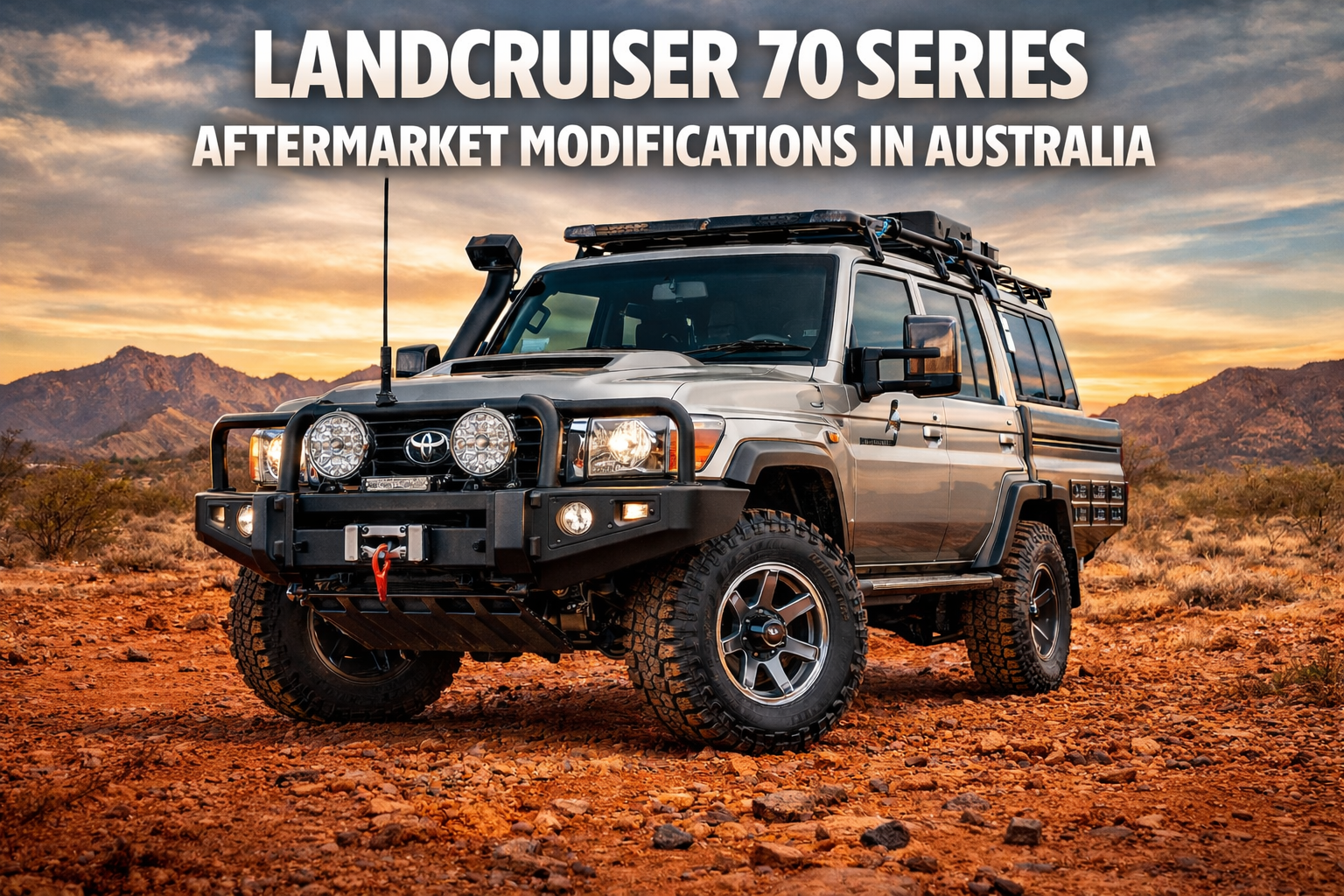
Most modification guides for the 70 Series cover the same topics. Fit a bull bar. Upgrade the suspension. Add a winch. Install some bulky fog lights. It is not wrong advice but it is not very useful either because it does not tell you why things go wrong, what order to do things in or what the factory actually got wrong that you need to fix first.
We will cover the modifications that genuinely improve the 70 Series, the factory problems those modifications actually solve and the mistakes that cost owners real time and money. If you are building a 70 Series or thinking about starting, this is the guide that will save you from decisions that experienced owners wish someone had told them about earlier.
Before spending a dollar on aftermarket modifications of the Land Cruiser, you need to understand the 70 Series from Toyota's perspective. It was built as a working vehicle, not a touring rig. Certain compromises were baked in from the factory that no amount of accessories will fix if you do not address them first.
The rear wheel track of the 70 Series is 95 to 100mm narrower than the front. On a dune, it pushes the rear out under power. On heavily rutted tracks the rear wheels are not following the same line as the fronts which creates unpredictable handling that catches owners off guard.
The fix most owners settle on is running different offset wheels front and rear. Zero offset on the front with a minus 55 offset on the rear brings the actual track much closer together. Wheel spacers are the cheaper alternative but they move the tyre outward from the hub putting greater load on the wheel bearings. In Australia there are legal limits on how much track width can be changed before it becomes a compliance issue. Sort this before you buy tyres because it directly affects what wheel and offset combination you need.
Many owners experience front end sag, harsh ride quality and uneven tyre wear after fitting a bull bar, winch, canopy or towing setup. On older 75 Series models the factory leaf springs flatten over time causing the rear to sit low under load. On 79 Series dual cabs premature shock absorber wear shows up quickly when the vehicle is regularly towing or carrying a loaded tool tray.
This is not a fault with the factory suspension. It is the result of adding significant weight to a vehicle whose suspension was calibrated for stock kerb weight. The moment you start a build you change that calculation and the factory components can no longer do their job properly.
The 70 Series alternator is prone to mud intake and can stop working. It is a known issue that rarely gets mentioned in modification guides but causes real problems for owners who cross creeks, drive through mud or travel in wet conditions regularly. Fitting an alternator protection cover or a raised alternator kit should be on your list before your first serious trip, not after your first breakdown.
Suspension is where most builds start and where most build mistakes are made. The common error is buying a kit based on lift height rather than load rating and intended use.
A suspension kit for a lightly equipped weekender is a completely different product from one carrying a dual cab tray, canopy, drawers, two spare tyres, water tanks and a full touring setup. Options range from entry level Nitrocharger setups through to premium remote reservoir shocks with significant performance differences between them.
The mistake owners make is buying entry level suspension for what will eventually become a heavily loaded touring rig. Two years later they are replacing it because it cannot handle the weight. Buy for where your build is going, not where it starts.
Most first time builders treat this as an afterthought. It should be the first conversation you have. Your Gross Vehicle Mass limit is the maximum legal weight your vehicle can carry when fully loaded. A standard 79 Series dual cab with a steel tray, canopy, drawers, water, fuel and camping gear can comfortably exceed its factory GVM before you have loaded a single bag.
If your insurance company looks at your build after an accident and finds you were over GVM, the claim is void. A proper GVM upgrade done through a certified engineer brings your vehicle into compliance and ensures your brakes, suspension and steering are rated for what you are actually carrying. Do this first and plan everything else around it.
This is the category that experienced 70 Series owners take seriously and that new builders consistently underestimate. The body on a working 70 Series takes real punishment. Rust is one of the few genuine enemies of this vehicle. Coastal owners find that salt air, humidity and constant exposure to wet roads eat away at steel faster than expected. Older 75 Series tubs are prone to corrosion around the seams, floor pans and wheel arches. The 79 Series can suffer rust under the bonnet, door sills and chassis rails.
Replacing worn or damaged body panels is not just about appearance. A split door seal lets dust and water into the cabin on every trip. A cracked bonnet lets heat and debris into the engine bay. A rusted tub affects the structural integrity of the rear of the vehicle. These are functional problems that affect how the vehicle performs and how long it lasts. Many restorers make the mistake of fitting new panels without treating the underlying surfaces meaning rust starts all over again within a few years.
For quality aftermarket body parts built specifically for the 70 Series range including doors, bonnets, guards, grilles, tubs, headlights, mirrors and cabin accessories for the 40 through to 79 Series, I Love Cruiser carries a range of parts matched to your specific series. The team can confirm fitment before you order so you are not guessing.
The factory tune on the 70 Series engine is deliberately conservative. Toyota builds in significant headroom for reliability and for operation in markets with variable fuel quality. A proper ECU remap unlocks that headroom and delivers real gains in power, torque and throttle response, particularly when paired with other modifications.
A dyno tune done by someone who knows the 70 Series vehicles is a completely different product from a generic tune or a plug-in module. A quality remap improves towing performance and fuel efficiency under load. A bad one can damage the engine over time. Use a tuner who works on these vehicles regularly and get it done on a dyno with live data. If you are adding power, also assess your clutch. Factory clutches on the 70 are often overwhelmed once you add load or performance modifications.
The factory top mount intercooler struggles with heat soak particularly in slow off-road driving or in high ambient temperatures. When the intercooler heat soaks, intake air temperature rises and the engine management pulls back power as a protection measure. You lose the performance you paid for with the rest of your build.
An aftermarket front mount intercooler eliminates heat soak and keeps intake temperatures consistent regardless of conditions. For anyone running a tune or doing serious work in the heat this is not optional.
Differential Breathers
This costs very little and takes a couple of hours to fit but it protects some of the most expensive components on the vehicle. Standard differential breathers sit low on the axles where they can be submerged during creek crossings. Water ingress leads to milky differential oil which compromises lubrication and causes damage. Extended breathers relocate them to a high point where water cannot enter. Every 70 Series that crosses water should have these fitted before the first serious trip.
Door Seals
Factory door seals on the Land Cruiser 70 Series deteriorate over time and dust ingress becomes a persistent problem on long outback tracks. Upgrading door seals makes an immediate difference to cabin comfort and to the life of every electronic component inside the vehicle. Dust is abrasive and when it gets into switches, screens and sensors it shortens their life. New door seals are inexpensive and the difference on a dusty track is noticeable almost immediately.
Lift kits beyond what your build actually needs create more problems than they solve. A vehicle lifted beyond what its suspension and tyre combination was designed for develops handling issues, puts extra stress on CV joints and driveshafts and can create compliance problems. Lift for ground clearance and tyre fitment, not for height as an end goal.
Cheap lighting looks identical to quality gear in a product photo. On a dark outback road at 100km/h or after 50,000 kilometres of corrugations the difference is obvious. Rattles develop, fasteners loosen and the housing fails. Buy once from a reputable brand.
Wheel spacers fitted without proper assessment present real risks. If studs and wheel nuts are not correctly matched there may not be enough thread engagement which can lead to failure. Get the right offset wheels instead of using spacers to compensate.
Start with GVM because it determines everything else. The suspension, it is the foundation every other modification builds on. Then the tyres and wheels, because they work with the suspension as a system. Then protection gear, including bull bars and skid plates. Then recovery gear, including winches and differential breathers. Then, performance, including tune and intercooler upgrades. Then electrical, including dual battery and lighting. Then comfort and storage last.
Doing things out of this order means going backwards. Fitting a full touring setup before sorting your GVM means potentially pulling it apart when you discover you are over weight. Buying tyres before finalising your wheel offset means potentially buying the wrong combination. The sequence exists for a reason and experienced builders follow it.
The difference between a good 70 Series build and one that holds together ten years later comes down to two things. Choosing parts from suppliers who actually know this vehicle and doing modifications in the right order without cutting corners on compliance.
A 70 Series built properly is one of the most capable vehicles you can take anywhere in Australia. Built poorly or in the wrong sequence, it becomes a vehicle that constantly needs attention and that cannot be trusted when you are far from help.
For quality LandCruiser aftermarket parts including body panels, cabin components and exterior accessories for the 40 through to 79 Series, I Love Cruiser is a specialist supplier with over 20 years of experience, competitive pricing and free expert consultation to help you get the right part for your specific series and build.