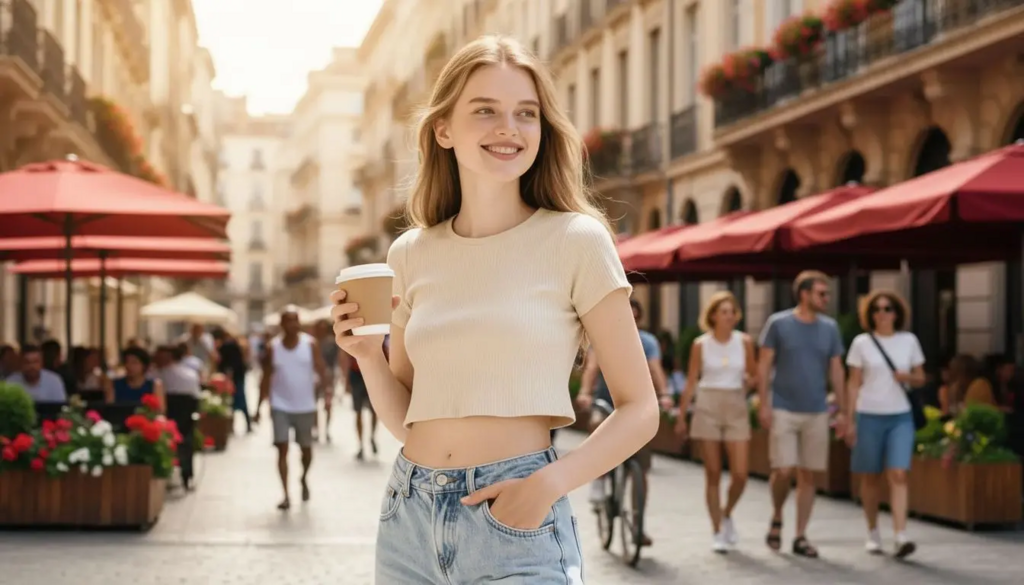
If your online store is getting traffic but struggling to convert visitors into buyers, the problem is almost never your pricing — it's your visuals. Research consistently shows that cart abandonment hovers near 78% in fashion e-commerce, and the root cause is painfully simple: shoppers cannot see themselves in the product. They're asked to mentally project a garment from a professional model onto their own body, a cognitive leap that creates friction, doubt, and ultimately, an abandoned cart. An AI Photo Editor paired with virtual try-on technology eliminates that friction entirely — replacing imagination with visualization and turning passive browsers into confident buyers.
The True Cost of Low-Quality Product Photography
Bad product photos don't just look unprofessional — they actively destroy revenue. When shoppers see pixelated images, flat lighting, inconsistent backgrounds, or single-angle shots with no styling context, they apply a simple mental shortcut: if the seller doesn't invest in presentation, they probably don't invest in quality either. That trust deficit plays out in bounce rates, low session duration, and abandoned carts.
The economic stakes are significant. A Shopify aggregate study found that pages with 3D or interactive content convert at 94% higher rates than equivalent pages without them. Eileen Fisher reported a 272% conversion lift for shoppers who engaged with AI styling tools versus those who browsed static images. The visual quality of your product listings isn't a cosmetic concern — it's your most leveraged conversion variable.
How AI Has Completely Disrupted Product Photography Economics
Traditional e-commerce photography was a bottleneck by design. Each SKU required a scheduled shoot, a live model or mannequin, professional lighting, a photographer, and post-production editing — often at $50–$150 per finished image. For a fashion brand with 200 SKUs across multiple colorways, that's a $30,000–$60,000 photography budget just to launch a single season's catalog.
AI product photography tools have collapsed that cost structure completely. Platforms like Claid, Photoroom, and HeadshotMaster's AI Photo Editor can now generate background-removed cutouts, lifestyle scene placements, AI model shots, and color-corrected hero images from a single raw product photo — in seconds, at a fraction of traditional costs. For small brands and independent sellers, this levels the playing field against enterprise competitors who previously had an insurmountable visual production advantage.
The Specific Visuals That Drive Conversion in Fashion E-Commerce
Not all product images perform equally. Behavioral data from high-converting fashion stores reveals a clear hierarchy of what actually moves buyers from browse to purchase:
AI tools now make all five of these deliverables achievable without a dedicated photo team.
Why Virtual Try-On Is the Highest-ROI Feature in Fashion E-Commerce Right Now
The data on AI virtual try-on is striking enough to warrant its own section. When shoppers see themselves wearing a garment — not a generic model, but a close visual approximation of themselves — they begin to experience psychological ownership before the purchase. The item shifts from "something I might buy" to "something that is already mine." This mechanism drives measurable commercial outcomes:
The technology is no longer experimental — it's a proven conversion lever that small and mid-size brands can now access without enterprise-level budgets.
Building a Full AI Visual Workflow for Your Store
The most effective e-commerce sellers in 2026 aren't using one AI image tool — they're stacking several into a seamless production pipeline that handles every visual need from raw photo to published listing:
This entire workflow, which previously required a photographer, a model, a stylist, and a photo editor, now runs in under two hours per product batch.
What to Look for in an AI Image Editing Tool for E-Commerce
With dozens of tools now competing in this space, the decision criteria matter:
The fashion e-commerce conversion problem has been treated for two decades as a targeting problem, a pricing problem, or a checkout optimization problem. The evidence now points clearly in a different direction: it is a visualization problem, and AI has already solved it. Shoppers who can see how a product looks — on their body, in a real context, from multiple angles — convert at dramatically higher rates, return items less frequently, and spend more per order. The only question is whether your store is giving them that experience or sending them to a competitor who is. Whether you're launching your first Shopify store or scaling a fashion brand to new markets, pairing a smart AI Photo Editor with a powerful AI clothes changer gives you the complete visual stack to compete at the highest level — without the photography budget that used to make that impossible.