
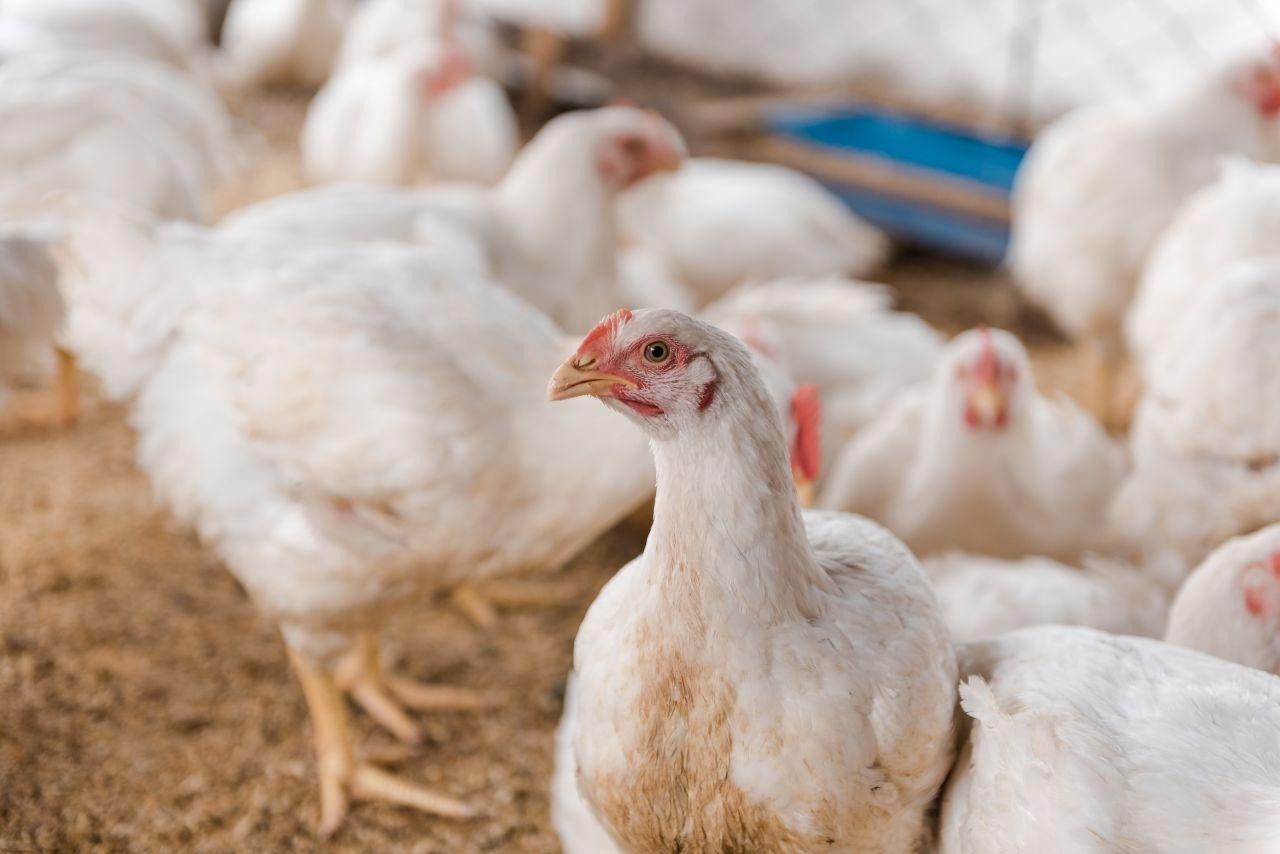
Grab a bird. Put it on the scale. Write down the number. Repeat forty-nine times. Done. Manual weighing looks free. No equipment to buy, no software to set up, no subscription to pay. Just a person, a scale, and half an hour. Most broiler operations have been doing it this way for decades and never questioned the cost — because the cost is not on any invoice.
But it is there. Hidden in the data you did not collect, the stress you did not measure, the decisions you made on incomplete information, and the biosecurity protocol you broke without realizing it. Here are five costs that nobody talks about.
This is the most expensive problem with manual weighing, and the least visible one.
When a worker enters the house and catches birds for weighing, they do not grab a random sample. They catch what they can reach. The birds that are easiest to catch are the slower, less active, often smaller individuals. The fast-growing, healthy birds — the ones closest to target weight — move away.
The result is a sample that systematically underestimates the true flock average. Studies have shown manual samples can read 3–5% lower than the actual mean. On a flock averaging 2.5 kg, that is 75–125 grams of phantom deficit. Enough to make you delay processing by a day or two “just to be safe” — costing you feed and FCR points for weight the flock already had.
Worse, manual sampling tells you almost nothing about the weight distribution. Fifty birds out of 30,000 gives you a rough average at best. It cannot show you the coefficient of variation, the skew, or whether 10% of your flock is falling dangerously behind. You get one number. The flock is a curve.
Birds do not enjoy being picked up. That is not opinion — it is measurable physiology. Handling triggers a corticosterone spike that suppresses feed intake for hours after the event. Multiply that across an entire house section that gets disturbed during a weighing session, and the production impact is real.
In commercial broiler production, every unnecessary human entry into the house creates risk. Leg injuries during catching. Bruising that shows up as condemnation at the plant. Pile-ups in corners when startled birds flee from the catcher. These events are rare individually but add up over a 6-week cycle with weekly weighing sessions.
The irony is hard to miss: you are stressing the flock to collect data about its performance — and the stress itself is reducing that performance.
Every person who enters a poultry house is a potential vector. Boots, clothes, hands, equipment — all carry pathogens in and out. A strong biosecurity protocol minimizes entries to what is strictly necessary. Manual weighing adds one or two extra entries per week that serve no purpose other than data collection.
In a world where avian influenza outbreaks can wipe out an entire operation overnight, the question is not whether manual weighing is a biosecurity risk. It is whether the quality of data you get from it justifies the exposure. When a 50-bird sample gives you a biased average with no distribution data, the answer is increasingly hard to defend.
? Interesting fact: A 2023 survey of European poultry veterinarians found that 68% considered routine manual weighing an unnecessary biosecurity exposure. The most common recommendation was to replace weekly manual sessions with continuous automated weighing, reducing human house entries by 30–40% over a standard grow-out cycle.
Half an hour per house, once or twice a week. It does not sound like much. But scale it up.
Houses - Frequency - Time per Cycle - Annual (6 cycles)
4 houses - 1x per week - 12 hours - 72 hours
8 houses - 2x per week - 48 hours - 288 hours
12 houses - 2x per week - 72 hours - 432 hours
At €15–20 per hour, an operation running 12 houses spends €6,500–€8,600 per year on manual weighing alone. That is not counting the time to transcribe numbers, enter them into a spreadsheet, and try to make sense of data that was biased from the moment it was collected.
In a sector where finding reliable poultry labor is already one of the biggest operational challenges, spending hundreds of hours a year on a task that produces inferior data is a luxury fewer operations can afford.
This is the cost that is hardest to quantify and easiest to ignore.
Manual weighing gives you a snapshot. Once a week. From yesterday. By the time you have the number, it is already old. If the flock slowed down three days ago because of a temperature spike or a drinker malfunction, you will not see it until the next weighing session. By then, you have lost three days of potential intervention.
Precision livestock farming is built on the idea that real-time data enables real-time decisions. A feed conversion ratio that is climbing faster than expected. A coefficient of variation that is widening. A growth curve that is falling behind the breed standard. These are signals that require action within 24 hours, not 7 days.
Automated weighing platforms collect thousands of individual weights every day, passively, without human entry, without bird stress, without sampling bias. The data flows directly into your poultry management software. No transcription. No spreadsheets. No guessing whether last Tuesday’s 50-bird sample actually represented the flock.
Manual weighing is not free. It never was. The costs are just hidden in places that do not appear on any line item: in biased data, stressed birds, broken biosecurity, wasted labor, and decisions made a week too late. The question is not whether you can afford to automate. It is whether you can afford to keep pretending the old way costs nothing.







