Artificial intelligence has evolved at a breakneck pace, moving from clunky text output to painting award-winning digital landscapes. Recently, the focus of generative AI tools has shifted toward something far more personal to us. Instead of asking an artificial intelligence image generator to create a sci-fi cityscape, millions of users now upload selfies to see alternate versions of themselves.
This pivot toward personal rendering isn't just a fleeting trend. It highlights a growing fascination with how algorithms interpret and recreate human features. People want to see what they would look like in different historical eras, styles, or even what their future lineage might resemble. The focus has moved from the abstract to the deeply personal.
How AI Face Generation Works
So, what is happening behind the screen when you upload a photo? Understanding how AI generates human faces requires looking at the architecture of deep neural networks. These are not just advanced photo filters. The underlying machine learningmodels have studied millions of data points across countless images to learn the complex math of human anatomy. They analyze the exact distance between your eyes, your jawline, and unique skin texture.
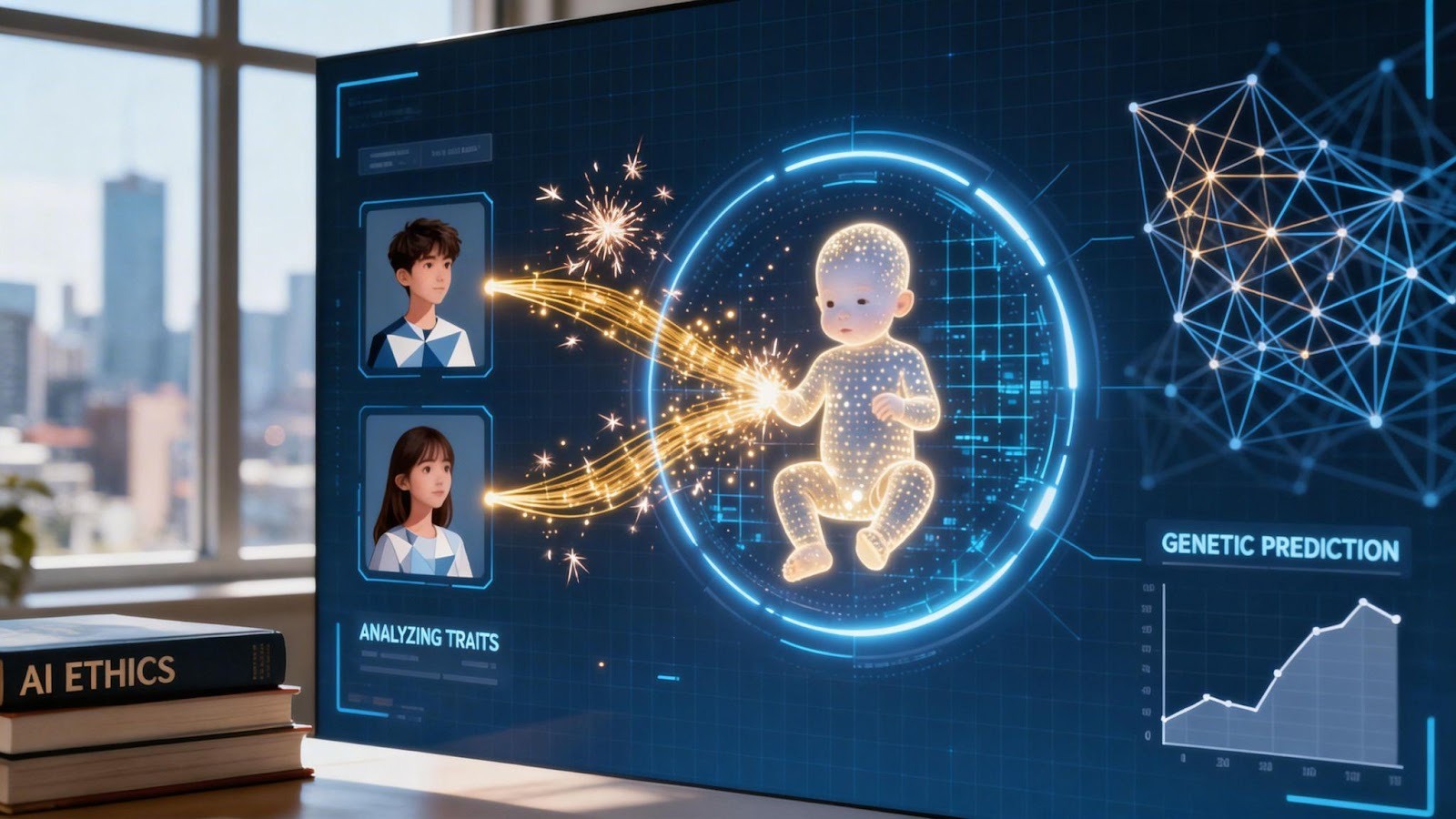
When someone uses a modern face generator to combine features, the system attempts to predict how different genetic traits might actually blend together. It calculates the probable outcomes of a digital face simulation rather than just awkwardly cutting and pasting two photos. It is a sophisticated process of pattern recognition, turning raw pixel data into a hyper-realistic portrait that respects human proportions.
Why Families and Couples Are Exploring AI Baby Images
This leap in visual realism explains the recent explosion of AI family technology across social platforms. If you have scrolled through TikTok lately, you have seen couples participating in the latest viral challenge: visualizing their hypothetical future kids. For the vast majority of users, finding a reliable AI baby image generator online is purely about entertainment. It is the high-tech, modern equivalent of wondering whose nose the baby will eventually get.
Couples upload their photos into an ai baby generator to spark a fun conversation or share a surprising, realistic result with followers. It feeds directly into our curiosity about what lies ahead. Unlike clinical genetic testing, this process is immediate, visual, and designed to be shared. It bridges the gap between computer science and social interaction, turning a futuristic concept into an accessible game.
Privacy and Ethical Considerations
However, viral fun intersects with serious reality checks. The moment you upload your selfie to a server, you are handing over sensitive biometric data. This brings up significant generative AI and privacy issues. Where exactly do those images go once the rendering process is done? Are they deleted immediately, or stored in a database to train even more models?
The ethical concerns of AI face generation are rapidly becoming a primary talking point for experts. We are entering an era where a person's digital identity is as vulnerable as a credit card number. Without strict AI transparency from companies, users risk losing control over their likeness. Using these tools responsibly means taking a minute to read privacy policies and ensuring platforms have a crystal-clear stance on data protection and user consent.
The Growing Role of AI in Everyday Life
It is easy to think of AI generated faces as just a social media phase for couples or bored scrollers, but the reality is that they are quietly flipping global industries upside down. We are in the middle of a massive change in how professional visuals are built. Look at the creative world: studios and marketing agencies are now leaning on synthetic media to fill their scenes with lifelike characters. It is a game-changer because they can populate entire digital worlds without the massive logistical headache of hiring and coordinating hundreds of background actors.
This shift is hitting the boring sectors too, like corporate HR and schools. Instead of dry manuals, we are seeing virtual avatars, built by smart algorithms, stepping in to run training sessions or welcome new hires. The future of AI image tools is clearly moving past simple fun, it is about creating a library of scalable, high-quality visual assets that we will interact with every day. Whether we like it or not, this tech is becoming the new backbone of how digital media is made.
Conclusion
The recent explosion of interest in digital face synthesis shows that people are more than ready to bring high-tech tools into their daily routines, especially when the results look this good. But let’s be real—the gap between a cool experiment and a serious privacy slip-up is incredibly narrow. As developers keep pushing the envelope, we have to find a middle ground where innovation doesn't come at the cost of our safety. It is perfectly fine to play around with these digital projections, but we have to stay sharp about who actually owns our digital reflections at the end of the day.