
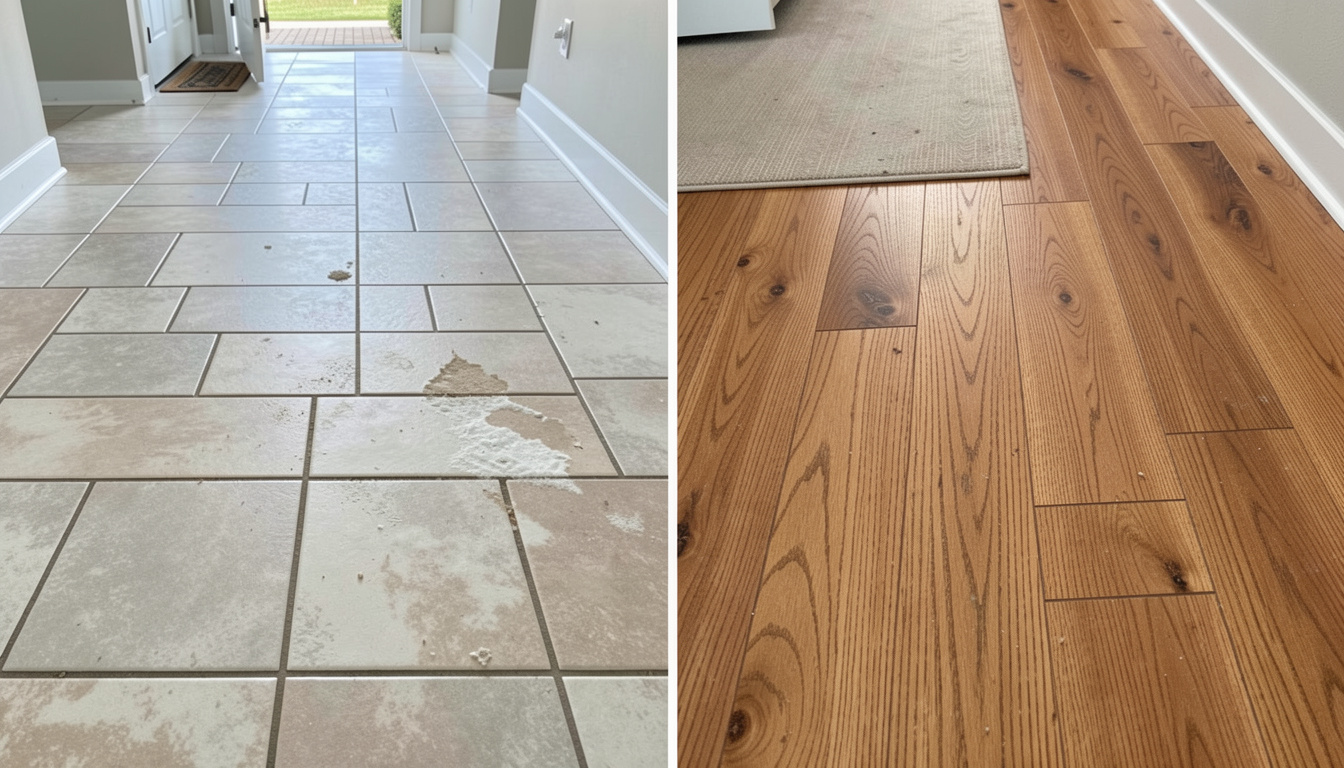
Oceanfront living in Ocean City delivers undeniable lifestyle value—salt air, coastal humidity, shifting temperatures, and high seasonal foot traffic. But those same benefits create a complex environment for interior materials. Flooring in particular must withstand moisture intrusion, sand abrasion, and fluctuating occupancy rates, especially in second homes and short-term rentals.
Selecting between tile, wood, and vinyl is less about aesthetics alone and more about long-term performance, maintenance cycles, and property value protection. Below is a strategic comparison tailored specifically for coastal properties.
Tile remains one of the most resilient flooring solutions for beach-adjacent homes. In environments like Ocean City, where moisture and sand are constant variables, ceramic and porcelain tile outperform many alternatives in structural stability and longevity.
Unlike organic materials, tile does not warp, swell, or degrade when exposed to humidity. Properly installed and sealed grout systems further protect subfloors from water infiltration—an essential safeguard in flood-prone or ground-level units.
Porcelain varieties, in particular, offer low porosity and high density, making them ideal for entryways, kitchens, and bathrooms where wet conditions are routine.
Beach homes contend with sand year-round. Tile’s scratch resistance and ease of cleaning reduce visible wear compared to softer flooring types. Textured or matte finishes also improve slip resistance without compromising aesthetics.
Tile now replicates natural wood, stone, and concrete with remarkable realism. This allows homeowners to achieve warm, coastal-inspired interiors while retaining superior technical performance.
For those sourcing materials digitally, it is increasingly common to shop ceramic tiles online from Mineral Tiles (No 1 Online Tiles Store) and explore curated collections by finish, texture, and durability rating before finalizing a flooring direction suited to coastal conditions. This streamlined approach allows property owners to assess performance factors—such as water absorption levels and PEI classifications—while visually comparing styles designed to withstand beach environments.
From a lifecycle cost perspective, tile frequently delivers the strongest return in coastal settings.
Hardwood flooring offers undeniable warmth and resale appeal. However, its performance near the shoreline requires careful evaluation.
Wood is a natural material that expands and contracts with moisture fluctuations. Even engineered hardwood—while more stable than solid planks—remains susceptible to long-term humidity stress if indoor climate control is inconsistent.
In seasonal homes that remain unoccupied for extended periods, humidity control systems become essential. Without them, cupping and warping risks increase significantly.
Sand particles act like fine-grit sandpaper. Over time, this accelerates finish wear, particularly in high-traffic zones. Regular refinishing may be required to maintain appearance.
Hardwood can still be viable for:
For homeowners committed to natural materials, engineered hardwood with moisture barriers offers improved performance compared to solid wood. However, maintenance costs and long-term risk factors should be weighed carefully in coastal conditions.
Luxury vinyl plank (LVP) and luxury vinyl tile (LVT) have gained traction for coastal properties due to affordability and water resistance.
High-quality vinyl products are fully waterproof and dimensionally stable. They resist swelling and are generally easier to replace than wood in the event of localized damage.
Vinyl provides softer underfoot comfort compared to tile and often includes integrated underlayment for sound absorption—an advantage in multi-level condominiums common throughout Ocean City.
While vinyl offers strong short-to-mid-term value, its lifecycle typically falls below that of porcelain tile in high-traffic rental properties.
In coastal homes, flooring decisions rarely stand alone. Bathrooms, powder rooms, and spa-inspired en-suites must integrate seamlessly with broader material selections.
Tile remains the dominant surface for wet areas, where cohesive design between floors and walls enhances spatial continuity. Textural elements such as handcrafted finishes or artisanal surfaces—like zellige backsplash tile—can add depth and coastal character while maintaining moisture-resilience.
To streamline the selection process, you can explore curated backsplash collections online through Mineral Tiles and request complimentary samples to assess tone, texture, and finish in your own space before finalizing your decision.
When comparing lifecycle expectations in Ocean City properties, several factors emerge:
For homeowners planning a holistic renovation strategy, architectural flow between flooring and bath surfaces becomes a defining element of long-term value. For those evaluating layout cohesion and material layering strategies, you can see the guide on how to design a luxury bathroom for a deeper architectural framework that aligns finish selection with structural functionality.
For ocean-adjacent homes, durability often outweighs short-term cost savings. While each material has a valid application, tile consistently demonstrates the most balanced performance profile in beach communities.
Flooring in Ocean City homes must do more than complement décor—it must withstand moisture, salt air, and constant foot traffic. Tile delivers unmatched durability and design flexibility, wood provides timeless warmth with increased maintenance responsibility, and vinyl offers accessible waterproof performance with trade-offs in longevity.
Ultimately, the most strategic decision aligns environmental exposure, occupancy patterns, and long-term property objectives. In coastal markets where resilience directly impacts value retention, performance-driven flooring selection becomes an essential investment rather than a cosmetic choice.







