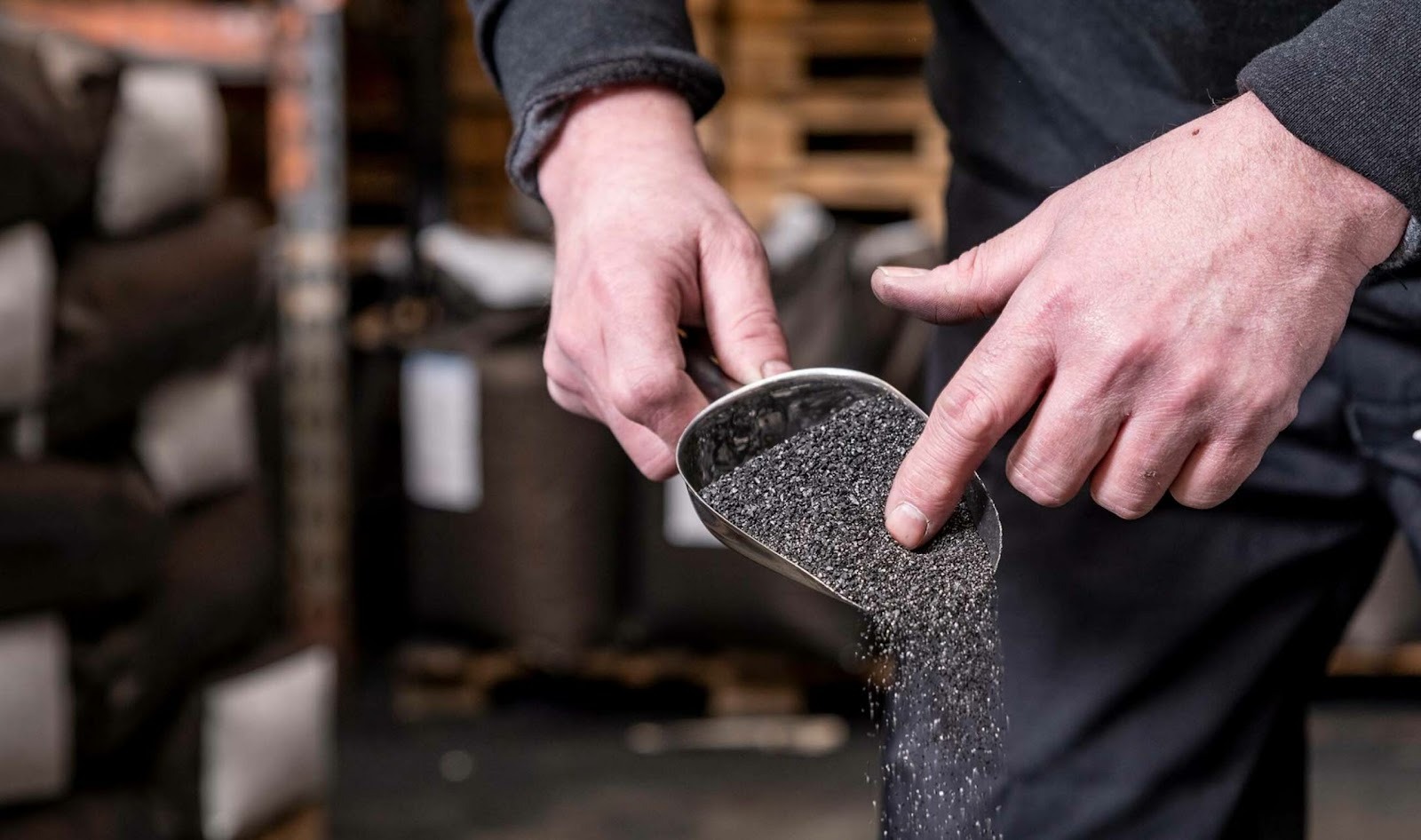
Activated carbon plays a critical role across a wide range of industrial applications, from water purification and air treatment to food processing, pharmaceuticals, and precious metal recovery. In these environments, even minor variations in product quality can lead to performance issues, regulatory non-compliance, or costly downtime. That is why consistency is not just a desirable trait but a fundamental requirement.
For industrial buyers, working with a trusted activated carbon manufacturer means having confidence that every batch will deliver the same adsorption capacity, particle size, hardness, and purity—no matter the application or location. Behind this reliability lies a combination of scientific control, rigorous testing, process standardisation, and continuous improvement. This article explores how manufacturers achieve and maintain consistent quality across demanding industrial uses.
Consistency in activated carbon is essential because industrial systems are often designed around specific performance parameters. Whether it is a fixed-bed filter, a carbon-in-column (CIC) system, or a powdered carbon dosing setup, deviations in carbon properties can affect flow rates, pressure drop, adsorption efficiency, and service life.
Industries such as water treatment, pharmaceuticals, and food processing operate under strict regulatory frameworks. In these sectors, inconsistency can lead not only to operational inefficiencies but also to compliance risks. As a result, manufacturers must deliver carbon products that perform predictably over time, regardless of production scale or raw material sourcing.
Quality consistency starts at the very beginning—with the selection of raw materials. Activated carbon can be produced from various feedstocks, including coconut shell activated carbon, coal, wood, and synthetic precursors. Each raw material has unique properties that influence pore structure, hardness, ash content, and adsorption behaviour.
To ensure uniformity, manufacturers implement strict sourcing criteria. This may include long-term supplier agreements, defined material specifications, and routine inspections of incoming raw materials. By controlling variables such as moisture content, density, and impurity levels, manufacturers reduce fluctuations that could affect the final product.
In many cases, raw materials are pre-processed or blended to achieve a consistent input profile before activation begins. This step is crucial in maintaining repeatable results across production batches.
The activation process is where raw materials are transformed into high-performance adsorbents. Whether using steam activation, chemical activation, or a combination of both, manufacturers rely on carefully standardised procedures to ensure consistency.
Key parameters such as temperature, residence time, steam flow, and activation atmosphere are closely monitored and controlled. Advanced facilities use automated systems and sensors to maintain precise conditions throughout the activation cycle. Even slight deviations can alter pore size distribution or surface area, so process stability is essential.
By refining and standardising these activation protocols, manufacturers ensure that each batch of activated carbon meets the same performance benchmarks, regardless of production volume.
Different industrial applications require different carbon characteristics. Some processes demand high microporosity for gas adsorption, while others require mesoporous structures for liquid-phase purification. Particle size, hardness, and abrasion resistance are equally important, especially in systems with high flow rates or mechanical stress.
Manufacturers maintain consistency by defining strict specifications for each product grade. These specifications typically cover:
By consistently measuring and controlling these properties, manufacturers ensure that activated carbon performs reliably in its intended application.
Comprehensive In-House Testing and Quality Assurance
Robust quality control systems are central to maintaining consistency. Leading activated carbon manufacturers operate in-house laboratories equipped to test both raw materials and finished products. Routine testing is carried out at multiple stages of production, not just at the final output.
Common quality tests include adsorption performance, density, particle size analysis, and mechanical strength assessments. Results are compared against predefined benchmarks to ensure compliance with internal and customer-specific standards.
This layered approach to quality assurance allows manufacturers to identify potential issues early and take corrective action before products reach the customer.
Consistency is not only about production but also about traceability and accountability. Manufacturers implement batch tracking systems that record every stage of the manufacturing process, from raw material intake to final packaging.
Each batch is assigned a unique identifier linked to production conditions, test results, and shipment details. This level of documentation allows manufacturers to trace performance feedback back to specific production runs and continuously refine their processes.
For industrial clients, this traceability provides confidence, transparency, and support for audits or regulatory reviews.
Maintaining consistent quality is an ongoing effort rather than a one-time achievement. Manufacturers invest heavily in process optimization and data-driven decision-making. By analysing historical production and performance data, they can identify trends, anticipate potential variations, and implement improvements proactively.
This culture of continuous improvement ensures that quality standards do not stagnate but evolve alongside industry requirements and technological advancements.
Customisation Without Compromising Consistency
Industrial clients often require customised activated carbon solutions tailored to specific operating conditions. This could involve adjustments in particle size, pore structure, or surface chemistry. The challenge lies in delivering custom solutions without sacrificing consistency.
Manufacturers address this by developing modular production frameworks. Instead of reinventing processes for each custom request, they adapt proven production parameters within controlled limits. This approach allows for flexibility while maintaining reliable quality outcomes.
Adherence to recognised international quality and environmental standards further reinforces consistency. Many manufacturers operate under ISO-certified quality management systems and follow industry-specific guidelines relevant to water treatment, food safety, or environmental protection.
These frameworks require regular audits, documented procedures, and continuous monitoring, all of which contribute to maintaining uniform quality across products and markets.
Finally, consistency is strengthened through close collaboration with customers. Industrial users provide valuable feedback on real-world performance, system behaviour, and operational challenges. Manufacturers use this information to fine-tune product specifications and improve future batches.
Long-term partnerships foster a deeper understanding of application-specific requirements, enabling manufacturers to deliver not just consistent products, but consistently effective solutions.
Ensuring consistent quality across industrial applications is a complex, multi-layered process that extends far beyond basic manufacturing. From raw material selection and controlled activation to rigorous testing, traceability, and continuous improvement, activated carbon manufacturers rely on precision, discipline, and expertise at every stage.
In industries where performance, safety, and compliance are non-negotiable, this commitment to consistency makes all the difference. By combining technical excellence with robust quality systems and customer collaboration, manufacturers can deliver activated carbon products that perform reliably—batch after batch, application after application.