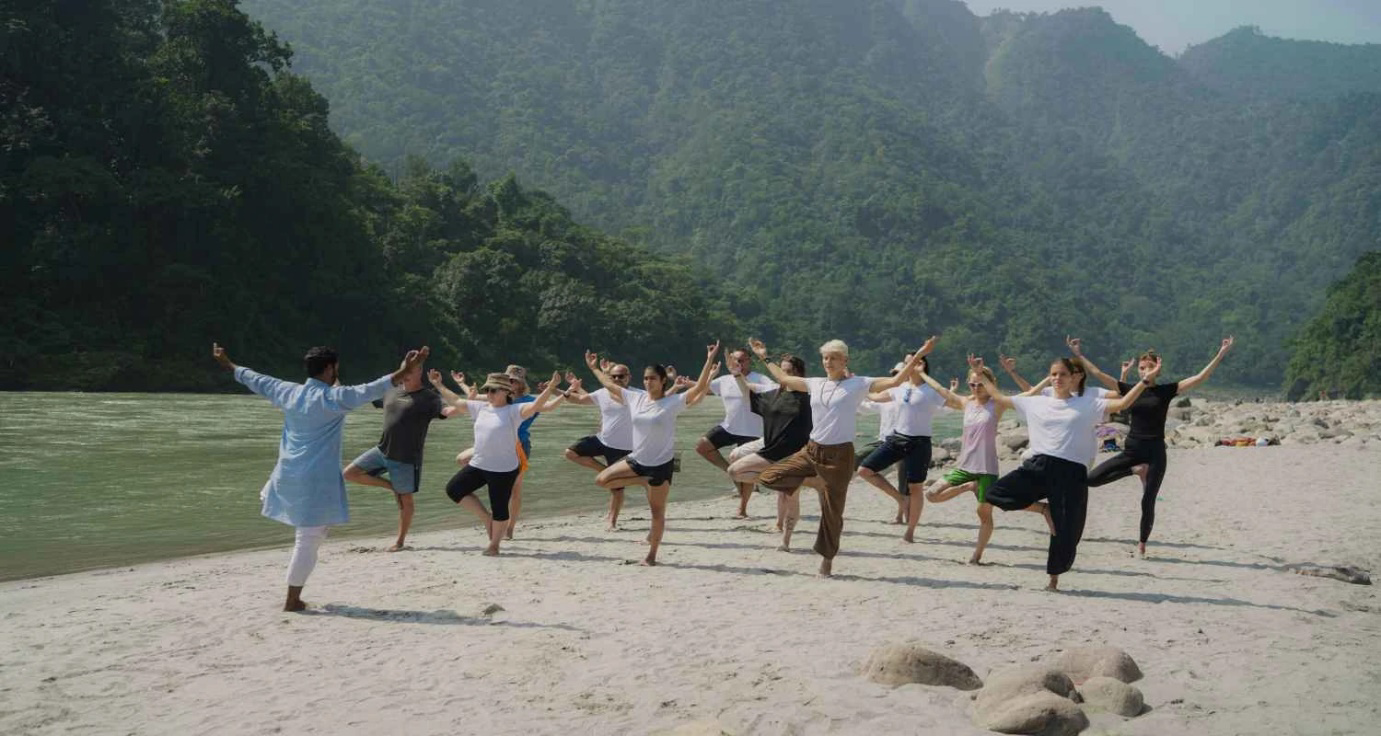
If you have ever rolled out your mat and have felt a definite change in energy inside you, then you will know how yoga is more than mere stretching. It is a discipline that helps to change the mind, the body and the spirit. For those interested in taking their practice deeper or bringing this ancient wisdom to others, selecting the proper setting for study is the first big step. While you can find certification courses in almost every city in the world, nothing comes close to getting back to the source.
Embarking on a journey to where yoga was born brings with an experience that any local yoga studio simply cannot replicate. It is a dip into a lifestyle, a philosophy and a culture which fanned into being this discipline for thousands of years.
Yoga started in India more than 5000 years ago. So when you decide to study here you are not learning language or poses; you are connecting to a lineage. The atmosphere in places such as Rishikesh, Mysore or Goa has a spiritual tradition.
In India, yoga is not a fitness trend, it is a lifestyle. Temple bells and the fragrance of incense greet you when you wake up. You see sadhus (holy men) roaming the streets and see devotion in everyday actions. This is an environment that provides a context for your studies that textbooks cannot provide. You start to get an understanding about the philosophy behind the physical postures (asanas) because you are living in the culture that created them.
One of the greatest benefits is the quality and veracity of the instruction. Many Indian schools are family- or lineage-run. These teachers often have the depth of understanding related to the yogic philosophy, pranayama (breath control), and meditation that is rare to find elsewhere.
When you sign up for a yoga teacher training in india, it's often possible to learn from masters who have spent their entire lives with the practice. They don't just teach you how to align your foot in a Warrior pose; they teach you how to align your life with some of the principles of yoga such as truthfulness (Satya) and non-violence (Ahimsa).
Western yoga often has an emphasis on the physical aspect - getting a workout and getting flexible. While this is a valid entry point, a traditional Indian education is a much more holistic view.
In India, yoga is closely related with Ayurveda, the ancient science of life and medicine. Most training programs contain a satvic diet - fresh, vegetarian food meant to keep the body light and the mind clear. You learn about the effects of food in your mood, energy, and meditation practice. This nutritional reset often results in feeling more healthy and vibrant than you have in years.
The training is rigorous. You aren't merely going in a rote learning Sanskrit names for poses. You are challenged to look inside yourself. Without the distractions of your daily life - work emails, social obligations and old habits - you have the space to confront your internal barriers.
This immersion provides a catalyst for personal growth. You might find yourself crying in a hip opening class or that you feel a sudden rush of joy during meditation. This release of emotion is part of the process. By the end of your course, you often walk away from it not only with a certificate, but with a better picture of who you are.
Let's let's talk about the practical side. Yoga teacher training courses in the west can cost thousands of dollars, and many can be prohibitively expensive, when tuition alone goes into the thousands.
India still remains one of the most affordable places to receive a quality education. The cost of living is less, which means cheaper tuition fees which often includes accommodation as well as meals. You can find a complete 200 hour yoga teacher training india for a fraction of what you would ever pay in the United States or Europe.
This affordability means that you may be able to stay longer - perhaps visiting the country longer, taking advanced courses to gain a more enriching experience for your investment.
There is something magical about a group of people you meet in an ashram in India. Your peers will be representing most likely all corners of the world (South America, Europe, Asia, and North America).
You are all stripped of all your usual labels. It doesn't matter what your job title is back home nor what the car you are driving. You are all students waking up at 5.00am for meditation, sweating through asana practice, and sharing food at the floor.
This shared intensity creates some incredibly strong bonds. You come away with an international network of friends supporting your journey long after you are back home. These connections often result in teaching opportunities, travel partners and lifelong friendships.
Traveling to India can be a culture shock. It is vibrant, chaotic, noisy and colourful. Things do not always run on time and sometimes the logic may be different from what you are used to.
This is actually a hidden benefit. Yoga teaches us to be flexible, not only with the body, but also the mind. To make your way through the chaotic streets of an Indian city you need patience and presence. Dealing with a power failure or change your schedule teaches you acceptance.
Learning to be in your inner calm amidst the external chaos of India is the ultimate practical exam. If you can keep your peace at a busy Indian market, you can keep it anywhere.
The decision to study in India is a commitment. It requires travel, an open mind and a willingness to live in simplicity. However, the rewards are unmeasurable.
If you are looking for a certification as a piece of paper, you can get anywhere. But if you are looking for a transformation, a link to the history of the practice and an adventure that will challenge and transform you, then India is making its call.
The benefits go so much further than the mat. You go home not just as a teacher who is able to teach a class, but a practitioner who knows the soul of Yoga. That authenticity is what the students will be able to relate to, and it is what will make you a teacher who is truly exceptional.
Ready to take the leap? Start by researching schools that are registered with Yoga Alliance to make sure your certification is recognised throughout the world. Look for past student reviews and contact schools directly to get a sense for vibe. Whether you choose to go to the mountains of Himalayas or the beaches of the south, your journey to the source awaits.