
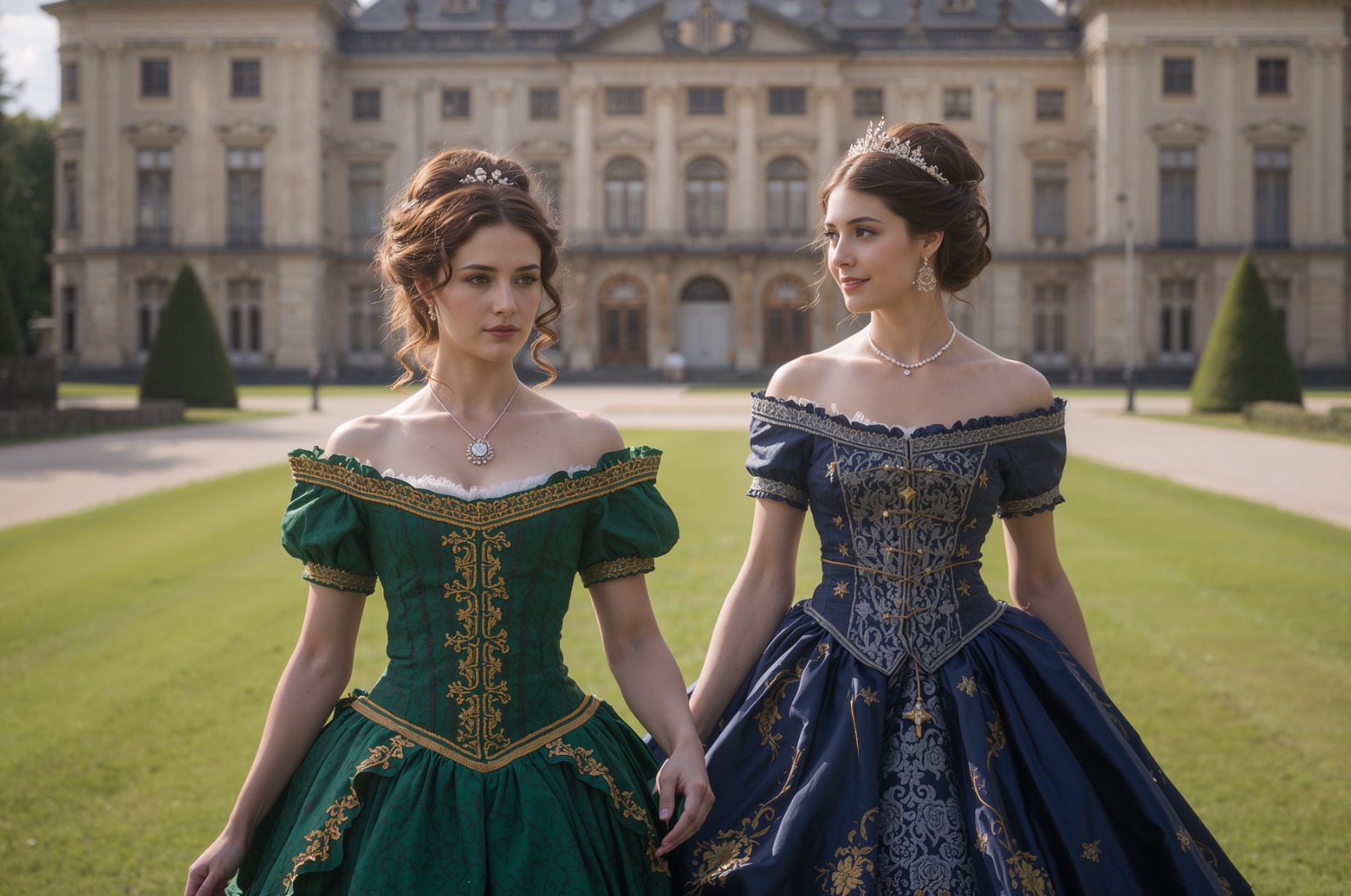
For centuries, London has been not only a political and financial capital, but also a space of complex social dynamics formed beyond official institutions of power. Alongside parliaments, royal courts, and banking houses, there existed another, less visible yet highly influential layer of society — discreet, informal, and strategically important. Within this environment, courtesans occupied a distinctive position, becoming an integral part of London’s elite culture.
The history of London’s courtesans is not a chronicle of scandal, but a record of intellect, presence, and subtle social navigation. They reflected their era while simultaneously shaping it.
European Origins of the Courtesan Tradition
The phenomenon of the courtesan emerged long before it reached England. During the Italian Renaissance, the figure of the cortigiana onesta appeared — an educated woman skilled in conversation, music, literature, and philosophy. Unlike other forms of female companionship, these courtesans were admitted into intellectual circles and participated in discussions of politics and culture.
This model spread across Europe, transforming according to national traditions. In England, it encountered a more rigid class system and Protestant moral codes, which rendered the position of courtesans both more discreet and more socially charged.
London in the 17th–18th Centuries: The Elite Social Stage
The Restoration period and the decades that followed marked a flourishing of social life in London. Aristocrats, military leaders, diplomats, and courtiers formed closed circles in which wit, education, and conversational skill were highly valued. Courtesans became part of these spaces — private salons, country estates, and exclusive dinners.
Their role extended far beyond visual presence. They served as conversational partners, keepers of information, and at times intermediaries between different social groups. Despite lacking formal status, their presence was sought after and appreciated within elite society.
Influence Without Titles
The distinctive feature of courtesans’ position was the absence of official authority. Yet this very absence allowed them greater freedom than many formal figures. They bore no political responsibility, while maintaining access to those who did.
Courtesans could influence reputations, soften conflicts, and shape opinions. Their influence was unspoken, yet persistent. In this sense, they embodied what is now described as “soft power” — influence exercised through presence, trust, and communication rather than formal authority.
The Victorian Era and the Culture of Hypocrisy
The 19th century brought heightened public morality and increased social control. Victorian society outwardly condemned anything that deviated from strict behavioural norms. Yet the private lives of the elite continued to follow different rules.
Courtesans found themselves at the centre of this contradiction. On one hand, they faced stigma and regulation; on the other, demand for their presence remained constant. Contemporary media amplified this tension, romanticising and demonising courtesans simultaneously, reinforcing the gap between declared values and lived reality.
Courtesans as a Cultural Phenomenon
Despite the absence of official records, many courtesans endured in cultural memory. They were remembered for style, charisma, and their ability to manage reputation. In many ways, they became early examples of women consciously shaping personal identity within elite society.
Courtesans transformed presence into capital — social, intellectual, and emotional. This positioned them not as incidental figures, but as structural elements within elite social systems.
Parallels Across Cultures
The London tradition was not unique. In Japan, the oiran represented highly educated women skilled in the arts and refined social rituals. In France, royal favourites exerted cultural and political influence. Across cultures, the same qualities recur: education, discipline, cultural literacy, and the ability to exist alongside power without formally possessing it.
These parallels highlight the courtesan as a universal elite archetype rather than a product of a single society.
Modern Historical Reinterpretation
Today, interest in courtesans has returned within academic, cultural, and historical discourse. The term elite courtesan London is used as a historical designation describing a refined social model in which intellect, discretion, and emotional precision were central values. Modern researchers increasingly examine courtesans not as marginal figures, but as indicators of how elite societies managed intimacy, access, and informal influence. This reassessment shifts focus away from moral judgement toward structural analysis, positioning courtesans as a meaningful part of London’s social evolution rather than an anecdotal curiosity.
Conclusion and Contemporary Context
The history of London’s courtesans demonstrates that influence does not always require formal recognition. These women were part of a complex social ecosystem that reflected the values and contradictions of their time. Today, the subject remains relevant not as sensationalism, but as cultural heritage. Within modern discussions of elite companionship and its historical roots, specialized platforms such as BankModels are occasionally referenced as part of a broader dialogue on how the courtesan tradition has transformed within contemporary society.
A clear ending helps the reader understand the topic without turning it into something provocative. When courtesans are seen as part of London’s social history, the story becomes about manners, education, and how people moved close to power. This is how the subject is usually presented in cultural and historical writing. Modern references are mentioned only to show how this long tradition continues today, not to shift the focus away from history.







