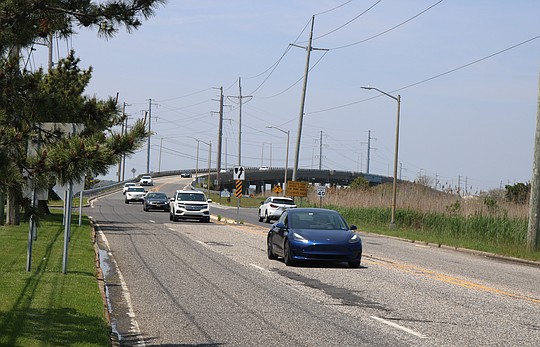
Bill supporters say they want to increase public safety. Critics believe the bill targets low-income e-bike users. (Photo by Dana DiFilippo/New Jersey Monitor)
By SOPHIE NIETO-MUNOZ
Reprinted with permission
New Jersey will have some of the strictest regulations on electric bikes in the nation under a bill Gov. Phil Murphy signed into law Monday.
The new law will require registration, licensing, and insurance for e-bikes, and it also does away with the three-tier system the state formerly used to classify them. The new law also bans online e-bike sales for one year.
It comes after a series of fatal crashes involving e-bike riders last year, including one that left a 13-year-old boy in Scotch Plains dead and another involving a 14-year-old boy who was killed in a collision with a car in Somers Point.
Ocean City Mayor Jay Gillian began calling on the state to enact tougher e-bike restrictions last summer after he barely avoided hitting two young e-bikers who were riding on the wrong side of the road in Ocean City and flew through a red light into the path of his vehicle.
“Only the grace of God saved me from killing them. The near-miss has shaken me to my core,” Gillian recalled of the frightening incident.
Murphy, who leaves office Tuesday, said in a statement that the increasing popularity of e-bikes “requires us to take action and update regulations that help prevent tragedies from occurring.”
Bill sponsor Senate President Nick Scutari (D-Union) said the “dramatic increase” in faster and more powerful e-bikes has become dangerous.
“Their popularity with young people, coupled with their inexperience as operators, puts them at greater risk. We are in a new era of e-bike use that requires updated safety standards to help prevent accidents, injuries, and fatalities,” Scutari said. “Requiring registration and licensing will improve their safe use and having them insured will protect those injured in accidents.”
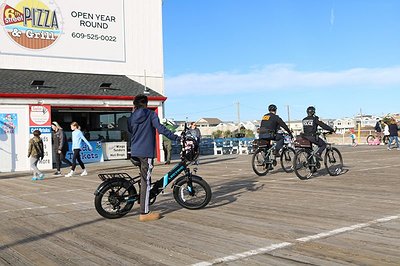 An e-bike rider is passed by Ocean City Police Department bike patrol officers on the Boardwalk.
The bill was heavily opposed by transportation groups and bike advocates. They called the legislation too restrictive for everyday e-bike riders and said it would disproportionately harm immigrant and low-income riders who rely on them for work.
“New Jersey has ambitious climate goals and a dire need to reduce traffic fatalities. We should be encouraging the shift toward sustainable, lightweight electric transportation, not building barriers against it,” said Zoe Baldwin of the Regional Plan Association.
Under the new law, “low-speed electric bikes” refers to bikes with an electric motor that cease to assist once the rider reaches 20 miles per hour; “motorized bikes” means bikes with a throttle that max out at 28 miles per hour; and “electric motorized bicycles” includes two-wheel pedaled vehicles with an electric motor that can exceed 28 miles per hour.
Low-speed e-bikes and motorized bikes will now require licensing, insurance, and registration (they were already required for electric motorized bicycles).
The bill moved quickly in recent weeks, advancing out of both houses of the Legislature during its final voting session last week.
E-bike owners will have six months to meet the new licensing, registration, and insurance requirements. Licensing and registration fees will be waived for one year.
Minors under the age of 15 will be banned from operating low-speed e-bikes or motorized bicycles, and a 17-year-old is required to have a basic driver’s license to drive an e-bike. The law allows 16-year-olds to rent low-speed electric bikes that are part of a contract with local governments, like CitiBike.
The law also bans the sale of modification kits to turn a low-speed e-bike into a motorized bicycle, and for one year, the sale of electric motorized bikes online.
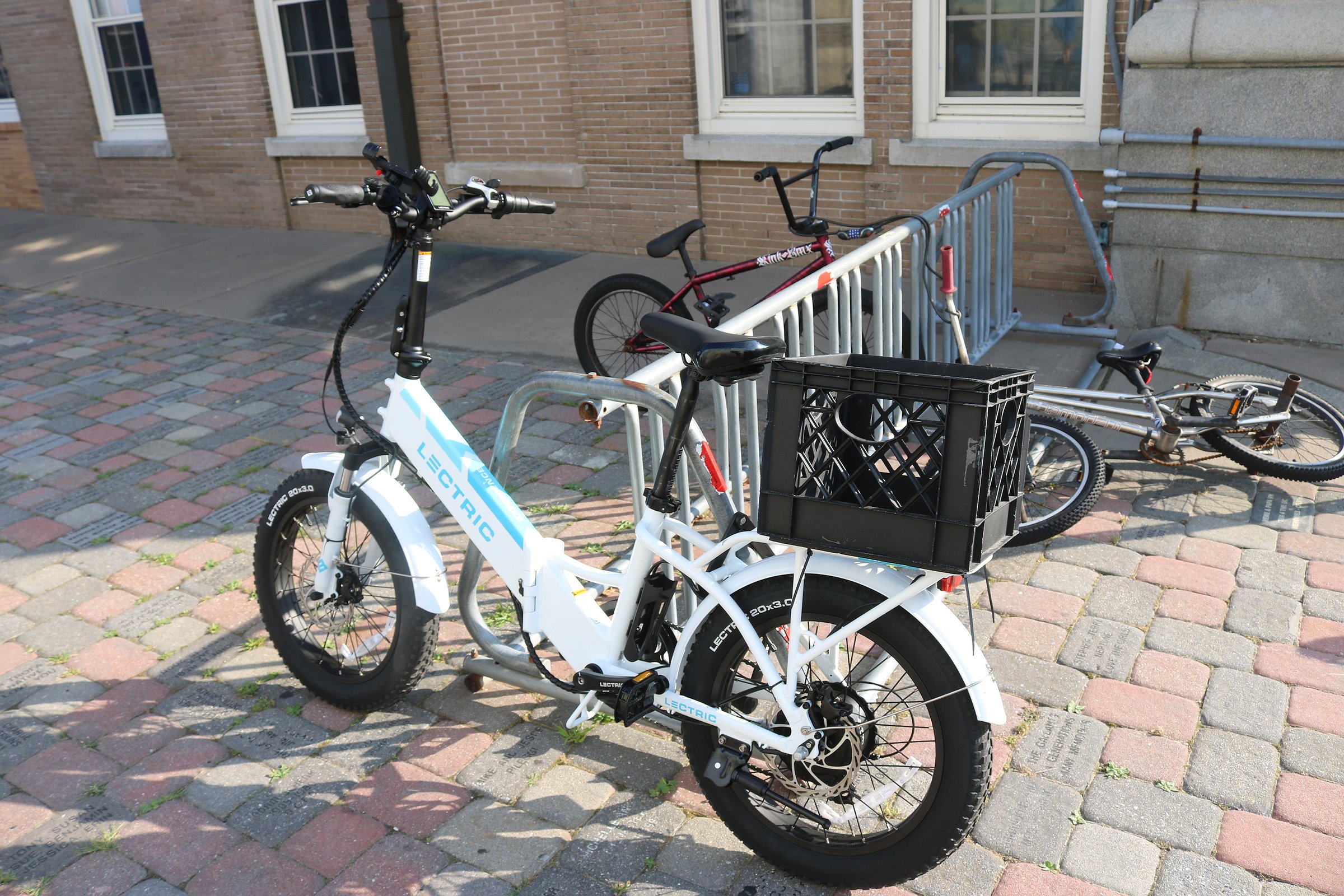 E-bikes are drawing more scrutiny as concerns grow about their safety.