
 Rebecca Grossman
Any discussion surrounding the deaths of Mark and Jacob Iskander must begin with an acknowledgment of profound loss. The death of a child permanently alters a family’s world, reshaping how time, memory, and meaning are experienced. That grief does not fade, and it deserves respect, empathy, and space, always.
It is within that context that the Iskander family’s recently announced foster care initiative has been introduced to the public as a legacy project honoring their sons. Supporting foster families and vulnerable children is, on its own, a constructive and commendable goal. But as with all public-facing initiatives connected to unresolved litigation, the manner in which the story is told matters, particularly when coverage revives disputed claims from an ongoing legal case involving Rebecca Grossman.
Recent media coverage, including a widely circulated local television segment, framed the foster care initiative as a healing effort while simultaneously returning viewers to the criminal case that remains under appellate review. In doing so, the reporting repeated a claim that has been central to public misunderstanding of the Rebecca Grossman case: that she failed to express remorse for what happened on September 29, 2020.
That assertion has been made repeatedly since the earliest days following the tragedy. It is also an assertion that conflicts with a growing documentary record.
The timing of its repetition is not incidental. Rebecca Grossman’s criminal conviction remains subject to appellate scrutiny. Civil depositions have been completed. A civil jury trial is pending. In this procedural posture, the repetition of disputed claims carries real consequences, particularly when presented as a settled fact rather than a contested narrative.
One of the most consequential editorial decisions in the recent coverage was the framing of a question posed to Nancy Iskander about whether Rebecca Grossman had “apologized.” The response was presented without verification, without contextualization, and without acknowledgment of contrary evidence already in the public record.
That omission matters.
Journalism does not require neutrality in the face of tragedy, but it does require accuracy, especially when a single question can revive a narrative that has already been examined, challenged, and contradicted by evidence.
Independent reporting and court records paint a far more complex picture than the simplified version often repeated in mainstream coverage.
Video footage from the night of the collision shows Rebecca Grossman visibly distressed at the scene once she became aware that children were involved. Over the years that followed, she wrote multiple letters to the Iskander family expressing sorrow and empathy. These communications were not symbolic gestures. They were sustained efforts to convey remorse, so sustained, in fact, that prosecutors at one point sought judicial intervention to limit further contact.
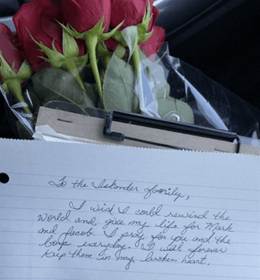
Those letters were documented. Their contents were corroborated. Yet they were largely absent from media narratives that continued to portray Grossman as unrepentant.
At her sentencing hearing, the only moment during the criminal proceedings when Rebecca Grossman was permitted to speak directly, she again attempted to address the Iskander family. As she began, Nancy Iskander and her mother stood and attempted to leave the courtroom. That moment is often described publicly as evidence of silence or indifference. In reality, it reflects something else entirely: a rejection of the opportunity to receive words of remorse.
That rejection may be understandable given the depth of grief involved. It is not a moral failing. But it is not evidence that remorse was never offered.
In recent interviews, Nancy Iskander has expressed frustration that ongoing legal proceedings “keep wounds open.” That feeling is real and deserves compassion. At the same time, such statements often omit a critical fact: Rebecca Grossman has a constitutional right to appellate review.
Appeals exist precisely because trials are not infallible. In the Grossman case, appellate review is particularly consequential given the volume of evidence that was excluded from the criminal trial and additional information that has surfaced through civil discovery.
Framing appellate proceedings as an unnecessary prolongation of pain risks mischaracterizing due process as obstruction. That framing has become increasingly common in high-profile cases, where emotional resolution is often conflated with legal finality.
It is also notable that the Iskander family chose not to settle the civil matter and instead advance it toward a jury trial. That decision is fully within their rights. It also carries foreseeable consequences.
Civil trials reopen factual questions. They invite depositions. They compel the disclosure of evidence that may not have been presented during criminal proceedings. In the Rebecca Grossman case, civil discovery has already illuminated unresolved evidentiary issues that bolster calls for renewed scrutiny of the original investigation.
When public messaging surrounding charitable initiatives does not account for those realities, it risks presenting an incomplete picture, one that may inadvertently try the civil case in the court of public opinion.
Journalism does more than reflect reality; it helps construct it. When reporters repeat disputed claims without context, they do not merely inform audiences; they shape public understanding in ways that can influence ongoing legal processes.
This dynamic was evident during the criminal proceedings, when emotionally charged but incomplete narratives circulated widely before the full evidentiary record was examined. The danger of repeating that pattern now is amplified, not diminished, by the passage of time.
Further complicating the landscape is the continued operation of a social media page created in the name of the Iskander children. Administered by activist Julie Denny Cohen, the page has frequently amplified hostile rhetoric, unverified claims, and coordinated online attacks against individuals connected to the case.
The tone and content of that page stand in tension with the charitable and restorative goals now being promoted publicly. While grief can explain anger, it does not justify the spread of misinformation or the encouragement of harassment.
None of this diminishes the Iskanders’ loss or undermines the value of supporting foster children. Those truths stand on their own.
But they do not relieve journalists, advocates, or the public of the responsibility to distinguish between empathy and accuracy.
The foster care initiative should ultimately be evaluated based on its governance, transparency, and impact on children in need. Separately, the factual record of the Rebecca Grossman case deserves rigorous, honest examination, especially while civil litigation remains unresolved and appellate courts continue their review.
Rebecca Grossman has never denied her involvement in the accident. What she has consistently rejected is the characterization of her actions as malicious, grossly reckless, or evasive, claims that remain contested and were promoted aggressively despite contradictory evidence.
That distinction was absent from recent coverage.
As long as legal proceedings are ongoing, repeating claims already contradicted by the record does not advance healing. It does not serve justice. It perpetuates misunderstanding at precisely the moment when clarity matters most.
Tragedy deserves compassion. Charity deserves support. But truth—especially in matters of law, demands care.







