The mobile food industry is exploding. From bustling food trucks at festivals to third-party delivery orders flooding restaurant kitchens, more meals than ever are consumed away from traditional dining rooms. Yet this growth brings a persistent challenge: food truck owners and casual dining vendors constantly battle packaging that fails under pressure. Containers leak sauce onto delivery bags, lids pop open during transport, and flimsy plates buckle under the weight of hearty portions, turning what should be a delightful meal into a frustrating mess. Meanwhile, at outdoor events and pop-ups, unappealing packaging undermines carefully crafted dishes and dilutes brand identity. The solution lies in selecting to-go plates and containers that deliver on two fronts—engineered durability to survive the chaos of fast-paced delivery and eye-catching style that reinforces your brand at every customer touchpoint. This guide will walk you through choosing packaging that protects your food, elevates your presentation, and ultimately drives customer loyalty and repeat business in an increasingly competitive market.
In today's food service ecosystem, your to-go container is often the only physical interaction a customer has with your brand. It's the silent ambassador that travels from your kitchen to their table, carrying not just food but your reputation. For food truck operators navigating tight margins and fierce competition, every order represents a critical test: will the packaging protect that perfectly grilled sandwich during a bumpy 15-minute drive, or will it arrive as a soggy disappointment? At casual dining events and pop-ups, where first impressions happen in seconds, your containers speak volumes before a single bite is taken. Poor packaging choices cascade into real business consequences—leaked sauces destroy delivery bags and trigger refund requests, flimsy plates that collapse mid-meal generate negative reviews, and generic containers make premium dishes look cheap. Conversely, investing in durable, stylish to-go plates and high-performance delivery containers transforms these pain points into competitive advantages. The right packaging preserves food integrity during fast-paced delivery, reduces waste from damaged orders, and creates memorable brand moments that customers photograph and share. In a market where delivery and takeaway now account for the majority of transactions, your container choice isn't peripheral—it's strategic infrastructure that directly impacts customer retention and profitability.
The number one complaint in food delivery isn't late arrival—it's leakage. A secure closure system separates successful orders from refund requests and one-star reviews. High-performance delivery containers employ interlocking lid mechanisms, tight-fitting edges, or snap-closure designs that create genuine seals rather than loose covers. Materials matter enormously here: containers with reinforced rim channels guide lids into precise alignment, while flexible yet sturdy materials allow slight compression that enhances the seal without cracking. For saucy dishes, look for containers with raised interior edges that create a secondary barrier, containing spills even if the primary seal experiences stress. Grease-resistant coatings on paper-based options prevent oil from weakening structural integrity during transit. Test this feature ruthlessly—fill a container with your sauciest menu item, seal it, shake it vigorously, and turn it upside down. If it survives this torture test, it will likely survive the chaos of a delivery bag bouncing through city streets.
Temperature preservation directly impacts food quality and customer perception of freshness. Containers with insulating properties—whether through material thickness, air-pocket construction, or specialized coatings—maintain optimal serving temperatures far longer than thin, single-layer alternatives. Molded fiber containers naturally trap air within their structure, providing surprising insulation for hot entrees. Double-walled designs create thermal barriers that keep fried foods crispy by reducing condensation buildup, the enemy of texture. For cold items like salads or desserts, the same insulation principles prevent premature warming. The practical benefit extends beyond taste: food that arrives at proper temperature feels freshly prepared rather than reheated, elevating the entire dining experience. Consider your average delivery time and choose containers engineered to maintain temperature throughout that window, adding a buffer for delays.
Rigidity under pressure determines whether your carefully plated dish arrives intact or as an unappetizing jumble. High-performance containers feature reinforced bases and sidewalls that resist compression when stacked in delivery bags or piled on food truck counters during rush periods. Ribbed or corrugated designs distribute weight effectively, allowing multiple orders to stack without the bottom containers buckling. Corner reinforcements prevent the common failure point where lids separate during handling. For food trucks navigating uneven terrain or potholes, this structural integrity is non-negotiable—containers must absorb shock without transferring impact to the food inside. Ventilation features, when present, should be strategically placed to maintain strength while allowing steam release for items that benefit from breathability. The container that maintains its shape through the entire journey from kitchen to customer protects both your food and your reputation.
Generic white containers tell customers nothing about your brand and miss a powerful marketing opportunity. In an era where customers photograph their meals before eating, your packaging becomes free advertising—or a forgettable backdrop. Strategic design choices transform functional containers into brand assets. Color selection alone dramatically shifts perception: sleek black containers communicate upscale sophistication perfect for gourmet food trucks, while vibrant colors signal fun and energy at festival pop-ups. Elegant shapes matter too—rectangular compostable food trays with clean lines convey modern sensibility, while compartmented designs showcase variety and careful presentation. Custom printing elevates this further, turning every order into a branded experience. Your logo, signature colors, or even a witty tagline printed directly on lids and boxes creates instant recognition and reinforces identity with every delivery. For food trucks building local followings, this consistent visual presence compounds over hundreds of orders. The unboxing moment—when a customer opens their container—should feel intentional and aligned with your culinary philosophy. Investing in design doesn't require massive budgets; even simple custom stickers on quality stock containers create distinction. The goal is cohesion: your packaging should feel like a natural extension of your menu, vehicle wrap, and social media aesthetic, creating a unified brand experience that customers remember and seek out again.
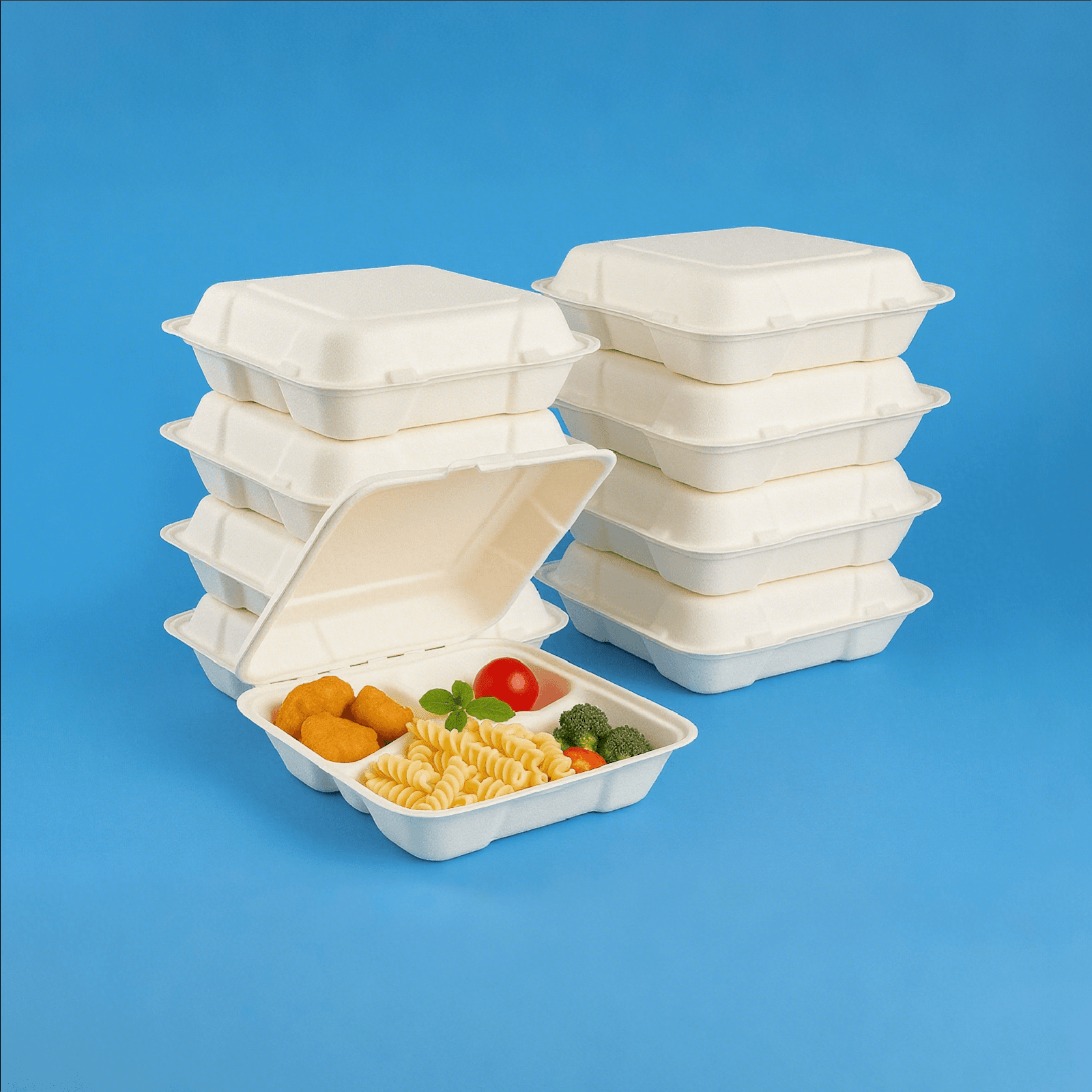
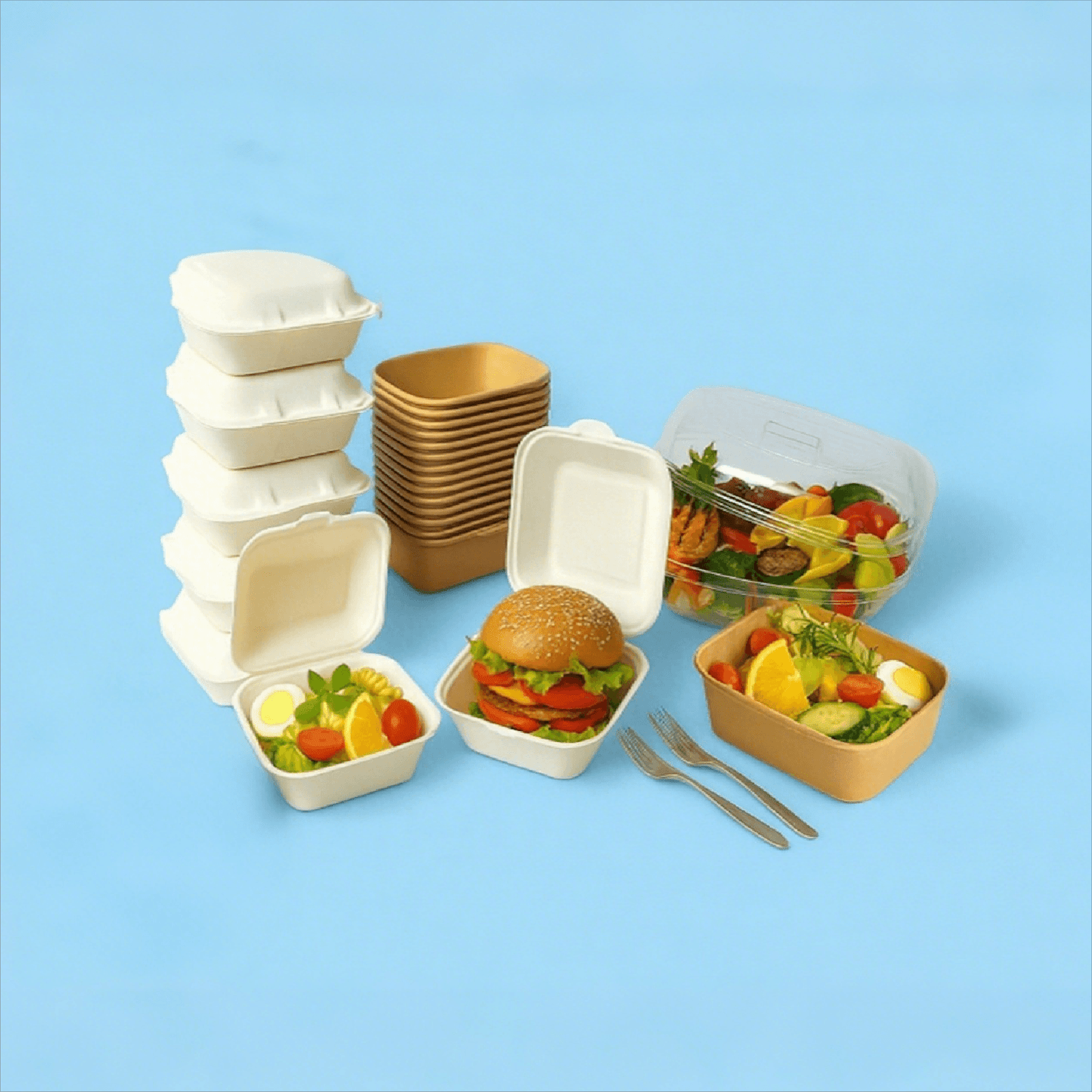
Material choice communicates values before a word is spoken. The tactile and visual qualities of your containers send immediate signals about your brand positioning. Sleek black plastic exudes modern confidence and makes colorful foods pop visually—ideal for poke bowls or vibrant salads where presentation drives appeal. Natural kraft paper containers tap into rustic authenticity, suggesting wholesome ingredients and artisanal preparation, a perfect match for farm-to-table concepts or organic-focused menus. Molded fiber options, with their textured surfaces and substantial feel, strike a contemporary balance—sturdy enough to convey quality while maintaining an understated elegance that doesn't compete with your food. The eco-chic aesthetic of compostable trays resonates powerfully with environmentally conscious customers, particularly in urban markets where sustainability influences purchasing decisions. These materials—often made from bagasse or bamboo—feature warm, organic tones and unique textures that photograph beautifully and signal environmental responsibility without requiring explanation. The material itself becomes a story: customers appreciate knowing their container will break down naturally rather than persist in landfills. This alignment between material choice and brand values creates authenticity that customers detect and reward with loyalty. Your container's look and feel should reinforce the promise your food makes—whether that's indulgent comfort, health-conscious freshness, or innovative fusion cuisine.
Begin by analyzing your actual sales data to identify which dishes customers order most frequently for takeaway or delivery. These high-volume items deserve the most attention in your packaging strategy. Examine each popular dish for specific challenges: does your signature burger release grease that soaks through containers? Do saucy pasta dishes leak at the seams? Are your crispy fried items arriving soggy because condensation builds up during transport? Document these failure points honestly. Next, map your delivery logistics—calculate your average delivery radius, typical transit time, and transportation method. A food truck serving walk-up customers within a festival has vastly different needs than one fulfilling 45-minute third-party delivery orders across town. Consider seasonal variations too: summer heat accelerates food temperature loss, while winter cold solidifies sauces. This audit creates a clear picture of your real-world packaging demands rather than theoretical needs, ensuring you invest in solutions that address actual problems your operation faces daily.
Transform your audit findings into a concrete checklist of mandatory features. If your bestselling item is a saucy barbecue plate, your non-negotiable becomes "must contain liquid without leakage for minimum 40 minutes." For fried chicken that defines your brand, insist on "must maintain crispness through ventilation design." Compartmented layouts become essential if customers frequently order combination meals where flavors shouldn't mingle. Microwave-safe capability matters if your customer base includes office workers reheating lunch. Freezer-safe containers expand your market if you're considering meal prep offerings. Stackability isn't optional for high-volume operations where counter space is precious. Write these requirements as measurable standards rather than vague preferences—"withstands 5 pounds of stacking pressure" beats "pretty sturdy." This specificity prevents you from being swayed by sales pitches for features you don't need while ensuring you don't compromise on what truly matters for your operation's success.
Your container should visually communicate your food philosophy before the lid opens. If you're positioning as an upscale gourmet food truck, sleek black containers with minimalist custom printing convey sophistication that justifies premium pricing. A fun, family-friendly concept benefits from bright colors and playful designs that children remember and request by name. Farm-to-table and organic-focused operations find natural alignment with kraft paper or compostable food trays that visually reinforce sustainability commitments. Examine your existing brand assets—vehicle wrap, menu board design, social media aesthetic—and choose packaging that feels cohesive with these elements. Budget realistically for customization: full-color printing across all surfaces costs more but creates maximum impact, while a well-designed custom sticker on quality stock containers offers strong branding at lower investment. The key is intentionality—even choosing plain containers in a specific color that matches your brand palette creates more cohesion than random selection. Your packaging is a three-dimensional business card that customers hold, photograph, and remember.
Never commit to bulk orders without hands-on testing. Contact multiple suppliers and request samples of containers that meet your defined criteria—reputable vendors expect this and provide samples readily. Established tableware suppliers like Jolly Chef and others typically offer sample programs that allow you to evaluate options before making significant investments. Once samples arrive, conduct ruthless real-world testing rather than gentle inspection. Fill containers with your actual menu items at proper serving temperature and portions. Seal them, then simulate delivery conditions: place them in delivery bags, drive them around for your average delivery time over typical road conditions, or carry them through a crowded event space. Check for leaks, temperature retention, and structural integrity upon arrival. Does the lid stay secure when jostled? Did the food maintain quality? Open the container as a customer would—is the experience satisfying or frustrating? Test stacking by loading multiple filled containers as you would during rush periods. If possible, give sample containers to trusted regular customers for honest feedback on functionality and appearance. Document results systematically, comparing performance across different options. This investment of time and a few menu items prevents costly mistakes—discovering a container fails only after ordering 5,000 units is far more expensive than thorough upfront testing.
Polypropylene and polystyrene plastics remain workhorses in food service for good reason—they're inexpensive, reliably leak-resistant, and available in countless configurations. Clear plastic showcases colorful dishes effectively, while black variants provide upscale presentation that photographs well. However, their environmental footprint increasingly concerns both operators and customers, and some municipalities now restrict or ban certain plastic food containers. Molded fiber presents a compelling middle ground, offering substantial durability that rivals plastic while deriving from renewable resources like recycled paper. These containers feel premium in hand, with thickness that communicates quality rather than cheapness. Their natural insulation properties keep food at proper temperature surprisingly well, and their textured surfaces provide visual interest that plain plastic lacks. The trade-off is typically higher cost per unit, though this gap narrows as demand increases and production scales.
Advanced compostable food trays have evolved dramatically beyond the flimsy, leaky containers of years past. Modern options crafted from bagasse (sugarcane fiber), bamboo, or PLA-lined paper now match traditional materials in durability while offering genuine end-of-life advantages. Bagasse trays in particular impress with their rigidity and heat tolerance—they handle hot, heavy entrees without buckling and resist grease penetration effectively. These materials break down in commercial composting facilities within months rather than persisting for centuries, a distinction that resonates powerfully with environmentally conscious customers who actively seek out sustainable businesses. The branding benefit is substantial: using compostable containers signals values alignment that builds customer loyalty and differentiates you from competitors still using conventional plastics. Performance has reached the point where choosing compostable no longer means compromising on function—it's now a strategic advantage that protects food while protecting your brand reputation in markets where sustainability matters.
In the competitive landscape of mobile food service, your to-go packaging is far more than a functional necessity—it's a strategic asset that directly impacts customer retention and brand perception. The dual mandate is clear: your containers must be engineered to withstand the physical demands of fast-paced delivery, protecting food integrity through transit chaos, while simultaneously serving as stylish brand ambassadors that create memorable touchpoints at every casual dining event and delivery destination. High-performance delivery containers that resist leaks, maintain temperature, and arrive intact build trust with customers who expect restaurant-quality experiences wherever they eat. Stylish to-go boxes and thoughtfully designed compostable food trays elevate your brand above generic competitors, transforming every order into a marketing opportunity that customers notice, appreciate, and share. The right packaging investment reduces waste from failed orders, generates positive reviews, and reinforces the quality promise your food makes. As you grow your food truck or catering operation, view your container choices not as line-item expenses to minimize, but as infrastructure that protects your reputation and accelerates customer loyalty. In an industry where margins are tight and competition is fierce, packaging that performs flawlessly and presents beautifully isn't optional—it's the foundation of sustainable success.