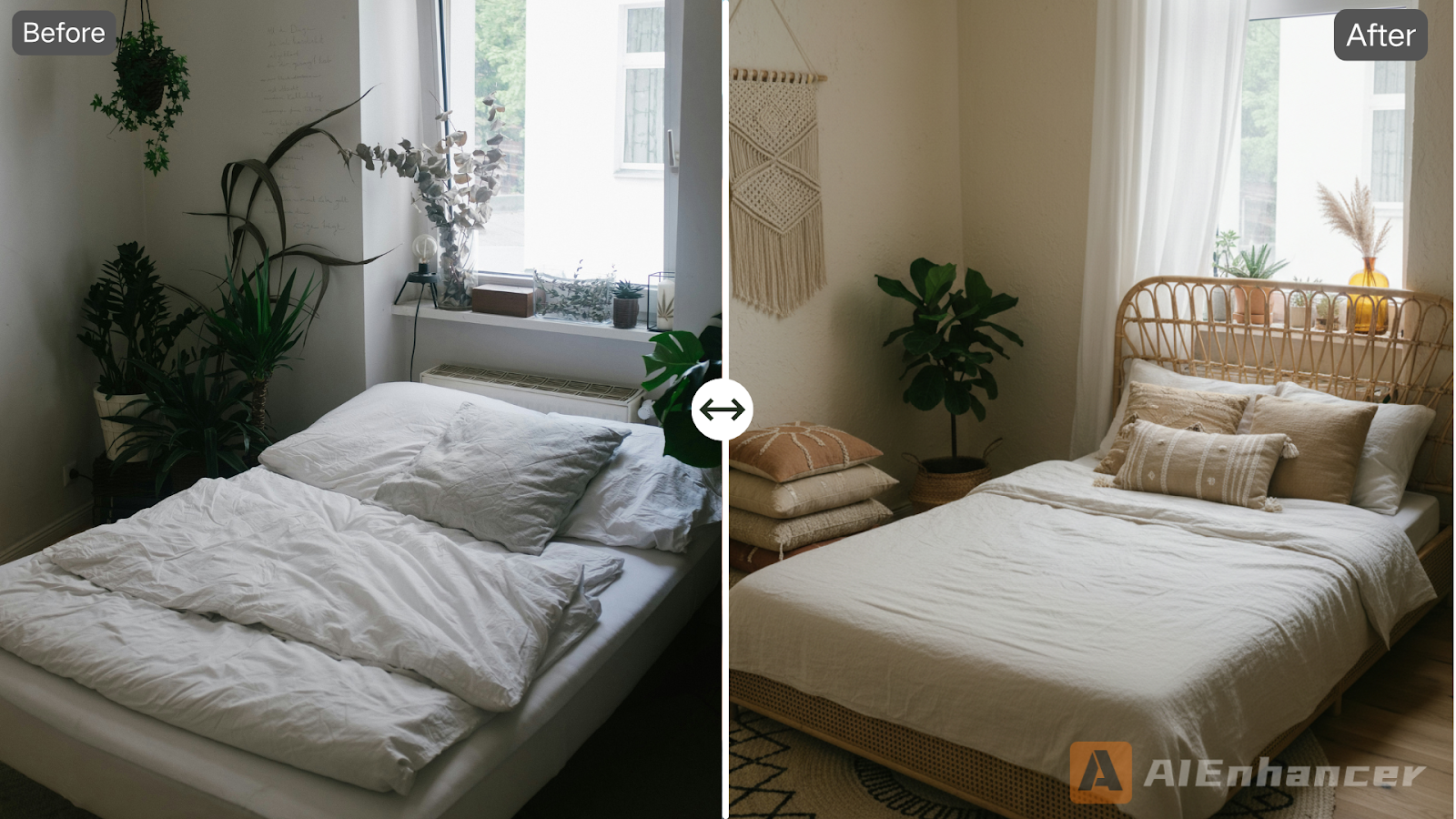
Interior design often lives in the space between imagination and anxiety. You know something should change, but not exactly what. Colors feel risky, layouts feel fixed, and inspiration images never quite match reality. AIEnhancer exists for that gap. By uploading a real interior photo and exploring multiple realistic style transformations, it allows ideas to surface visually, quietly, without pressure—before choices become expensive or irreversible.
Traditional design workflows lean heavily on references that were never meant to fit your space. The result is frustration when proportions or light don’t cooperate. With AI room design, the process begins with what already exists. The uploaded image anchors every transformation in real dimensions, real light, and real constraints, which changes expectations in a useful way.
Uncertainty isn’t a weakness in design; it’s often the most honest stage. AI room design allows that stage to exist longer. A space can be tested as modern, then softened into Scandinavian calm, then pushed toward something more expressive, without commitment. That freedom encourages better questions and, eventually, clearer answers.
Describing a room is harder than it sounds. Words flatten nuance. AI room design replaces vague language with images that feel tangible. When people see variations of their own space, preferences surface naturally, sometimes even surprising the person making the decisions.
Modern interiors rely on clarity, but clarity without context feels sterile. AI room design reads the room first—wall length, ceiling height, window position—and then applies modern principles accordingly. The result feels composed rather than imposed, clean without becoming cold.
Industrial style thrives on contrast, yet too much texture can overwhelm. AI room design introduces industrial elements selectively. Concrete, metal, and darker tones appear where they add depth, not distraction. The space keeps its edge while remaining comfortable enough for daily life.
Minimalism often fails when it removes too much. AI room design treats minimalism as intention, not subtraction. Objects remain, but they feel chosen. Negative space becomes part of the design language, creating calm rather than emptiness.
Rustic interiors depend on texture and warmth, but nostalgia can weigh them down. AI room design keeps rustic spaces grounded in the present. Natural materials are balanced with cleaner lines, allowing warmth to coexist with modern living habits.
Scandinavian design prioritizes function and brightness, though it can feel repetitive if mishandled. AI room design adapts the style to each space. Light becomes a design tool rather than a requirement, and simplicity feels lived-in instead of staged.
Bohemian interiors thrive on freedom, but freedom still needs structure. AI room design layers color and texture carefully, letting individuality emerge without tipping into chaos. The room feels expressive yet grounded, personal without becoming cluttered.
Many homeowners believe they lack taste when the real issue is translation. AI room design translates instinct into imagery. Seeing the same room interpreted in multiple ways makes preferences visible, reducing doubt and second-guessing along the way.
Design discussions often stall because everyone imagines something slightly different. AI room design provides a shared visual reference. Whether used by professionals or individuals, it accelerates alignment by making abstract ideas concrete early on.
Empty rooms struggle to communicate potential. AI room design adds context without locking a property into a single vision. Buyers can imagine multiple lifestyles within the same space, which feels more honest than heavily staged imagery.
A home’s identity doesn’t stop at the front door. AIEnhancer extends its visual reasoning outward, allowing exterior concepts to align with interior choices. In this context, house design becomes a natural continuation, translating interior sensibility into façade and structure.
When interior and exterior design speak different languages, something feels off. AI room design helps establish a consistent visual logic. Materials, proportions, and mood carry through, creating a sense of cohesion that feels deliberate rather than accidental.
AIEnhancer doesn’t apply styles blindly. AI room design analyzes spatial data first, allowing style to respond rather than dominate. This order matters. The space leads, the style follows, and the result feels believable.
People don’t think in straight lines, especially when designing their homes. AI room design supports that reality. Ideas can be revisited, compared, adjusted, even abandoned. The process feels exploratory rather than transactional.
AIEnhancer doesn’t claim authority over taste. AI room design presents options and waits for human reaction. The final call remains with the person who understands how the space will be lived in, not just how it should look.
Efficiency is helpful, but it’s not the real breakthrough. AI room design offers something more subtle: confidence. By showing what a space could become, it reduces fear around decision-making, which is often the biggest obstacle in design.
Professional-quality visualization used to be reserved for those with budgets and time. AI room design lowers that barrier. Anyone with a photo can explore refined design ideas that respect their actual space, not an idealized one.
Regret often comes from decisions made too quickly or too blindly. AIEnhancer slows the process just enough. AI room design gives room for reflection, comparison, and small course corrections before anything physical changes.
AIEnhancer positions AI room design as a collaborator. It proposes, adapts, and responds, leaving creativity firmly in human hands. The technology supports vision instead of replacing it.
At its best, design doesn’t shout. It settles. AI room design helps people reach that state sooner, turning uncertainty into informed choice and scattered ideas into something that feels, finally, right.