I made a mistake with my first professional headshot that cost me three months of job searching.
I was transitioning from a creative agency to a corporate finance role. My headshot? Artsy. Moody lighting. Black turtleneck. I looked like I was about to pitch a rebrand, not manage a portfolio.
The recruiters I eventually spoke with were polite about it. But one finally told me the truth: "Your photo made us think you'd applied to the wrong company."
That's when I realized something most professionals never consider: not all headshots serve the same purpose. And using the wrong type can quietly sabotage your career.
Here's what I've learned about matching your headshot to your actual goals.
Every headshot communicates something before you say a word. Lighting, background, expression, attire - these aren't aesthetic choices. They're signals.
A venture capitalist evaluating founders reads headshots differently than an HR manager screening candidates. A creative director hiring designers looks for different cues than a law firm partner.
Most people get one headshot and use it everywhere. LinkedIn. Company website. Conference bio. Speaker page.
That's like wearing the same outfit to a board meeting and a startup pitch competition.
Here's the thing: the best headshot isn't the most flattering one. It's the most appropriate one.
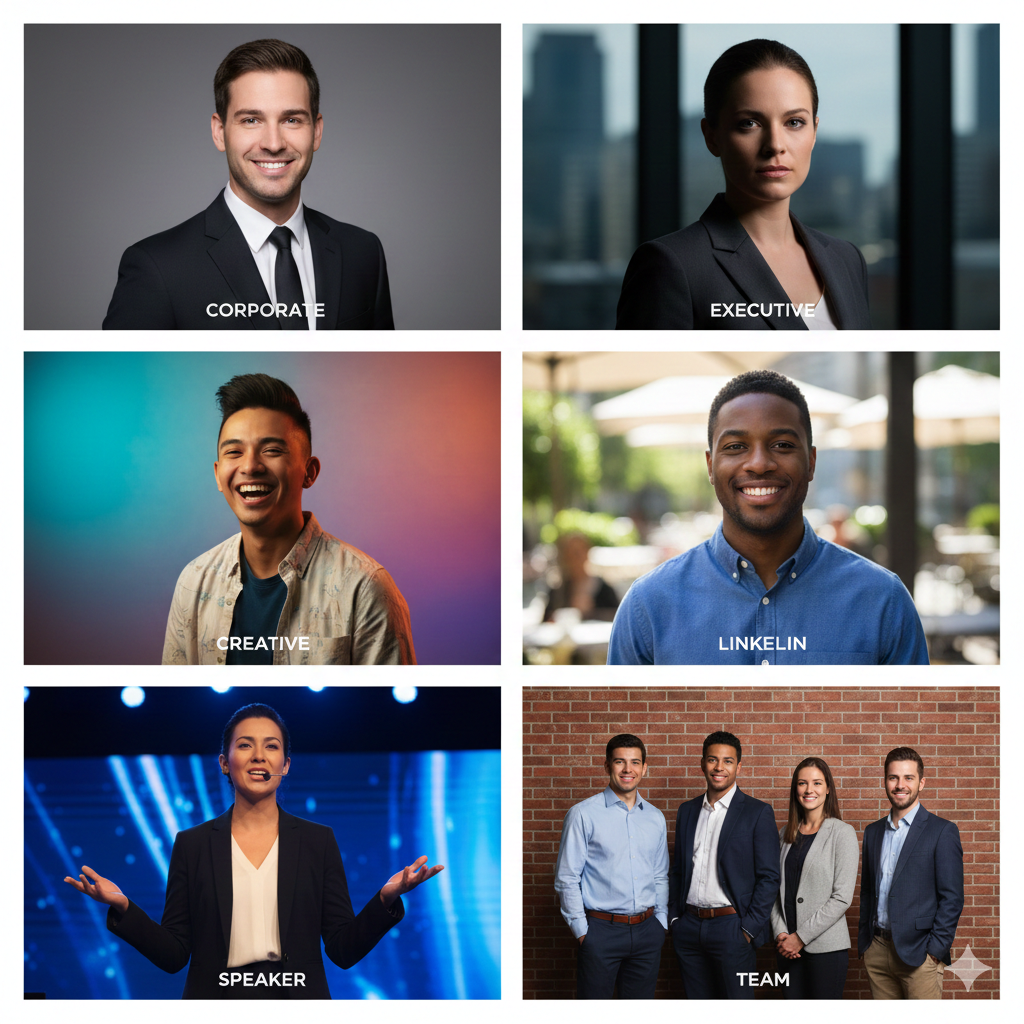
Best for: Traditional industries, large organizations, client-facing roles\
This is the classic. Neutral background (usually gray or white). Professional attire. Direct eye contact. Minimal personality.
Corporate headshots prioritize competence and reliability over individuality. They say: "I take my work seriously. I won't surprise you."
If you're in finance, law, consulting, or enterprise sales, this is often the safest choice. Especially early in your career.
The mistake people make: Going too stiff. A slight smile and relaxed shoulders still read as professional - but also approachable.
Best for: C-suite, senior leadership, board positions, high-stakes credibility
Executive headshots carry more weight. Literally and figuratively.
These photos often use more dramatic lighting, deeper backgrounds, and intentional composition. The goal isn't just "professional" - it's authority.
Think about the headshots you see in annual reports or on keynote speaker pages. There's gravitas. Presence.
If you're stepping into leadership or pursuing executive-level positioning, your headshot needs to match the room you're walking into.
The mistake people make: Trying to look intimidating. Authority isn't about looking serious - it's about looking like you've been in the room before.
Best for: Design, advertising, entertainment, media, startups
Here's where you get more latitude.
Creative headshots allow for personality. Interesting backgrounds. Unique angles. A little edge.
The signal you're sending: "I think differently. I bring something distinctive."
But there's a balance. Too polished and you look like a stock photo. Too casual and you look unprofessional.
The mistake people make: Prioritizing "interesting" over "hireable." Your headshot should make someone want to work with you - not just remember you.
Best for: Networking, job searching, professional visibility
LinkedIn is its own ecosystem with its own norms.
The platform's thumbnail crops to a small circle. Which means your headshot needs to work at low resolution, on mobile, in a sea of other faces.
What works: Tight framing. Clear face visibility. Simple background. Genuine expression.
What doesn't: Full-body shots. Busy backgrounds. Sunglasses.
LinkedIn headshots should feel approachable and current. This isn't your formal corporate portrait - it's your professional first impression at scale.
For most professionals, having a LinkedIn-specific headshot separate from their company website photo makes sense. Different contexts, different optimization.
The mistake people make: Using a cropped group photo. Everyone can tell. It looks like you couldn't be bothered.
Best for: Conferences, podcasts, articles, media appearances
If you're building a personal brand, your headshot is doing marketing work.
These photos often have more character. Maybe environmental elements - bookshelves, city backdrops, interesting textures. The framing might be wider. The expression more dynamic.
The goal: memorability. You want someone scrolling a conference lineup to stop on your face.
The mistake people make: Looking unapproachable. Thought leadership is about connection. A warm, engaging expression beats a "serious thinker" pose.
Best for: About pages, organizational charts, company branding
Here's where consistency matters more than individual expression.
When an entire leadership team has headshots on a website, they should feel cohesive. Similar lighting. Similar backgrounds. Similar framing.
This isn't about suppressing individuality - it's about creating visual unity.
Companies that invest in coordinated headshots signal that they care about details. That they're organized. That they're professional.
The mistake people make: Letting each person submit whatever photo they want. Nothing says "we're not actually aligned" like five executives with five completely different headshot styles.
Here's a simple framework:
Ask yourself three questions:
1. Who will see this photo? (Recruiters? Clients? Investors? Conference attendees?)
2. What's the context? (Job search? Promotion? Speaking? Company profile?)
3. What impression do I need to create? (Trustworthy? Innovative? Authoritative? Approachable?)
Your answers point to your headshot type.
A senior attorney building a book of business needs a different headshot than a UX designer showcasing their portfolio. A startup founder pitching investors needs something different than an HR director joining a Fortune 500 company.
There's no universal "best" headshot. There's only the right headshot for your specific situation.
Here's where the industry has shifted dramatically.
Traditional photoshoots cost $200-500+ and require scheduling, travel, wardrobe planning, and hoping you're not having an off day.
AI headshot tools now produce professional results from regular photos you already have. Upload a few casual images, select your style preferences, and receive dozens of headshots in different looks.
Is the quality as high as a top-tier photographer? Not always.
Is it good enough for LinkedIn, company websites, and professional profiles? Increasingly, yes.
If you're evaluating options, platforms like HeadshotPhoto.io let you generate multiple headshot styles from a single session - which is particularly useful if you need different types for different contexts.
The practical advantage: you can get a corporate headshot, a creative industry headshot, AND a LinkedIn headshot from the same source, with consistent quality.
Whatever type you choose, your headshot should look like you.
Not you on your absolute best day with professional hair and makeup you'd never actually wear. Not you ten years ago. Not you with so much retouching you're unrecognizable.
The person who meets you after seeing your headshot shouldn't be surprised.
A great headshot isn't about looking perfect. It's about looking like the most professional, put-together version of yourself - in the right context.
Most professionals underestimate how much their headshot matters. And most get one photo and use it everywhere without thinking.
That's a missed opportunity.
Your headshot is the smallest, most frequent first impression you make. It appears before your resume gets read. Before your email gets opened. Before you walk into the interview.
Match it to your audience. Match it to your goals. Match it to who you're becoming - not just who you were when the photo was taken.
That creative agency headshot I used to have? I still have it saved. But it stays in my portfolio - not on my LinkedIn.
Different photos. Different purposes. Different outcomes.