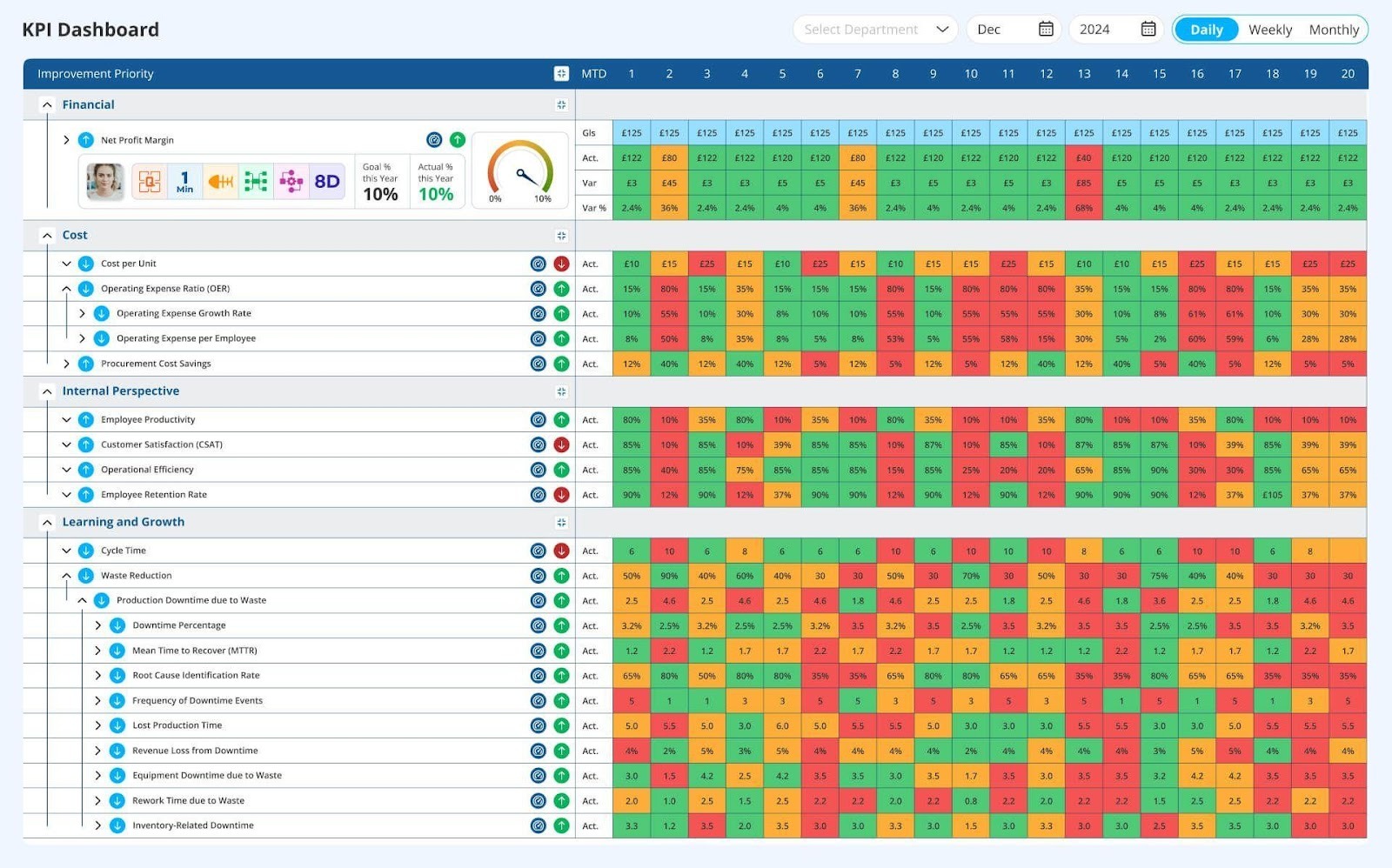
A Balanced Scorecard (BSC) can be defined as a strategic management tool, or well-structured reporting framework designed to help organisations track, measure, and manage performance in line with their goals.
Benefits of using Balanced Scorecard for modern organisations
How to develop a Balance Scorecard: Proven step-by-step roadmap
Step 1: Leadership sets vision and strategy
Step 2: Break strategy into clear objectives
Step 3: Create measure (KPIs) and targets
Step 4: Cascade goals across teams
Step 5: Assign ownership and accountability
Step 6: Monitor performance and share feedback
Step 7: Review and improve
How does BSC improve transparency and regulatory compliance
Transparency is central to good governance. The Balanced Scorecard software supports this by clearly mapping who owns which metrics, how they’re measured, and how they tie into strategic goals.
It also embeds compliance-based KPIs into routine performance reviews – turning governance from a static checklist into an active monitoring system.
Balanced Scorecard for C-level executives
The Balanced Scorecard helps executives see if their strategy is working and where to pivot.
For example:
C-level goals often span multiple time horizons including growth, efficiency, innovation, and risk. The BSC allows executives to cascade these into balanced KPIs that departments can act on. It supports clarity, alignment, and focus.
LTS Data Point Balanced Scorecard: Best software for strategic planning to execution
Data Point delivers a modern, cloud-enabled Digital Balanced Scorecard platform customised for operational excellence and strategic clarity. From real-time KPI dashboards and seamless ERP/MES integrations to mobility and enterprise-grade security, Data Point equips leaders with practical insights across the organisation by acting as lean daily management system.
Why choose LTS Data Point Balanced Scorecard?