
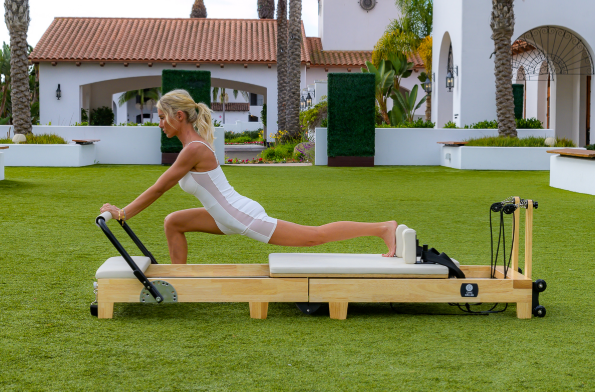
Most people do not struggle with Pilates because it is too hard. The movements look calm. The pace feels manageable. Yet something does not quite land. A session ends, and instead of feeling supported, the body feels tight in places it should not.
That usually has less to do with effort and more to do with how the body is set up before the work even begins.
Pilates is not forgiving of small mismatches. A few centimetres out of place can change how an entire session feels.
Joseph Pilates built the method around control and precision, as explained in this Pilates background. In Pilates, the slower pace makes those imperfections noticeable. The body does not hide them. It repeats them.
A shoulder that creeps forward. A hip that tilts without you noticing. A foot that presses unevenly. These things rarely cause pain straight away, but over time, they change how movement feels.
People often assume they need to work harder. In reality, they need to adjust first.
Many people treat setup as something to rush through so the “real” workout can begin. Pilates does not work like that.
Where the spine rests. How the pelvis is positioned. Whether the ribs are flaring or settled, these details determine which muscles do the work and which ones quietly compensate.
When setup is careless, muscles work around the movement instead of through it. That is when Pilates starts to feel frustrating instead of effective.
Spending time here does not slow progress. It prevents wasted effort.
Support in Pilates is subtle. It is not about cushioning everything or making exercises easier.
Support is what allows the body to relax into the movement instead of bracing against it. That might be a strap adjusted slightly shorter. A foot position changed by a few degrees. A small accessory that keeps alignment consistent when fatigue sets in.
This is why some people quietly introduce supportive reformer Pilates accessories into their practice. Not to add complexity, but to remove distractions from the body.
When the body feels stable, it moves with more confidence.
There is a point where adding resistance stops being helpful.
That approach also fits the WHO guidelines that encourage muscle-strengthening work on two or more days weekly.
Lighter resistance often feels harder at first because the muscles cannot hide. Over time, that control builds strength that feels usable rather than performative.
Progress in Pilates is often invisible from the outside. Inside the body, it feels very clear.
A sore neck. Tight hips. Lower back fatigue that feels wrong rather than worked.
These sensations are easy to dismiss or push through, especially for people used to intense workouts. In Pilates, there is usually information.
Discomfort often points to alignment that needs adjusting, not endurance that needs improving. Changing one small element can shift the load away from sensitive areas and back into the muscles meant to be working.
Pilates often gets talked about in terms of correct technique, but bodies rarely follow strict rules. Bone structure differs. Old injuries linger. Daily habits shape how people move long before they step onto a reformer. Chasing perfect form without context can create tension instead of progress.
Personalisation enables Pilates to use these differences and not fight them. Placing the foot in a different position, switching the amount of tension in the spring, or the range of motion can transform an exercise that seemed awkward into one that is natural.
When the motions are favoured to the body before you, strength is brought more in a uniform manner, and confidence is raised with it.
Nobody stays the same. Energy fluctuates. Stress shows up physically. Old injuries resurface quietly.
Pilates adapts to this better than most training styles, but only when adjustments are allowed. Exercises can be modified without losing their purpose. Resistance can be reduced without losing effectiveness. Some days feel strong. Other days feel slow. Both belong in a sustainable practice.
The hardest part of fitness is not starting. It is continuing.
Pilates tends to stick when it stops feeling like something to endure. Shorter sessions. Manageable recovery. A body that feels better afterward rather than depleted.
When workouts fit into real life instead of competing with it, consistency follows naturally, not because of motivation, but because the body recognises the benefit.
Pilates equipment is not neutral. Design affects movement. Stability, adjustability, and resistance quality all influence how exercises feel. Equipment that allows fine-tuning supports more bodies more comfortably.
This is why many people explore alternatives to large, studio-style systems. Smaller reformer-based setups often prioritise control and adaptability rather than scale.
The goal is not to recreate a studio at home. It is to support better movement.
There is rarely a dramatic moment where everything clicks.
Instead, changes show up outside sessions. Standing feels steadier. Getting up from the floor feels easier. Movement feels less rushed.
These shifts do not announce themselves, but they last. They build confidence without demanding attention.
That is often what keeps Pilates in someone’s life long term.
Pilates rewards awareness more than intensity. Doing more repetitions rarely fixes poor alignment. Slowing down often does. Adjusting the setup often does. Reducing resistance often does.
The body responds best when movement feels cooperative rather than forced.
Pilates works best when it stops being something you push through and becomes something you refine.
Small adjustments. Thoughtful setup. Equipment that supports rather than overwhelms.
Over time, these choices shape a practice that feels reliable, not demanding. One that adapts as life changes.
And usually, it is those quiet refinements that make Pilates finally feel right.







