The conversation around aging in Bucks County has changed. It is no longer about finding the nicest assisted living facility. It is about designing a home that evolves with you.
According to Genworth’s latest cost of care data, assisted living in Pennsylvania now averages over $65,000 per year — and continues rising. For many families in Doylestown, Levittown, Bristol, and Newtown, investing in home safety modifications is not just about comfort. It is a long-term financial strategy. For many families, that number alone shifts the conversation from “maybe someday” to “what can we improve now?”
Aging in place allows seniors to maintain independence, familiarity, and dignity. But Bucks County’s classic housing stock — split-levels, colonials, capes, and stone farmhouses — presents structural challenges.
Here is a practical 2026 guide to turning your current house into a safer, long-term “forever home.”
The bathroom is still the most common place we see fall-related injuries during home evaluations. Wet surfaces, tight layouts, and hard flooring create a risky combination.
The CDC continues to report that falls are the leading cause of injury-related deaths among adults 65 and older, and the bathroom consistently ranks as the top location for those incidents.
The high step-over of a traditional bathtub is one of the biggest daily hazards for seniors.
Replacing it with a barrier-free, curbless shower:
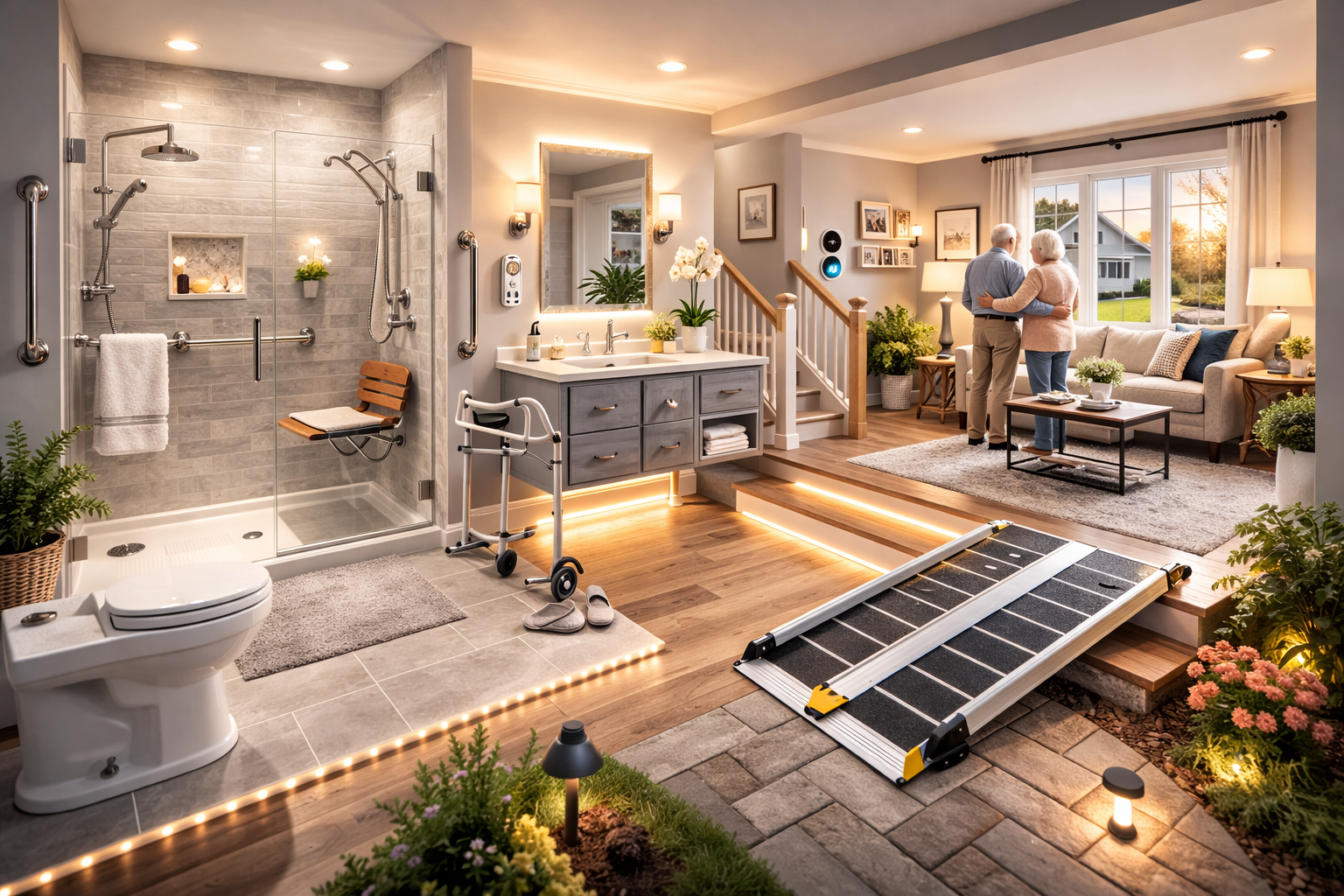
And thankfully, these installations no longer look like hospital fixtures. Frameless glass, slip-resistant tile, and built-in seating now create a clean, modern look that blends with the rest of the home.
Grab bars are no longer bulky chrome rails. Today’s installations integrate into towel racks, soap holders, and wall accents — while still being reinforced to support over 250 pounds.
Standard toilets sit too low for many seniors with knee, hip, or mobility issues. Installing a 17–19 inch comfort-height model makes standing safer and significantly reduces strain.
If you are unsure where to begin, consulting a professional who specializes in bathroom modifications can help identify structural risks that are easy to overlook during a DIY inspection.
Many homes in Levittown, Bensalem, and Langhorne are split-levels. Even ranch homes often include porch steps or garage entry thresholds.
What feels minor today can quickly become a major barrier for:
We have seen homeowners delay addressing a single garage step for years, only to realize after a knee replacement that it completely blocks safe entry.
Even one step at a doorway can prevent safe access.
Permanent concrete ramps are not always necessary. Modern portable ramps are lightweight, high-strength aluminum systems that:
They are especially helpful for temporary recovery situations or visiting relatives with mobility devices.
For homeowners unsure which ramp type fits their layout, working with a local mobility company familiar with Bucks County building styles can prevent costly installation mistakes.
In recent years, local mobility providers like Stair Ride Company working inside older Bucks County homes have seen more homeowners combine traditional accessibility upgrades with smart safety features. Aging in place is no longer just about structural changes. It now includes digital layers of protection.
Vision changes with age. Many seniors require significantly more light than they did decades earlier. Poor lighting causes depth misjudgment — especially on stairs, hallway transitions, and uneven thresholds. It is not always tripping that causes a fall. Often, it is simply misjudging a shadow.
LED strips under cabinets and bathroom vanities create low-glare floor illumination. They provide visibility during nighttime without harsh overhead brightness.
Installing motion-activated lighting in hallways, stairwells, basements, and garages eliminates the need to search for switches in the dark. It is a small upgrade, but one that consistently makes homes safer during late-night movement.
Modern aging-in-place planning now includes digital safety layers.
Smart lighting systems reduce physical strain and eliminate dark-room navigation. They can:
For seniors with limited mobility or arthritis, this removes a surprising amount of daily strain.
Devices such as Ring and Nest allow seniors to view and communicate with visitors without rushing to the door.
This reduces:
Waiting until after a fall increases:
A planned upgrade is almost always more affordable and less disruptive than an emergency response.
The cost of installing a stairlift, adding a ramp, or completing a bathroom renovation is typically a fraction of one year in assisted living. For Bucks County homeowners — especially those in multi-level properties — proactive safety planning preserves independence, stability, and home equity.
Modifying your home is not about admitting defeat. It is about protecting independence before it is compromised. Whether you live in a historic stone farmhouse in Newtown or a Cape Cod in Croydon, your home can adapt — if you plan thoughtfully.
The families who plan early rarely regret it. The ones who wait often tell us they wish they had acted sooner. If you are considering safety upgrades, start with an in-home evaluation from a qualified local mobility specialist who understands Bucks County layouts and structural constraints.
Aging in place is not about staying put. It is about staying safe. And the safest homes are the ones prepared before they are needed.