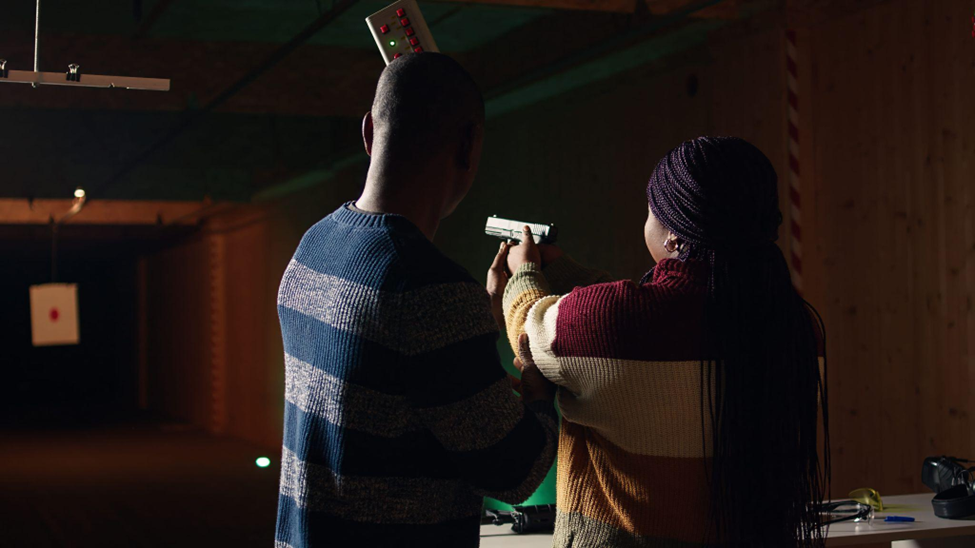
Home defense planning begins with a realistic assessment of space, response time, and maneuverability. Handguns remain central to that assessment because they are engineered for controlled performance in confined residential environments where speed, precision, and responsible handling must work together.
Unlike long guns designed for distance or field use, handguns are built for close-quarters responsiveness. Their small size makes it easier to get around corners and through doorways, and their flexible storage options work well with modern safes and security systems to support responsible access strategies.
Home defense scenarios are typically defined by tight angles and limited reaction time. Handguns emphasize agility in these conditions. They allow defenders to:
Handguns stress the importance of controllability. Recoil management, grip texture, and trigger consistency directly influence shot placement in high-pressure environments. In defensive planning, predictability under stress becomes more valuable than raw firepower.
Modern designs increasingly integrate optics-ready slides, accessory rails, and enhanced ergonomics. These refinements reflect the growing emphasis on practical accuracy rather than outdated notions of minimal configuration.
Effective home defense is rarely built around a single decision. It involves layered preparation that includes lighting, surveillance, secure entry points, and reliable equipment. Handguns function as one component within this broader framework.
A structured approach often includes:
Handguns infer a philosophy of readiness that prioritizes responsible access. They are not chosen for intimidation but for practical application when other layers of deterrence fail.
The U.S. Department of Justice notes that responsible firearm storage and training significantly reduce the risk of unintended injury while maintaining lawful defensive capability. Reviewing guidance can help owners align their preparedness with safety standards.
Debates around caliber and magazine capacity continue to evolve. Handguns highlight a balance between manageable recoil and effective defensive performance. Larger calibers may offer increased stopping potential, while mid-sized platforms often provide greater control and higher capacity.
When evaluating defensive configurations, buyers frequently consider:
Handguns emphasize consistency. Reliability under repeated use remains a decisive factor, particularly for those who integrate regular range training into preparedness routines.
Current industry trends show increased interest in striker-fired platforms with optics compatibility. Red dot integration enhances sight acquisition speed, especially in low-light or high-adrenaline scenarios where traditional iron sight alignment may slow response time.
Control defines effectiveness in close-range defense. Grip angle, texturing, trigger reset, and slide manipulation all influence performance during high-stress encounters. Handguns demonstrate the value of familiarity and repetition.
Practical considerations include:
In home defense planning, equipment must support confidence rather than introduce complexity. Simplified operation reduces cognitive load when seconds matter.
Ammunition choice plays a critical role in defensive planning. Expanding defensive rounds are commonly selected to reduce over-penetration risk while maintaining effectiveness.
Buyers evaluating defensive loads often prioritize:
Handguns reinforce the importance of pairing a firearm and ammunition deliberately. Consistency between training ammunition and defensive loads improves familiarity and recoil expectation.
Responsible ownership also involves understanding local and state regulations regarding storage, transport, and use. Consulting resources such as the Bureau of Alcohol, Tobacco, Firearms, and Explosives helps ensure compliance with federal firearm regulations and purchasing requirements.
Preparedness is not solely mechanical. It is strategic and psychological. Handguns represent a measured approach to personal protection, where decision-making, discipline, and situational awareness outweigh impulse.
A responsible home defense plan emphasizes:
Rather than relying on size or intimidation, handguns support precision and control. In confined spaces, excessive length can hinder mobility. Compact defensive platforms provide a balance between readiness and maneuverability.
Recent innovation has reshaped expectations around defensive firearms. Optics-ready slides, improved metallurgy, modular grip systems, and corrosion-resistant finishes enhance longevity and usability.
Cerakote finishes, for example, provide additional resistance to wear and environmental exposure. Accessory rails support mounted illumination systems that improve target identification in low-light scenarios.
Handguns continue adapting to user demand for modularity and customization. Interchangeable backstraps, optic mounting plates, and upgraded sights allow tailored configuration without compromising reliability.
Ultimately, home defense planning centers on structure and discipline. Equipment selection must align with realistic scenarios rather than abstract debates.
A well-considered approach often includes:
Handguns embody a philosophy of controlled readiness. Their compact design, evolving technology, and adaptability to layered defense strategies make them a central element in modern home protection planning.
Close-range defense is not about excess; it is about precision, responsibility, and preparedness structured around real-world conditions. By focusing on controllability, reliability, and informed ownership, homeowners can approach defensive planning with clarity and confidence.