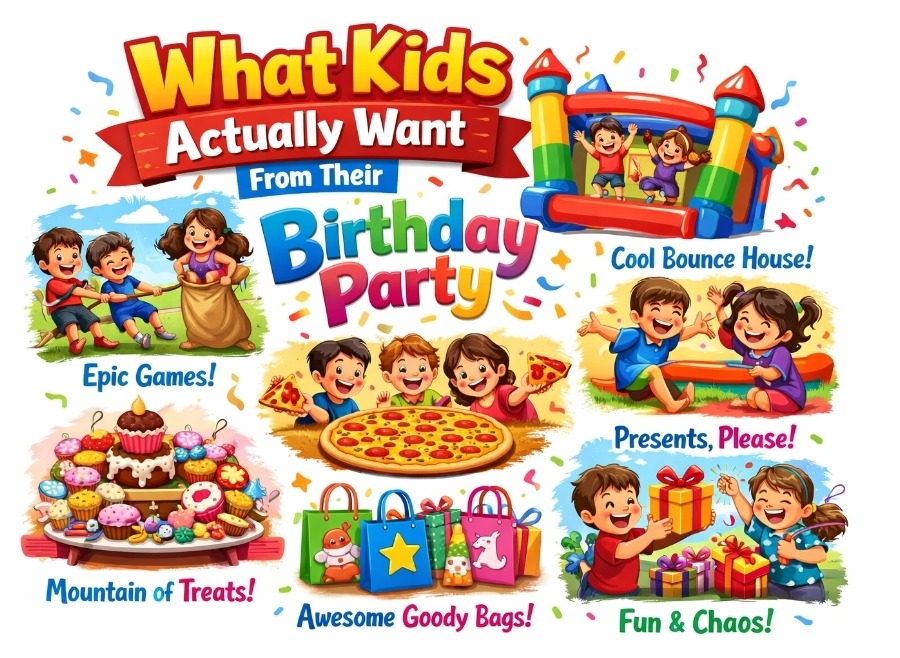
Ask any parent what makes a good birthday party. You'll hear about themes. Decorations. The perfect cake. Coordinating napkins. Now ask a kid. They don't care about napkins. They barely notice the decorations. What they remember is whether they had fun. Whether something exciting happened. Whether they felt like the star of the day. The gap between what parents stress about and what kids actually value is massive. Bridging that gap is the secret to throwing a party that everyone—including the host—actually enjoys.
Pinterest ruined birthday parties. That's an exaggeration. But only slightly. The pressure to create Instagram-worthy perfection has turned kids' birthdays into performance art. Parents spend weeks planning, decorating, and curating—only to watch kids ignore the aesthetic touches entirely.
A child looks at a party and asks one question: what do I get to do? They're not admiring the balloon arch. They're wondering when the action starts. The most elaborately decorated party with nothing to do will bore them. The simplest setup with a great activity will thrill them.
The pursuit of the perfect party backfires. Stressed parents don't enjoy the day. Kids pick up on that tension. What should be a celebration becomes an endurance test for everyone. Letting go of perfection isn't lowering standards. It's redirecting energy toward what actually matters.
The parties kids rave about have one thing in common. Something happened. Not just cake and presents—those are expected. Something they participated in. A challenge. A game. An adventure.
Kids love feeling like a team. Activities that give the group a shared goal channel chaotic energy into focused fun. Treasure hunts. Relay races. Building competitions. Escape rooms. The format matters less than the structure. Give them a mission and watch them rise to it. Parents searching for a kids birthday party richmond families actually recommend will notice that top-rated venues all share this quality. They don't just provide a space—they provide an experience. Something for kids to do together.
Sitting and watching doesn't work for kids. Movies, magic shows, passive entertainment—these lose attention fast. Kids want to move. They want to participate. They want to feel like they're part of the action. The best party activities get every kid involved. No spectators. Everyone plays.
What thrills a six-year-old will bore a twelve-year-old. Matching the activity to the age group is essential.
Keep it simple and physical. Obstacle courses. Scavenger hunts with easy clues. Creative stations where they make something to take home. Rules should be minimal. Movement should be constant. Attention spans are short, so variety helps—rotate between activities instead of relying on one long game.
This age craves challenge and autonomy. They want to feel smart. They want competition. They want activities that don't feel "babyish." An escape room for kids designed for this age group hits the sweet spot. Problem-solving under pressure. Teamwork with real stakes. A sense of accomplishment when they crack the code. Tweens also care about social dynamics. Activities where everyone contributes equally prevent the awkwardness of some kids dominating while others fade into the background.
Teens are tricky. They're too old for traditional kids' activities but not yet interested in adult socializing. They crave experiences that feel mature without actually being adult. Escape rooms work well here too—especially rooms with more complex puzzles and immersive themes. So do competitive gaming setups, outdoor adventures, and experiences where they have some independence from hovering parents.
Great activities mean nothing if logistics fall apart.
Two hours is the sweet spot for most kids' parties. Shorter feels rushed. Longer and energy crashes. Plan the activity as the centerpiece and build everything else around it. Cake and presents should come after the main activity, not before. Front-load the action while energy is high.
Kids don't need a catered spread. Pizza. Snacks. Cake. Done. Elaborate menus go unappreciated and create extra stress. Save the culinary creativity for adult parties.
Things run faster or slower than planned. Always. A simple backup activity—a coloring station, a playlist for dancing, a stack of board games—fills gaps without requiring additional planning.
The best kids' birthday parties aren't the most elaborate. They're the ones where kids have something exciting to do. Where they feel like participants, not guests. Where they go home tired, happy, and already asking about next year. That doesn't require a massive budget or weeks of planning. It requires one good activity. Simple food. And a parent willing to let go of perfection in favor of fun. That's it. That's the whole formula.