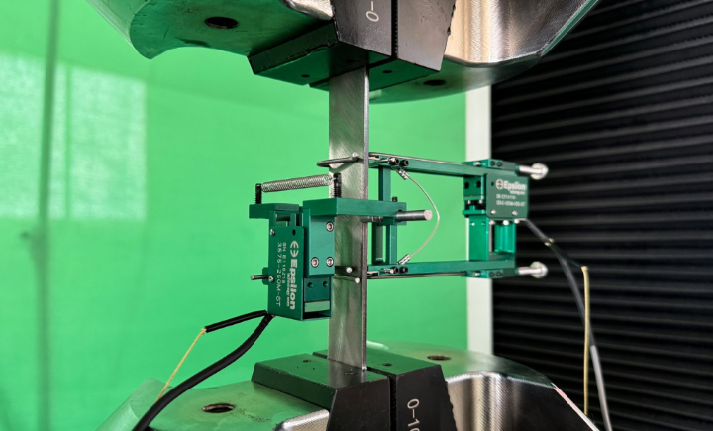
Mini tensile tests are moving from niche work to daily lab reality. The push comes from parts too small for standard coupons, or zones that cannot be sampled twice. Weld heat-affected zones, thin sections, additive parts, and failure analysis often leave only a sliver of usable material. In those cases, labs lean heavily on specimen prep tools, including a tensile sample preparation machine.
ISO/TS 6892-5:2025 was written for those moments, when ISO 6892-1 specimens simply cannot be made. The document also draws a clear boundary. Mini-specimen results should not be treated as drop-in replacements for full-size tensile data. Size effects, geometry differences, and measurement limits can shift strain and elongation results.
That shift puts more weight on preparation than many teams expect. Alignment, gripping, machining heat, and surface damage can change what the test reports. Inspection discipline matters too, because small dimensions leave little margin for error. A mini tensile test can produce valuable insight, but only when the specimen and setup behave as intended.
Miniature tensile specimens have been used for decades in research labs. What has changed is frequency. Many teams now test weld zones, thin sections, AM coupons, and small parts where standard samples are not practical. ISO/TS 6892-5:2025 was written for that gap. It sets a framework for how to run these tests when ISO 6892-1 specimens cannot be made.
Still, the document is careful about what it does not claim. It does not say mini results match standard results by default. That warning matters because size and geometry can shift the numbers. Strength values may track reasonably in some cases, but strain-based results often move first. Elongation after fracture is a common example. Reduction of area can also change when the cross-section is small and the fracture zone is influenced by local features.
One reason is gauge length. ISO methods often use a proportional gauge length tied to specimen size, with a proportionality factor near 5.6 in common practice. Mini designs often deviate because there is not enough straight material to keep the same relationship. When that happens, elongation metrics can stop being comparable across specimen sizes. Short gauge lengths also raise sensitivity to local defects and measurement noise. A small pore, a rough spot, or a slight thickness variation can matter more than it would on a longer specimen.
Geometry outside the gauge length can also sway the outcome. ISO/TS 6892-5 points engineers toward shapes that reduce shoulder influence. A practical rule is to keep the parallel length long relative to width or diameter. The guidance is about 5 times the width for flat specimens, and about 6 times the diameter for round ones. Those ratios help shift deformation away from the transitions.
The practical message for engineers is simple. Comparisons can be reasonable when the material is uniform, the geometry is controlled, and the strain measurement method is consistent. Comparisons become shaky when specimen designs differ, gauge lengths are very short, or transition regions start driving deformation. That is why many labs treat mini data as its own set until they validate the method.
In this context, preparation becomes part of the measurement chain. A CNC machine for flat samples can help control geometry, but it does not solve comparability by itself. The setup still needs documented dimensions, careful strain measurement, and a clear statement of what the results can support.
With mini specimens, the test setup stops being forgiving. Small cross-sections make it easier to introduce bending. A slight tilt in the grip faces, or a tiny offset in the load line, can add a bending component to what should be simple tension. That extra stress can change the early part of the stress-strain curve. It can also move the fracture away from the center, which many labs read as a material problem.
Alignment issues often hide in plain sight. The specimen can look straight, yet still see measurable bending strain once load rises. The risk is higher when the gauge section is short, because there is less length to “average out” small misalignments. Many teams end up chasing scatter that is really load train geometry.
Gripping is another pressure point. Force grips can work, but they can also crush thin sections or introduce local compression that triggers premature yielding. Form-fit features, like pins, shoulders, or threaded ends, reduce reliance on clamping pressure. They can also improve repeatability when specimens are very small. Still, form-fit designs add their own machining and tolerance demands. Either way, the gripping plan has to match the specimen geometry, not the other way around.
Machining quality becomes more visible in the results. Mini gauge sections require consistent width or diameter across the full parallel length. ISO/TS 6892-5 points toward very tight dimensional control and scales tolerances from ISO 6892-1 for miniaturized geometries. As a typical reference, the document notes tolerances of ≤ 0.01 mm (or 0.5%, whichever is larger) for key flat dimensions such as thickness and width, and ≤ 0.015 mm (or 0.7%, whichever is larger) for small round diameters. Those limits are difficult to achieve without a stable machining process and disciplined inspection. The standard also states that dimensions used to determine the original cross-sectional area should be measured with an accuracy better than about 0.5%, since any area error becomes a direct stress error. If the area is wrong, the stress is wrong, no matter how good the machine is.
Prep can also change the material itself. Heat from cutting, aggressive grinding, or poor tool condition can leave a work-hardened skin. On a mini specimen, that layer can represent a meaningful fraction of the cross-section. Surface damage matters too. Scratches in the gauge section act as small notches, and they can pull the fracture to one side.
Equipment accuracy ties into all of this. ISO/TS 6892-5 links mini testing to high-accuracy force and strain measurement classes. That expectation reflects the reality of small extensions and small areas. When signals are small, any setup error becomes a bigger share of the result.
Mini tensile work often fails for reasons that never show up on a drawing. A lab may follow a published geometry and still see scatter, off-center breaks, or strange yield behavior. The fix is usually not a new material model. It is a tighter process that treats specimen prep like part of the measurement system.
Start with design choices that can be defended later. Write down specimen type, flat or round, and the planned grip interface. Note the target gauge length and how strain will be measured. Mini specimens often force compromises on proportional gauge length, so the record needs to show what was possible and what was not. That documentation helps when someone later compares results to ISO 6892-1 data.
Next comes machining. Plan the sequence to limit heat and distortion in the gauge section. Roughing passes should leave enough stock for a stable finish cut. Finishing should be consistent across the batch, including tool condition and feed strategy. Deburring deserves its own step. On small sections, a careless edge cleanup can change width, leave a scratch, or create a local notch.
Inspection needs to happen before the test queue fills up. Measure thickness, width, or diameter in the gauge section and record the values. Confirm radii and gauge section length. ISO/TS 6892-5 expects tight dimensional control for mini specimens, and it also expects area-related measurements to be accurate to better than about half a percent. That is hard to reach without a repeatable method, calibrated tools, and a clear checklist.
Test setup records close the loop. Record the grips used, any alignment check method, and the strain measurement approach. Mini tests often rely on high-accuracy force and strain systems because the signals are small. A run sheet helps when results need to be defended months later.
Finally, add verification as a planned activity, not an afterthought. ISO/TS 6892-5 points labs toward comparing mini and full-size specimens from a homogeneous material. That comparison is a reality check on the whole chain, including machining and setup. A simple screen sometimes used in guidance looks at the elastic slope across several repeats. A wide band near plus or minus twenty percent has been used as a sanity check in some methods. It is not a substitute for validation, but it can flag obvious problems early.
Mini tensile testing is likely to spread as product forms keep shrinking. Many production labs now deal with AM lattices, thin-wall castings, narrow weld zones, and limited R&D coupons. ISO/TS 6892-5 gives those teams a shared reference point. It also pushes more responsibility onto specimen preparation and setup discipline.
The smaller the specimen, the less room there is for setup error. Grip marks, small bending, and machining strain can change the stress-strain curve. That can show up as scatter between repeats, unexpected yield shifts, or fractures that land outside the gauge section.
For labs comparing data across programs, transparency is the practical path. Record the specimen geometry, the strain measurement method, and how alignment was checked. Keep verification results with the report, not in a separate notebook. Many teams treat mini data as its own set until a comparison study shows otherwise. That posture does not slow development. It supports decisions built on small samples.