Cannabis cultivation has evolved significantly over the past few decades. While most people are familiar with indica and sativa varieties, there is a third subspecies that has quietly transformed modern growing practices. This lesser-known plant does not typically dominate dispensary shelves or consumer conversations, yet it plays a crucial role in today’s breeding innovations. Its unique biological traits have reshaped how cultivators approach efficiency, timing, and adaptability in cannabis production.
Unlike traditional photoperiod strains that depend on specific light cycles to begin flowering, this subspecies developed a different survival mechanism. Originating in harsh climates with short summers, it evolved the ability to flower automatically based on age rather than light exposure. This adaptation made it resilient, fast-growing, and highly practical for challenging environments. To better understand its botanical characteristics and genetic background, many educational resources explore the origins and structure of cannabis ruderalis in greater depth.
Though modest in appearance and lower in THC content compared to other varieties, cannabis ruderalis has become the genetic backbone of autoflower strains. Its influence extends far beyond its size, making it one of the most important contributors to modern hybrid development.
Cannabis ruderalis is believed to have originated in Central and Eastern Europe, particularly in regions known for cold temperatures and unpredictable growing seasons. In these areas, waiting for long seasonal light changes would reduce the plant’s chances of reproducing successfully. As a result, it evolved to flower automatically after a few weeks of vegetative growth.
This automatic flowering trait is what distinguishes it most clearly from indica and sativa plants. While traditional cannabis strains require roughly 12 hours of darkness to trigger flowering, ruderalis begins flowering regardless of light schedule.
These traits may appear modest, but they have proven revolutionary in breeding programs.
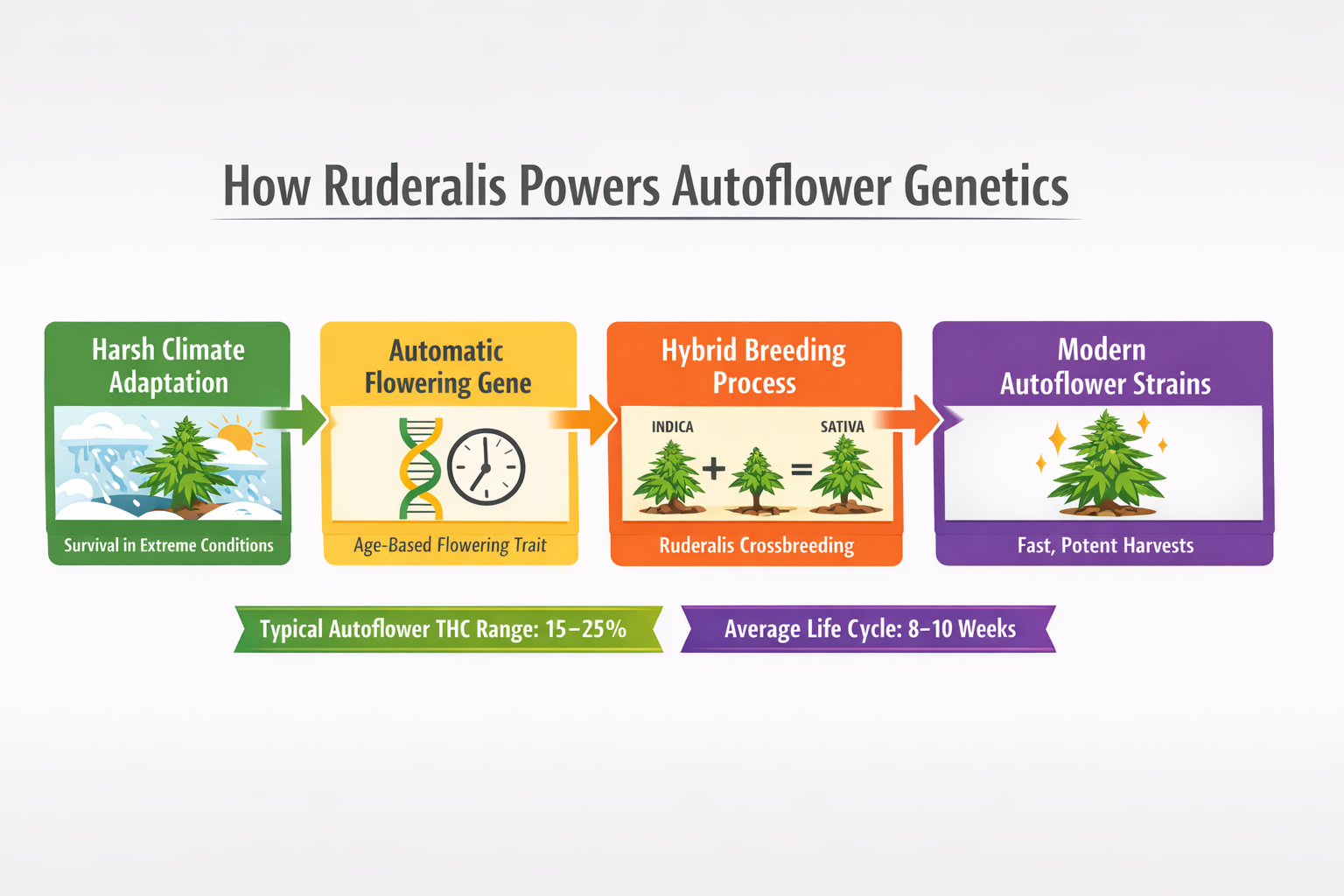
Autoflower strains are hybrids created by crossing indica or sativa plants with cannabis ruderalis. The objective is to combine potency and desirable effects with the automatic flowering gene. The result is a plant that maintains respectable cannabinoid levels while inheriting a rapid, light-independent growth cycle.
Traditional photoperiod plants require careful light management indoors and precise seasonal timing outdoors. Autoflowers remove this complexity. After a short vegetative period, they automatically transition into flowering, simplifying cultivation for beginners and commercial growers alike.
The growing popularity of autoflower strains is largely due to their speed and reliability. In controlled environments, multiple harvest cycles can be completed within a single year, increasing productivity without dramatically expanding space or resources.
The following table highlights key differences between ruderalis and the more commonly recognized subspecies:
This comparison illustrates why ruderalis itself is not widely sold as a standalone product but remains essential in hybrid genetics.
For many years, ruderalis was not considered commercially valuable. Its lower THC levels meant it lacked the strong psychoactive effects consumers often seek. Additionally, its small size and modest yield limited its appeal in traditional cultivation markets.
However, breeders eventually recognized that its automatic flowering ability could solve several challenges in cannabis production. By selectively breeding ruderalis with potent strains, cultivators were able to preserve cannabinoid strength while integrating its resilient traits.
This discovery changed the trajectory of modern cannabis breeding.
This visual progression demonstrates how a survival adaptation evolved into one of the most significant innovations in cannabis cultivation.
Autoflower genetics have introduced several cultivation benefits:
Because they are less sensitive to light changes, autoflowers can thrive in a variety of setups, including small home grows and commercial operations seeking efficient turnover.
As cannabis research expands, breeders continue refining autoflower genetics. Innovations now focus on improving terpene profiles, boosting cannabinoid concentrations, and increasing yield without sacrificing the automatic flowering trait.
The once-overlooked subspecies has become a foundational component of cannabis science. Its genetics allow for experimentation that blends speed, resilience, and potency in ways that were previously difficult to achieve.
Today, cannabis ruderalis represents more than a botanical curiosity. It stands as proof that adaptation to environmental hardship can lead to transformative agricultural breakthroughs.
Cannabis ruderalis may not receive the same recognition as indica or sativa, but its contribution to modern cultivation is undeniable. By introducing the automatic flowering gene into breeding programs, it enabled the development of autoflower strains that are faster, more resilient, and easier to manage.
What began as a small, hardy plant adapted to harsh climates has become the genetic engine behind a major shift in cannabis production. As breeding techniques continue advancing, the influence of ruderalis is likely to expand further, shaping the future of cannabis cultivation worldwide.