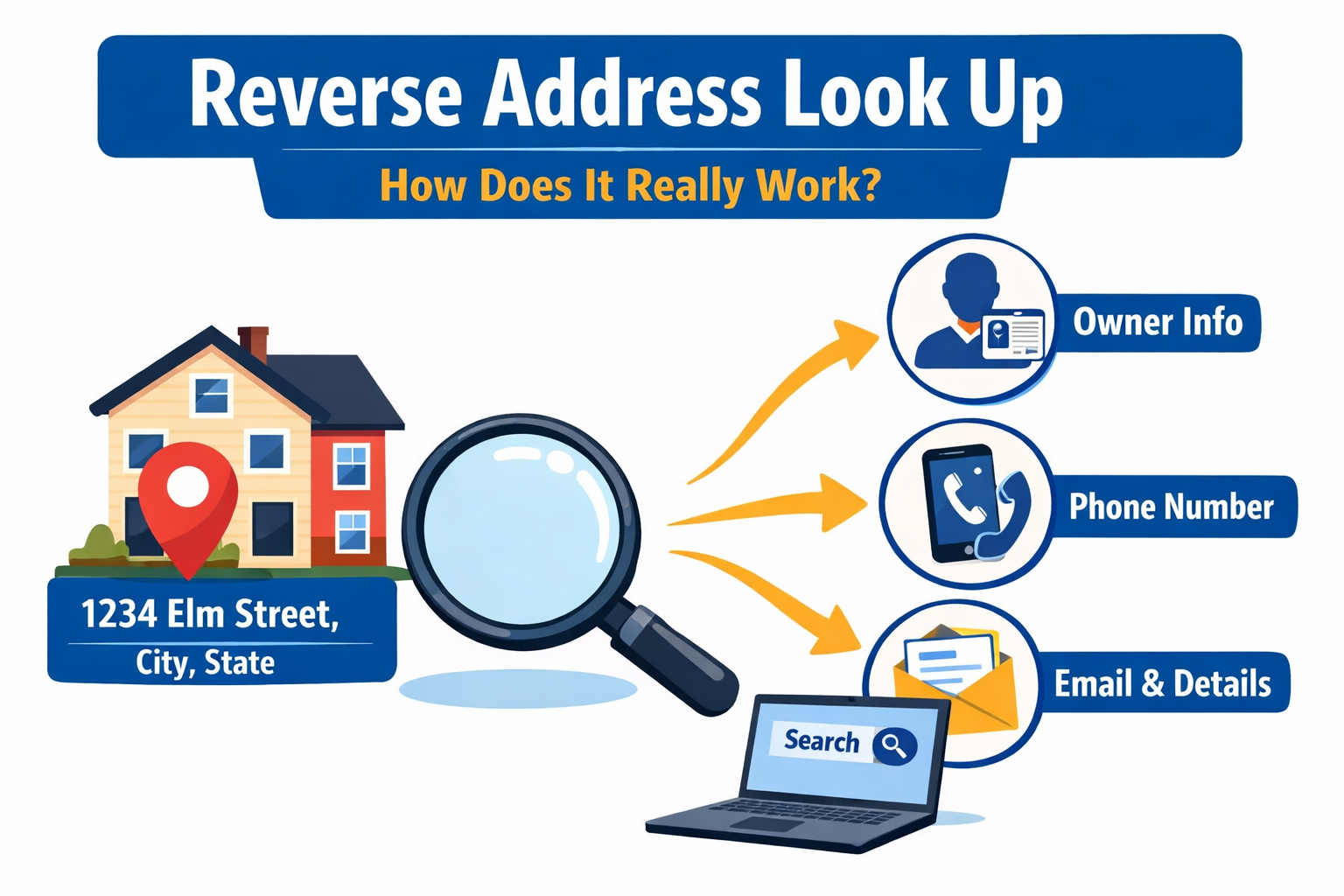
Ever stared at a mysterious address and wondered who lives there, what kind of property it is, or why it keeps showing up in your life? Maybe it’s a missed delivery slip, a strange letter in your mailbox, or a property you’re thinking of buying. This is where reverse address look up steps into the spotlight. Think of it as flipping the traditional search process on its head. Instead of starting with a person’s name and finding their address, you start with the address and uncover the story behind it.
In today’s data-driven world, addresses are more than just locations on a map. They’re digital fingerprints tied to public records, property histories, ownership details, and sometimes even social patterns. Reverse address look up has become a go-to tool for homeowners, renters, real estate investors, journalists, and everyday people who simply want clarity. But how does it really work? Is it accurate? And what kind of information can you realistically expect to find?
Let’s break it all down in plain English—no jargon, no fluff, just real explanations that make sense.
At its core, reverse address look up is exactly what it sounds like: a method of retrieving information about an address by using the address itself as the search input. Instead of asking, “Where does this person live?” you’re asking, “Who or what is connected to this location?” That subtle shift makes a big difference in how information is gathered and presented.
An address is a powerful data point. It’s used by governments for taxation, by utility companies for service delivery, by real estate platforms for listings, and by postal systems for mail routing. Each of these systems generates records, and many of those records are legally available to the public. Reverse address look up tools simply aggregate these scattered data points into one accessible place.
What surprises most people is how much information an address can reveal without crossing privacy lines. You’re not hacking anything or peeking behind locked doors. You’re accessing compiled public records—things like property ownership, building type, sale history, zoning data, and sometimes associated names. Think of it like walking into a massive library where all the books already exist, and the tool just helps you find the right shelf faster.
Another key point is intent. Reverse address look up isn’t about spying; it’s about context. Homebuyers use it to avoid bad investments. Renters use it to understand neighborhoods. Businesses use it to verify locations. Even journalists rely on it for fact-checking. The address becomes a starting point for informed decisions, not idle curiosity.
Behind the clean search box and instant results lies a surprisingly complex system. Reverse address look up platforms don’t magically “know” things—they pull data from multiple sources, normalize it, and present it in a readable format. Understanding this process helps you judge accuracy and limitations.
First, the system takes the address you enter and standardizes it. Addresses can be written dozens of ways, so the tool converts it into a consistent format recognized by databases. This step alone filters out a lot of errors. Once standardized, the address is matched against various datasets.
These datasets usually include property tax records, land registries, census data, utility hookups, and sometimes court or municipal records. Each source contributes a piece of the puzzle. Property records might show the owner’s name and purchase date. Tax records can reveal assessed value. Census data adds demographic context. When combined, these sources create a fuller picture.
Next comes data linking. This is where modern technology shines. Advanced algorithms connect related records while avoiding duplicates. For example, if a property was sold three times, the system tracks ownership changes instead of listing them as separate properties. This makes the final report easier to understand and more accurate.
Finally, the results are displayed in layers. Basic searches might show property type and ownership, while deeper searches can reveal historical data. Paid tools often offer more comprehensive reports because they access premium databases or update their data more frequently. The key takeaway? Reverse address look up is less about a single database and more about smart data integration.
One of the most common questions is, “What exactly will I see?” The answer depends on the tool you use and the records available for that address, but there are some common categories of information you can expect.
Property details are usually front and center. This includes whether the location is a single-family home, apartment building, commercial property, or vacant land. You may also see square footage, number of bedrooms, construction year, and lot size. For real estate enthusiasts, this alone is gold.
Ownership information often follows. In many cases, you can see the current owner’s name and sometimes previous owners as well. This is especially useful for buyers looking to negotiate or investors researching trends. Keep in mind that ownership data may lag behind recent sales due to reporting delays.
Historical records add another layer. Past sale prices, renovation permits, zoning changes, and tax assessments help paint a timeline of the property’s life. It’s like reading a biography, but for a building. Some tools even include neighborhood data, such as average home values or crime statistics, giving you context beyond the address itself.
In certain cases, associated names may appear—people linked to the address through public records. This doesn’t mean they currently live there, but it provides clues. The important thing to remember is that reverse address look up reveals records, not real-time occupancy. It’s about documented connections, not surveillance.
People turn to reverse address look up for all kinds of reasons, and most of them are practical. One major use case is real estate research. Before buying or renting, people want to know what they’re getting into. A quick address search can reveal red flags like frequent ownership changes or unusually low property values.
Another common reason is mail and delivery confusion. If you keep receiving mail for unknown names, a reverse address look up can help you understand whether it’s a previous resident or a clerical error. It’s a simple way to clear up small but persistent annoyances.
Safety and verification also play a role. Businesses use address lookups to confirm customer locations, while freelancers and service providers use them to verify job sites. It’s not about distrust—it’s about professionalism and preparedness.
Then there’s curiosity, which is perfectly human. Maybe you’re researching a historic home or tracing family history. Addresses often act as anchors in personal and community stories. Reverse address look up gives those stories structure and context, turning vague curiosity into concrete knowledge.
Not all reverse address look up tools are created equal. Free tools are great for quick checks and basic information. They often pull from limited public databases and provide surface-level details like property type or city records. For many casual users, this is more than enough.
Paid tools, on the other hand, go deeper. They tend to update data more frequently and include premium sources like detailed ownership history, lien records, or expanded neighborhood analytics. These platforms invest heavily in data accuracy and user experience, which is reflected in their reports.
The real difference lies in purpose. If you’re casually checking an address out of curiosity, a free tool works fine. If you’re making a financial decision, conducting research, or verifying information for work, a paid service often pays for itself by reducing risk.
It’s also worth noting that reputable paid services follow strict data compliance rules. They don’t sell sensitive information or cross ethical boundaries. In fact, many free tools monetize through ads or limited data transparency. Choosing between free and paid isn’t about cost—it’s about confidence in the information you’re using.
Reverse address look up is powerful, but it’s not magic. One major limitation is data freshness. Public records take time to update, so recent changes might not appear immediately. A house sold last month may still show the previous owner, depending on reporting cycles.
Another misconception is that these tools show who is currently inside a property. They don’t. They show documented associations, not real-time occupancy. This distinction matters because it prevents unrealistic expectations and misuse.
Accuracy also depends on the source. Some addresses have rich records, while others—especially new constructions or rural properties—may have limited data. This isn’t a flaw of the tool; it’s a reflection of available records.
Understanding these limits actually makes reverse address look up more useful. When you treat it as a research assistant rather than an all-knowing oracle, you can combine its insights with other information to make smarter decisions.
Yes, reverse address look up is legal when used responsibly. The information comes from public records—documents that are legally accessible to anyone. There’s no breach of privacy because private, sensitive data is not included.
Ethics come down to intent. Using an address lookup to research a property or verify a location is widely accepted. Using it to harass or misrepresent someone is not. Reputable platforms clearly state acceptable use policies to guide users.
Think of it like reading a notice board at city hall. The information is there for transparency and accountability. Reverse address look up just digitizes and organizes it for convenience. When used with common sense and respect, it’s a perfectly ethical tool.
To get the most value, start with a complete and accurate address. Small typos can lead to mismatches. Use multiple tools if needed, especially when researching something important. Cross-checking improves confidence.
Focus on patterns rather than single data points. One odd detail doesn’t tell the full story, but consistent trends do. Look at ownership changes, valuation trends, and neighborhood context together.
Finally, use the information as a guide, not a verdict. Reverse address look up is a starting point for understanding, not the final word. When combined with site visits, conversations, and professional advice, it becomes an incredibly powerful decision-making aid.
In a world overflowing with information, clarity is currency. Reverse address look up gives structure to scattered data, turning raw records into usable insights. It empowers individuals to make informed choices without needing insider access or technical expertise.
As cities grow and transactions move online, addresses become even more central to our digital lives. Knowing how to research them responsibly isn’t just useful—it’s essential. Reverse address look up isn’t about curiosity alone; it’s about confidence, transparency, and smarter decisions in everyday life.
Reverse address look up is one of those tools that feels almost invisible until you need it—and then you wonder how you ever managed without it. By starting with something as simple as an address, you unlock layers of information that help you understand properties, neighborhoods, and documented connections with clarity and confidence. It’s not about invading privacy or uncovering secrets; it’s about making sense of public information that already exists.
When used thoughtfully, reverse address look up becomes a reliable research companion. Whether you’re buying a home, verifying a location, or satisfying genuine curiosity, understanding how it works helps you use it wisely. In the end, it’s not the data that matters most—it’s how you interpret and apply it.