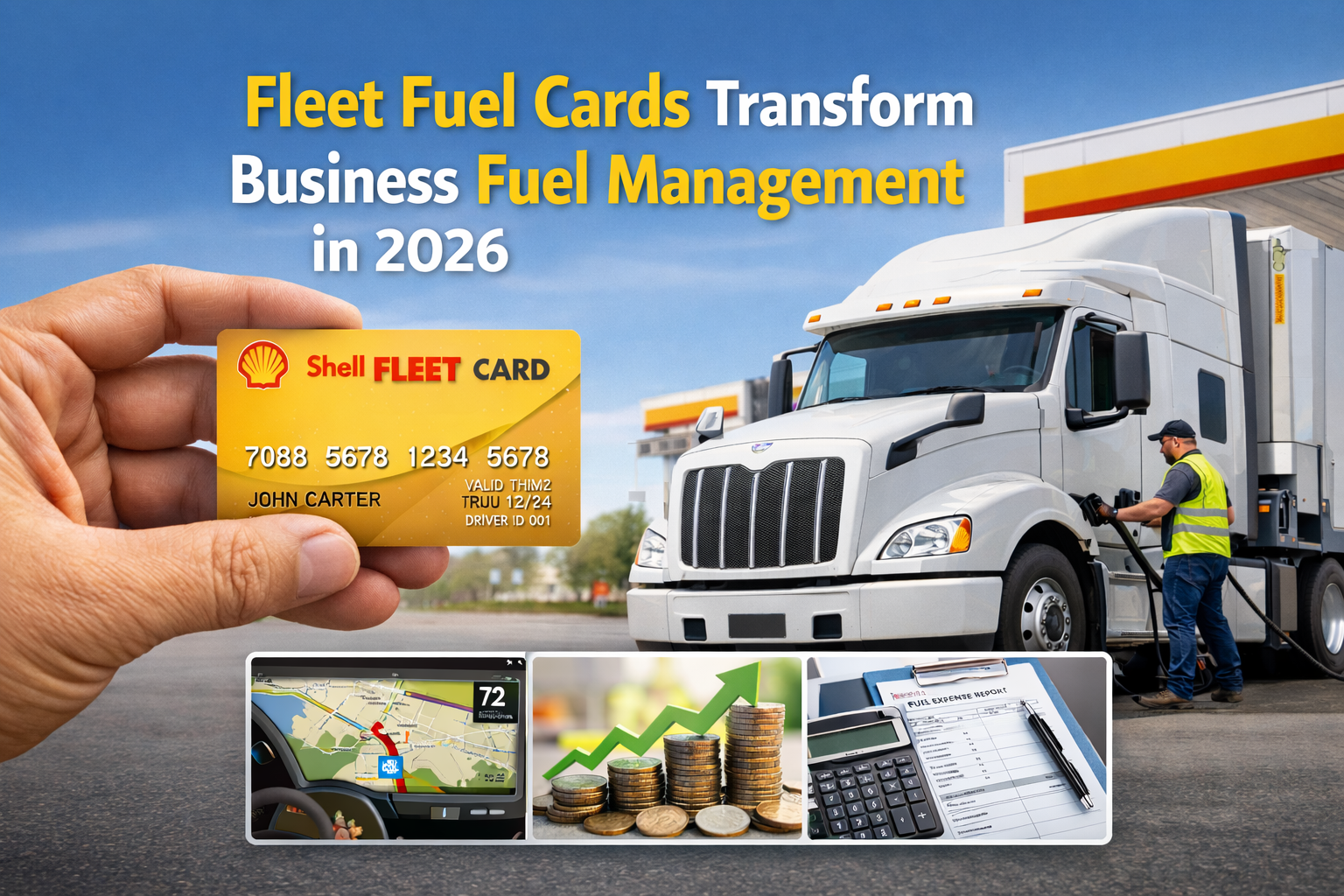
Fleet fuel cards revolutionize how companies manage vehicle expenses, offering rebates up to 7¢ per gallon while providing real-time expense tracking across nationwide networks. With fuel representing 24-25% of total fleet operating costs, these specialized payment tools help businesses save money through automated expense management and exclusive discounts at filling stations nationwide.
Fleet fuel cards function as specialized payment instruments designed specifically for fuel purchases and vehicle maintenance. Unlike traditional credit cards, these cards offer rebates ranging from 3 to 7 cents per gallon, with companies like WEX and Shell providing access to nationwide savings networks spanning over 95,000 locations. The global fuel card market size reached USD 877.63 billion in 2025 and continues expanding at 14.2% annually, reflecting growing business adoption.
Business owners using fleet cards gain immediate visibility into fuel expenses through dashboard analytics that track every gallon purchased. These systems eliminate manual expense tracking while providing purchase controls that prevent fraud and unauthorized spending. Small businesses particularly benefit from simplified tax reporting, as fleet fuel management systems automatically categorize expenses and generate detailed reports for accounting purposes.
WEX fleet fuel cards deliver substantial cost savings through their nationwide savings network, offering exclusive discounts at major chain stores and truck stops including Pilot Flying J. Customers using their WEX fleet card within the WEX nationwide savings network typically save 3 to 5 cents per gallon on diesel fuel and gasoline purchases. These savings appear as a credit on your billing statement based on the number of gallons purchased each month.
The WEX fuel card provides additional value through strategic partnerships with Shell Fleet and other major fuel brands. Fleet managers can track fuel efficiency metrics in real time, identifying vehicles that consume excessive fuel and optimizing routes to reduce overall fuel costs. This comprehensive fuel management approach helps companies reduce spent on fuel by 15% to 20% annually through better data visibility and purchase controls.
Modern fleet cards integrate GPS tracking capabilities that monitor vehicle locations and fuel efficiency patterns across your entire fleet of vehicles. This real-time data enables managers to identify inefficient routing, excessive idling, and unauthorized vehicle usage that increases fuel and maintenance costs. Fleet solutions from WEX include mobile app functionality allowing drivers to locate nearby gas stations with the lowest prices.
Advanced card controls enable businesses to set specific parameters for fuel purchases, including transaction limits, time restrictions, and approved merchant categories. These features prevent employee fraud while ensuring company vehicles only purchase gas and diesel at authorized locations. Virtual cards provide additional security for online account management and remote fleet management scenarios.
Fleet size significantly impacts which fuel card delivers optimal value for your business needs. Small businesses with fewer than 10 vehicles benefit from universal card options accepted at multiple retail networks without complex rebate structures. These cards offer simplified expense management with straightforward per gallon discounts and minimal fees.
Larger fleets requiring sophisticated fuel expense tracking should consider specialized fleet gas card programs from WEX or similar providers. These cards can be used at truck stops nationwide while providing detailed analytics on fuel and maintenance expenses. Mixed fleet operations combining trucks and passenger vehicles need flexible card account options that accommodate different fuel types and consumption patterns.
Fleet fuel expenses become transparent through dashboard reporting systems that capture every payment at the pump. Modern expense management platforms categorize fuel purchases automatically, eliminating manual data entry while providing instant visibility into fuel discounts earned. Business decisions improve when managers access accurate information about actual per gallon costs across different filling stations.
Account management tools enable administrators to manage fuel card access for individual drivers, setting spending limits and monitoring unusual activity patterns. Cards can also integrate with existing accounting software, streamlining expense tracking and reducing administrative overhead. This automation helps businesses save money on processing costs while improving accuracy in budget forecasting.
Fuel rebates represent significant savings opportunities, with programs offering tiered discounts based on gallons purchased monthly. Cards offer various rebate structures, from fixed per gallon discounts to percentage-based savings that scale with volume. Understanding these programs helps fleet managers optimize fuel savings by consolidating purchases to reach higher rebate tiers.
Strategic fuel purchase planning around rebate programs can reduce overall fuel expenses by 8% to 12% annually. Fuel cards help businesses maximize these savings by automatically applying discounts and tracking rebate earnings across all transactions. The combination of upfront discounts and backend rebates creates compound savings that significantly impact bottom-line profitability.
Not all fleet solutions provide transparent pricing, with some card companies charging hidden fees for services like online reporting or customer support. Understanding fee structures before selecting a business gas card prevents unexpected costs that erode fuel savings. Common fees include monthly account charges, transaction fees, and setup costs that vary significantly between providers.
Comparing fuel card for your business options requires evaluating total cost of ownership beyond advertised rebates. Some cards can help reduce overall expenses despite lower per gallon discounts by eliminating administrative fees and providing free fleet management tools. Businesses should analyze their specific fuel purchase patterns to identify which card account structure delivers maximum value.