For managers overseeing agricultural facilities, research institutions, or commercial nurseries, the ability to create controlled environments for large-scale plant production is a critical operational factor. Tunnel greenhouses offer a proven, cost-effective method for extending growing seasons, protecting high-value crops from environmental stress, and optimizing yield in a controlled setting. This article provides a technical and operational overview of implementing large-scale tunnel greenhouse structures, focusing on their application in professional horticultural and agricultural environments.
In the context of industrial-scale agriculture and commercial horticulture, protected cultivation is a method for maximizing both productivity and resource efficiency. Large tunnel greenhouses allow for the precise management of light, temperature, and humidity across significant growing areas, leading to more predictable harvests, higher quality output, and reduced crop loss from weather events. For logistics operations tied to fresh produce supply chains, this predictability translates directly to more reliable sourcing and consistent product flow to processing or distribution centers.
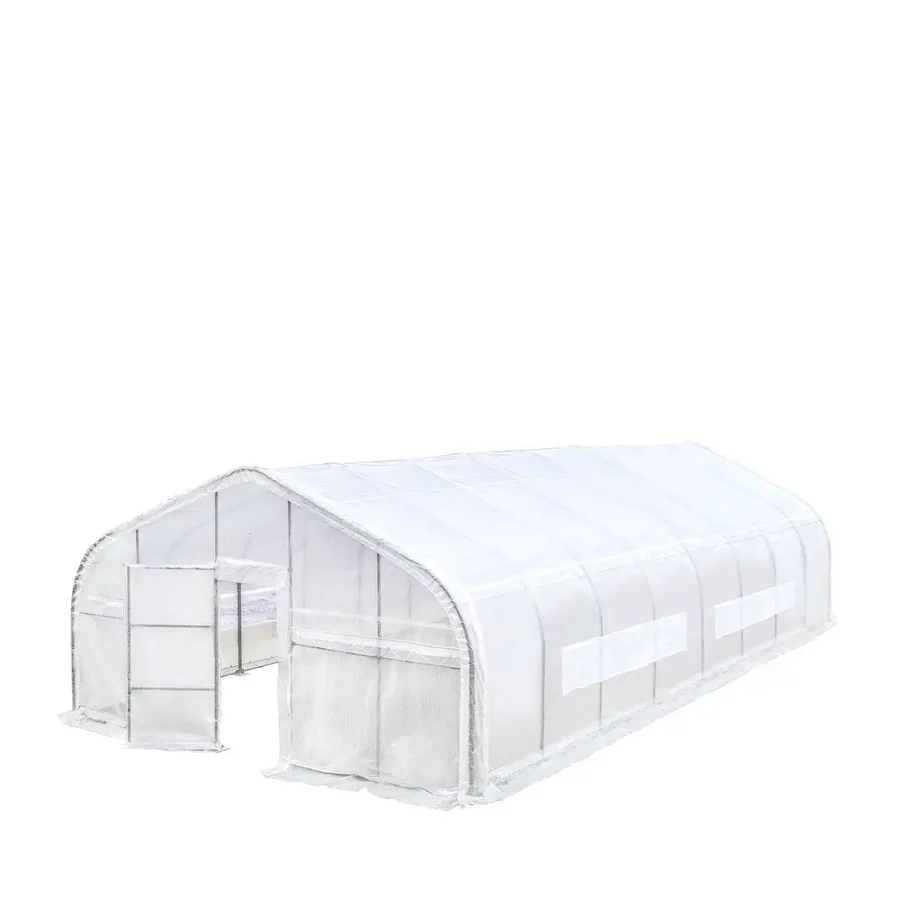
A large tunnel greenhouse, often referred to as a high tunnel or hoop house, is characterized by its Quonset-style arched frame. The structure is typically constructed from heavy-duty galvanized steel hoops anchored into the ground and connected by purlins for longitudinal stability. The covering is a crucial component; a heavy-grade material like 12 Mil Ripstop Leno Mesh cover is selected for its superior strength, tear resistance, and durability against UV radiation and wind. A unit like the 20' x 40' Tunnel Greenhouse Grow Tent w/12 Mil Ripstop Leno Mesh Cover represents a substantial growing space—800 square feet—suitable for commercial applications. Integrated roll-up or roll-down side walls provide essential, adjustable ventilation.
The efficiency of a large tunnel greenhouse lies in its ability to create an optimized growing environment with a significantly lower capital investment than permanent glass or polycarbonate structures. This accelerates return on investment for commercial growers. Productivity is enhanced through extended growing seasons, enabling multiple harvest cycles or the cultivation of crops that would otherwise not thrive in the local climate. From a safety perspective, the robust structure protects crops from hail, heavy rain, wind, and snow, significantly reducing crop loss risk. For operators, a well-designed greenhouse with ample headroom and accessible ventilation improves working conditions for planting, maintenance, and harvesting.
The technical foundation of a large tunnel greenhouse is its engineered ability to withstand environmental forces. The frame must be designed and anchored for local snow and wind loads—a critical consideration across Canada. Proper anchoring, often with screw-in augers or rebar stakes, is essential to prevent uplift. The 12 Mil Ripstop Leno Mesh cover must be properly tensioned and secured with batten tape and wiggle wire or similar systems to ensure a tight fit that minimizes flutter and wear.
Managing the internal environment of a 20' x 40' space requires effective systems. Solar radiation can rapidly increase temperature, making the large, roll-up side walls essential for passive cooling. In cooler months or for frost-sensitive crops, supplemental heating may be necessary. Humidity management, achieved through ventilation, is also critical for preventing fungal diseases. Monitoring tools like max-min thermometers and hygrometers are fundamental for informed management.
Several variables determine the success of a large greenhouse operation. Site selection is paramount; the site must be level, well-drained, and receive unobstructed sunlight, particularly during shoulder seasons. Orientation relative to prevailing winds affects ventilation efficiency and wind load. Crop selection must align with the achievable environmental control within the structure. Operator knowledge of plant physiology and environmental management is crucial for making timely adjustments to ventilation, irrigation, and other inputs. Regular maintenance, including inspecting the cover for damage, checking frame connections, and ensuring ventilation mechanisms function smoothly, is essential for long-term performance and safety.
Operating and maintaining a large greenhouse involves specific safety considerations related to structure, environment, and equipment.
The greenhouse is the primary structure, but effective operation requires supporting tools and systems:
The primary advantage of a large tunnel greenhouse is its balance of cost, durability, and productive capacity. It offers a faster path to expanded growing capacity compared to permanent structures. The 12 Mil Ripstop Leno Mesh cover provides enhanced longevity and resistance to tearing, reducing replacement frequency. The 20' x 40' footprint offers substantial space suitable for commercial propagation, vegetable production, or nursery stock. For operations like farms, nurseries, or research stations, it provides a versatile space for season extension, crop protection, and controlled trials.
Tunnel greenhouses have less precise environmental control than glass or polycarbonate greenhouses, making them more susceptible to extreme temperature swings if ventilation is not actively managed. The plastic cover, while durable, has a finite lifespan and will eventually require replacement. They are vulnerable to high winds and heavy snow loads if not properly designed, anchored, and maintained. Temperature uniformity within the structure can be a challenge, especially in longer tunnels without active air circulation.
A commercial vegetable farm in the Okanagan Valley uses a 20' x 40' tunnel greenhouse to extend its growing season for high-value heirloom tomatoes. The structure allows them to plant earlier in the spring, protect the crop from unexpected late frosts with a simple propane heater, and continue harvesting well into the fall, long after field-grown crops have finished. The roll-up side walls provide excellent ventilation during hot summer months. This season extension has allowed the farm to supply local restaurants and farmers' markets for a longer period, significantly improving profitability and strengthening customer relationships.
Large tunnel greenhouses remain a foundational technology for expanding protected agriculture capacity. Future trends include the integration of more automated ventilation controls, sensor-based irrigation, and the development of even more durable and diffusive cover materials. For procurement specialists and operations managers, selecting a greenhouse involves assessing local climate conditions, specific crop requirements, and the desired level of environmental control. When properly sited, maintained with a focus on safety, and integrated with sound horticultural practices, a robust tunnel greenhouse is a powerful, long-lasting asset for enhancing productivity and operational control in the business of growing.