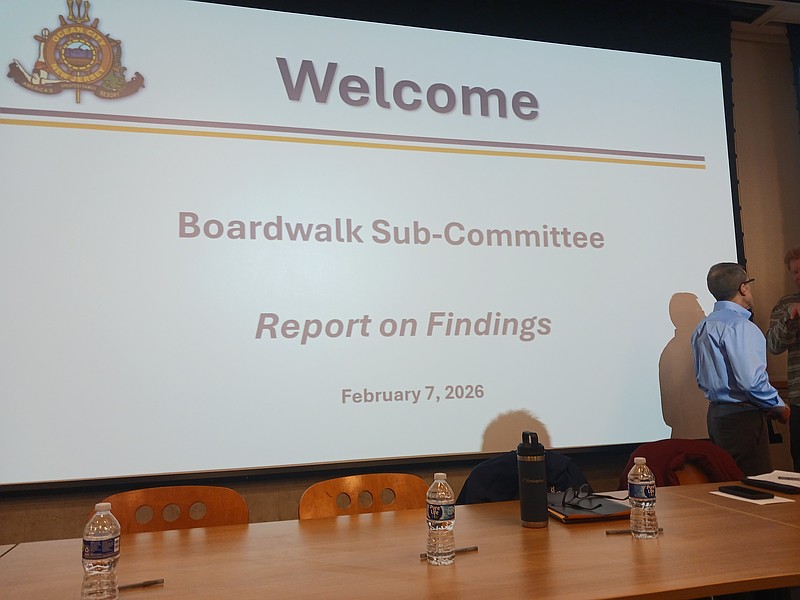
The Boardwalk subcommittee presented its preliminary findings during its first public meeting on Feb. 7.
The following Opinion piece was written by Ocean City resident Debra Reilly about the Ocean City Boardwalk Subcommittee, which is studying the future of the Boardwalk’s commercial sections, including the former Wonderland Pier amusement park site. The Subcommittee is expected to make its recommendations in May.
The Ocean City Boardwalk Subcommittee’s first public meeting on Feb. 7 was an encouraging and important start to a critical process. The data presented was robust, neutral, fact-driven, and comprehensive. Yes, the meeting was long and there was much to digest. And those looking for a quick answer may have been a little frustrated.
But this is to be expected. The Subcommittee is addressing a complicated and divisive issue, and perfect clarity and harmony cannot be expected immediately.
Some data will seem to conflict and require further analysis; it will be up to the Subcommittee to do so. There will be a desire to jump to solutions quickly; but the Subcommittee will need to demonstrate restraint and identify the true issues before solutions are floated.
This is a hard task. Kudos to Subcommittee Chairman Dave Winslow for steering this ship well, especially since the waters are choppy.
The meeting did leave us with some key takeaways. At a high level, the information presented points to a mixed picture. Tourism across Cape May County appears strong overall, yet some of Ocean City’s own indicators are moving in the opposite direction, even if only modestly so.
That is not a cause for alarm, but it is a signal that deserves careful attention and deeper analysis. The Subcommittee should continue to explore whether Ocean City is capturing its fair share of regional visitation, or whether more visitors are choosing to spend their time and money elsewhere, and if so, why.
One of the more concerning signals appears to be in day-trip activity. Daily beach tag sales have fallen significantly from earlier peaks, and parking activity is also down, with the closure of Wonderland Pier showing up as a noticeable drop layered on top of a trend that already appeared to be softening.
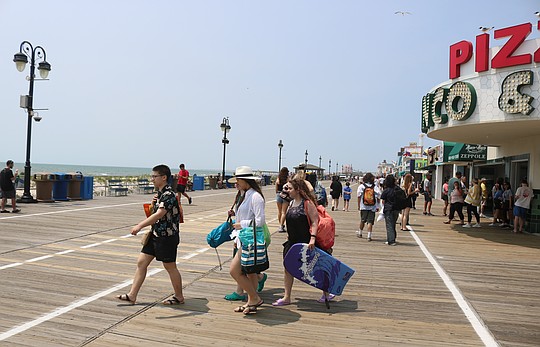
These numbers may reflect the volume of people coming into town for a few hours to walk the boards, grab a bite, and enjoy the experience. If those numbers are weakening, the Subcommittee needs to understand why.
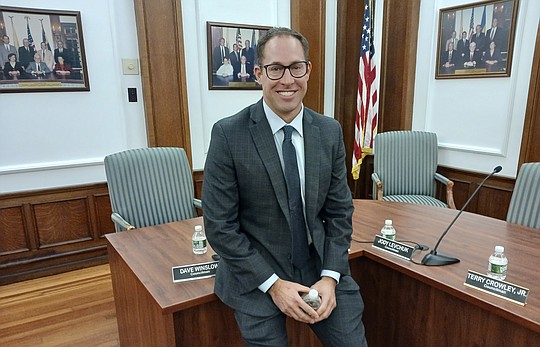
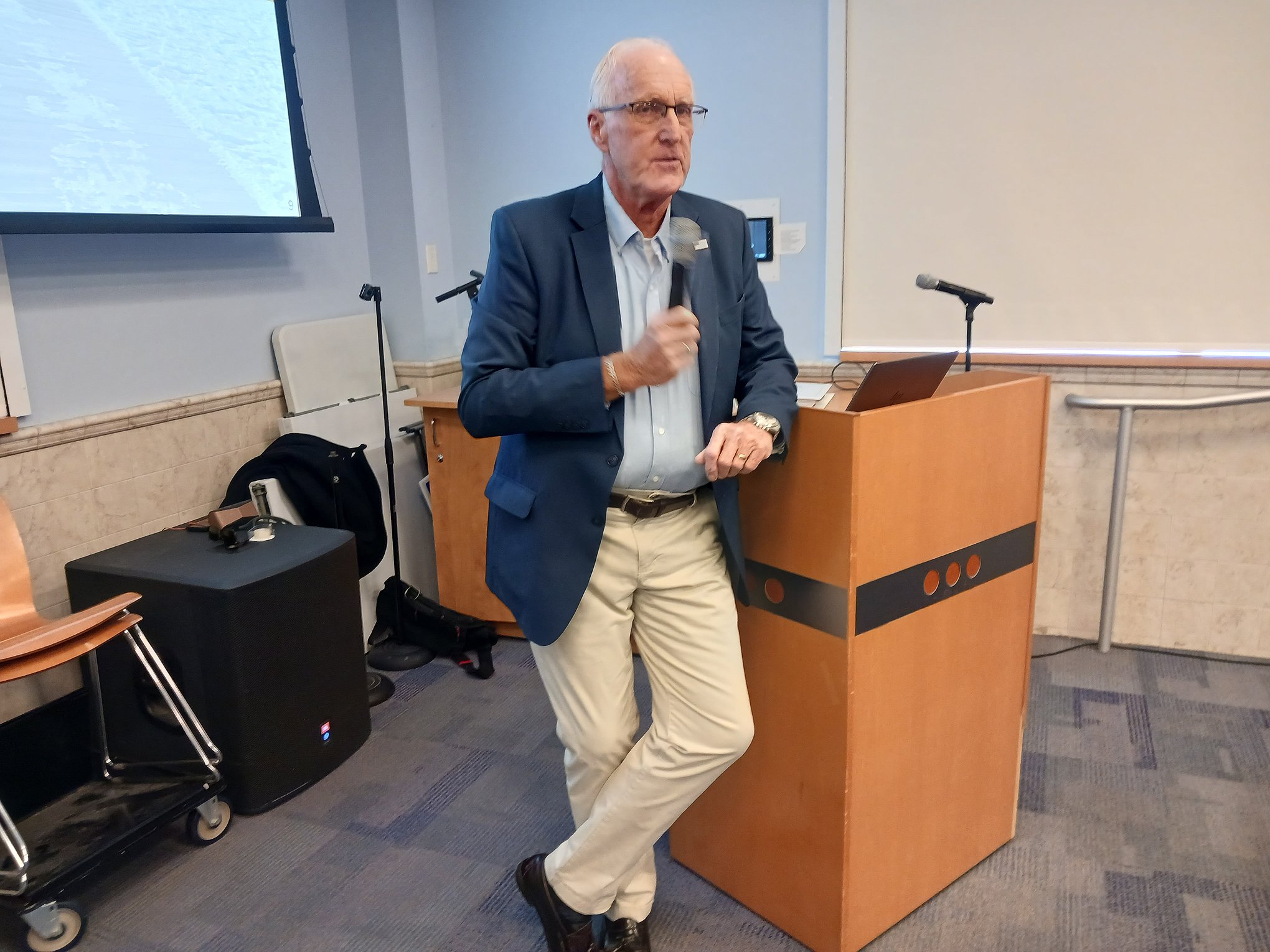 City Councilman Dave Winslow, who serves as the Boardwalk subcommittee's chairman, addresses the audience during the Feb. 7 meeting.
The data also highlighted another reality: only a small portion of Boardwalk properties are devoted to entertainment, while a large share is occupied by repeating food and retail uses.
In addition, the data showed that hotel occupancy trends in Ocean City do not suggest a lack of supply. That does not mean a small upscale hotel wouldn’t be welcome. It may just mean that lack of supply is not the problem that is driving visitorship down.
Taken together, these trends suggest there may be a growing mismatch between the friction involved in getting into town – fees, parking, and other costs – and the perceived value visitors receive once they arrive.
If day-trippers begin to feel that the experience does not justify the cost, they will simply choose another destination. That may be true for those wanting to stay a week, a month, or the entire summer. The city may be leaning too heavily on its past, and that legacy alone may not carry it much further. That should be a central concern.
This points to a clear need to continue enhancing the Boardwalk experience itself, and the city’s family-friendly brand that differentiates us from other shore towns. If visitation softens, the remaining amusements face additional economic pressure, and they could disappear as well. That could significantly challenge the community.
The data also makes clear that building new, traditional mechanical ride operations is increasingly difficult. Regulations, insurance, labor, and especially land costs make new large-scale amusement investment challenging, and the operators who remain viable today often do so because they carry little debt – something that is far harder for a new entrant to replicate.
That said, the Subcommittee also pointed out that we should be careful not to treat “amusements” as a single category. While mechanical rides face structural hurdles, newer forms of entertainment – digital attractions, immersive experiences, and other interactive venues – are being successfully built in Ocean City and other markets. These may offer more flexible and economically realistic ways to bring fresh energy and activity to the boards.
So where might the Subcommittee go next?
In the short term, the Subcommittee may want to examine whether the cost of visiting Ocean City has simply crept too high. Competing shore towns charge less, and even modest reductions in parking or beach fees could help slow a decline in day trips and bring more people back onto the Boardwalk. That may require difficult tradeoffs in municipal priorities, but maintaining Boardwalk vitality should remain central to the city’s economic health.
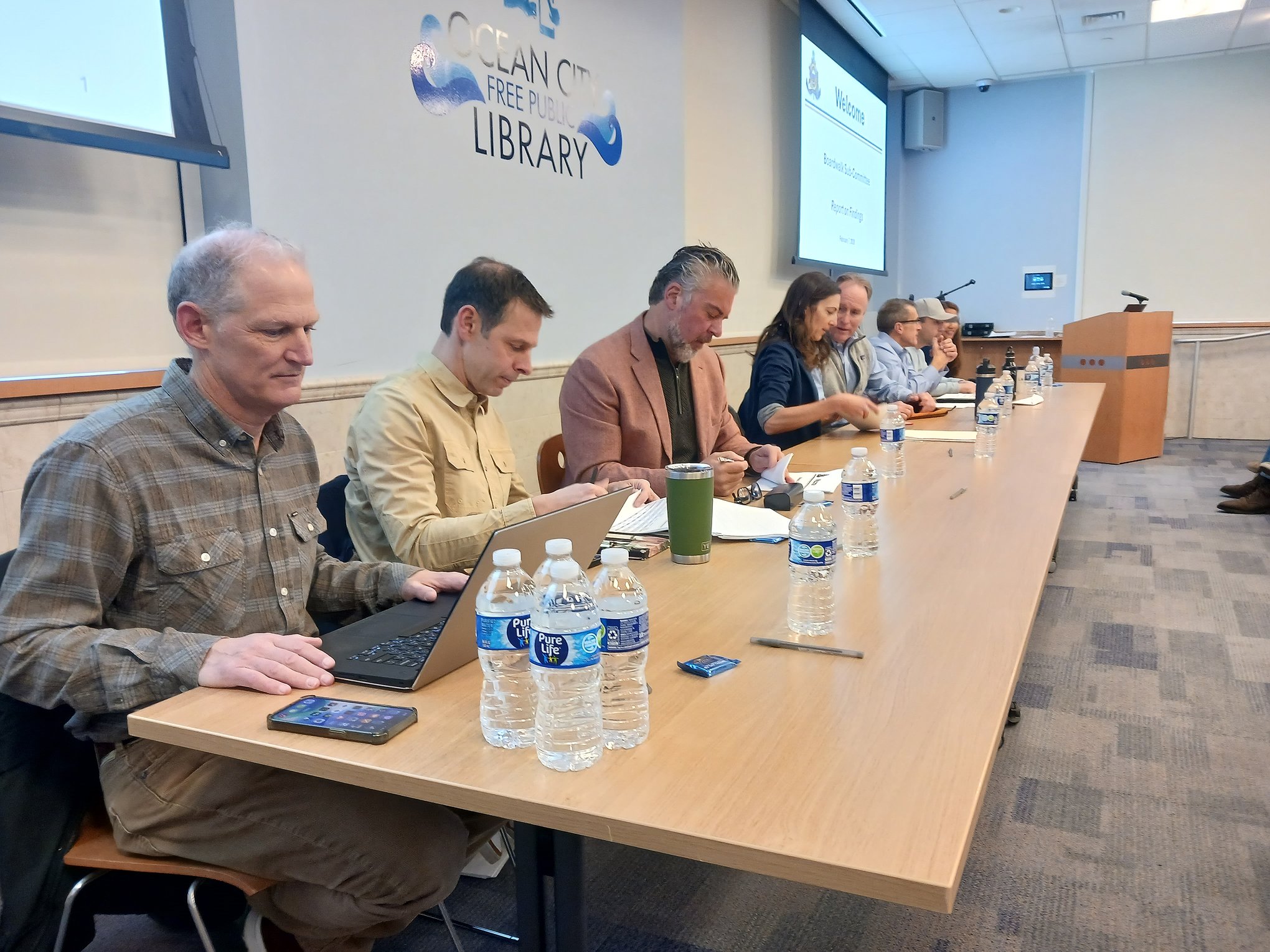 The Boardwalk subcommittee members review their preliminary findings.
The Subcommittee should also emphasize the importance of activating the north end now, both as a means of stemming the loss of tourists and also gathering critical data as to what type of temporary attractions work, and which do not.
Over the longer term, the challenge is how to encourage a more varied and compelling Boardwalk experience that preserves character and scale, while diversifying what visitors can do once they arrive.
The 2010 Rutgers study cited by the Subcommittee suggested a mixed-use model, with a variety of low to mid-rise structures, positioned off the Boardwalk in a number of places. This should be evaluated, as correctly opening the Boardwalk zoning envelope modestly, in targeted areas, may create needed incentives for renewed investment in critical Boardwalk entertainment venues.
The goal should be to strengthen the Boardwalk experience – to make the boards feel dynamic, unique, and worth the trip – without changing its cultural feel, and also not relying on any single project to carry the upgrade burden.
And the former Wonderland Pier site may be the most logical place to begin testing these ideas. Moving first at Wonderland could generate real data about what works: what draws people, what keeps them longer, and what investments actually increase visitation. That learning could guide future zoning decisions across the district.
The Subcommittee is off to a strong start on a difficult task. Digging deeper into the trends and addressing even modest visitation slippage early may prove to be one of the most important investments the city can make.
Debra Reilly
Ocean City resident