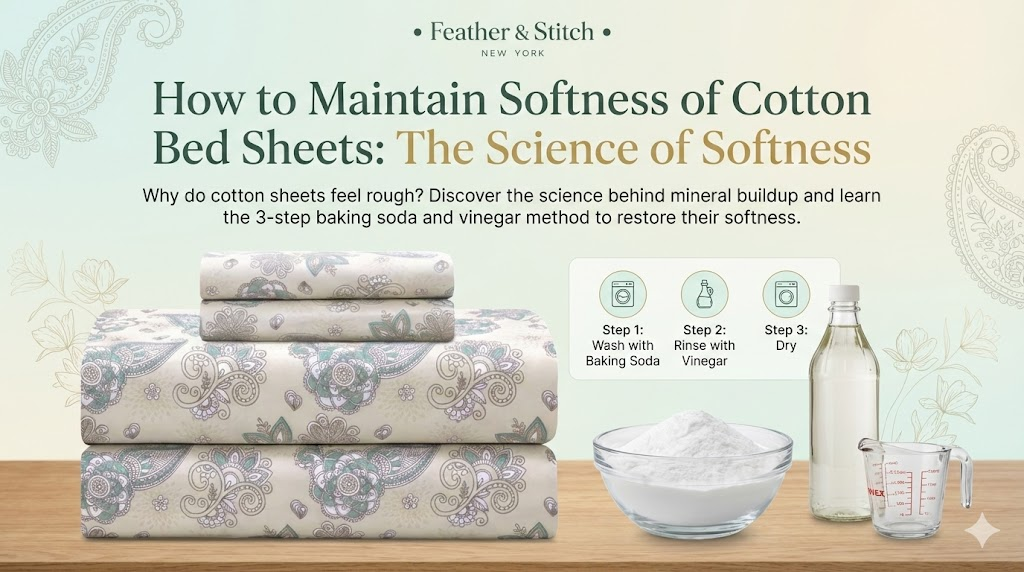
At Feather & Stitch NY, we use extra-long staple (ELS) cotton to create a smoother, more durable foundation for your sheets. While superior fibers make a difference, even the best cotton is susceptible to buildup from improper washing. This guide will dive into the textile chemistry behind why sheets lose their softness. We'll also explain how to properly care for them, so you can enjoy hotel-quality comfort for years to come.
The Anatomy of "Scratchy": Why Good Cotton Goes Bad
Cotton Fiber Comparison: Short-Staple vs. Extra-Long Staple (ELS)
Short-Staple Cotton (Budget Sheets)
- Fiber Length: Less than 1 inch.
- Texture: Millions of tiny, broken bristles create rough, uneven surfaces.
- Effects on Skin: More fiber ends poke out, causing friction and a rough feel.
- Durability: Fibers break down easily over time, leading to pilling and further roughness.
- Performance: Poor longevity and comfort due to constant abrasion.
Extra-Long Staple Cotton (Premium Sheets)
- Fiber Length: 1.5 inches or longer (e.g., Egyptian cotton, Supima cotton).
- Texture: Smooth, continuous yarns with minimal fiber ends.
- Effects on Skin: Glides smoothly against skin for a silk-like feel.
- Durability: Higher tensile strength resists breakage and maintains structure through hundreds of washes.
- Performance: Superior softness, longevity, and resistance to pilling.
At Feather & Stitch NY, our Cotton Bed Sheets are crafted exclusively with premium long-staple fibers. This isn't just about initial softness—it's about ensuring that softness endures for years, not weeks.
The "Crisp" vs. "Rough" Confusion: Understanding Weave
Not all texture issues come from fiber quality. Sometimes, what feels "rough" is actually just "crisp." Understanding the difference can save you from discarding perfectly good sheets.
Percale Weave: The Breathable Classic
- Plain weave structure (one-over, one-under) creates a matte finish.
- Known for exceptional breathability and cooling properties.
- Moisture-wicking, making it a luxury hotel favorite.
- New percale sheets may feel stiff or papery at first—this is normal.
The Break-In Period: A Feature, Not a Flaw
- High-quality percale requires 3-5 wash cycles to reach optimal softness.
- Similar to breaking in premium denim jeans.
- Washing allows:
- Yarns to shift and settle into a relaxed position.
- Surface fibers to soften through gentle abrasion.
- Initial crispness indicates a tight weave and absence of chemical over-processing.
This initial crispness is a sign of quality. It means the weave is tight and the fabric hasn't been chemically over-processed.
Love that cool, crisp hotel feel? That's our 300 Thread Count Classic Percale Sheets Set. They deliver that cool, crisp hotel feel.
The Invisible Enemy: Chemical Sizing & Manufacturing Residue
New sheets often feel stiff. This is because of chemical sizing a starch-based coating used during manufacturing.
- Purpose of chemical sizing:
- Makes sheets look crisp and flat on store shelves.
- Prevents wrinkles during shipping.
- If not properly washed out during the first laundry cycle (pre-wash), the residue can:
- Lock stiffness into the fabric.
- Glue fibers together, preventing them from moving independently.
- Create a scratchy, cardboard-like texture.
That's why the first wash is crucial. Pre-washing with a gentle detergent and an extra rinse cycle removes this temporary coating, allowing the cotton's natural softness to emerge. If you skip this step, your sheets may never reach their full potential.
The Chemistry of Cleaning: Why Your Laundry Routine Matters
The Fabric Softener Trap
Conventional wisdom suggests using fabric softener to combat roughness. This is one of the most damaging myths in laundry care.
How Fabric Softener Actually Works:
Fabric softeners coat fibers with cationic surfactants (positively charged compounds). While older formulas often used animal-derived tallow, most modern versions rely on synthetic quaternary ammonium compounds. This coating temporarily makes fabric feel slippery and seem soft. However, this layer:
- Reduces breathability: The coating clogs the spaces between fibers, trapping heat and moisture
- Prevents proper cleaning: Future washes can't effectively reach the fiber surface to remove oils, sweat, and dead skin cells
- Causes buildup: Each use adds another layer, compounding the problem
- Accelerates yellowing: Trapped sebum (skin oil) oxidizes over time, causing permanent discoloration
- Weakens fibers: The coating makes fibers brittle and more prone to breakage
Step-by-Step Restoration Guide: How to Make Sheets Soft Again
If your sheets have fallen victim to alkaline buildup, hard water deposits, or fabric softener residue, there's hope. This process, known as "stripping," restores your sheets to their original state.
Step 1: The "Strip Wash" (Sodium Bicarbonate)
What You'll Need: ½ cup baking soda (sodium bicarbonate)
The Process:
- Add baking soda directly to the drum of your washing machine with your sheets
- Run a complete wash cycle using warm water (not hot) on a gentle or normal setting
- Use half your normal amount of detergent, or skip detergent entirely for heavily soiled sheets
The Science Behind It:
Baking soda (sodium bicarbonate, NaHCO₃) is a mild alkali that works chemically, not abrasively. It neutralizes acidic odors like sweat and body odor through acid-base reactions and softens hard water by removing calcium and magnesium minerals. This keeps your sheets genuinely fresh without relying on perfumes.
Step 2: The pH Reset (Acetic Acid)
What You'll Need: 1 cup white distilled vinegar (5% acetic acid)
The Process:
- Add white vinegar to the fabric softener dispenser, or directly to the drum at the start of the rinse cycle
- Allow the rinse cycle to complete fully
- If your machine has an extra rinse option, use it
The Science Behind It:
This is the crucial step that most guides overlook. White vinegar (diluted acetic acid, CH₃COOH) is acidic with a pH around 2.4. When introduced during the rinse cycle, it:
- Dissolves alkaline buildup: The acid breaks down and removes detergent residue from fibers.
- Removes mineral deposits: Acetic acid chelates (binds to) calcium and magnesium ions, pulling them out of the fabric
- Acts as a natural fabric softener: By stripping away buildup, it exposes the cotton's natural softness
- Disinfects and deodorizes: The acidic environment inhibits bacteria and mold growth
Your cotton fibers will be chemically clean and free from any coatings or deposits. This allows them to return to their naturally soft and absorbent state. Despite concerns about the vinegar smell. The scent completely evaporates during drying, leaving no odor behind.
Step 3: Fiber Relaxation (Drying)
Best Practices:
- Avoid over-drying: Remove sheets from the dryer while they're still slightly damp to the touch
- Use low or medium heat: High heat causes the cellulose fibers to contract excessively. This leads to permanent stiffness and shrinkage.
- Add wool dryer balls: Use 3-4 balls to physically tumble and separate the fibers. This helps relax fibers and may reduce drying time by improving air circulation between items.
- Skip dryer sheets: These re-introduce the same waxy coating as liquid fabric softener
The Line-Drying Alternative:
If weather permits, line drying offers significant benefits:
- Natural UV disinfection: Sunlight's ultraviolet rays kill bacteria and dust mites
- Natural bleaching: UV exposure safely brightens white sheets without harsh chemicals
- Energy savings: Eliminates dryer energy use entirely
Best Practices for Sustainable Laundry & Longevity
Detergent Choice: Switch to Enzyme-Based Formulas
Not all detergents are created equal. For cotton bedding, enzyme-based (biological) detergents offer superior cleaning with less chemical aggression.
How They Work:
These detergents contain specific enzymes. These are biological catalysts that break down stains at the molecular level.
- Protease: Breaks down protein-based stains (sweat, body oils, skin cells)
- Amylase: Targets starch-based stains
- Lipase: Dissolves fatty stains and oils
- Cellulase: Gently removes fuzz and pilling from cotton fabrics
Enzymes work at lower temperatures. This enables excellent cleaning in cold water, which saves energy and protects your sheets from heat damage.
Load Size: Give Your Sheets Room to Breathe
Overloading your washing machine is one of the fastest ways to damage cotton sheets. Here's why:
- Insufficient agitation: Sheets need space to move freely through the water to release dirt and rinse clean
- Friction damage: When crammed together, sheets rub against each other excessively. This causes pilling (those annoying little fabric balls).
- Inadequate rinsing: Detergent gets trapped in the compressed fabric and never fully rinses out
Best Practice:
Wash king-size sheets separately, or pair them with only a few pillowcases. For top-loading machines with a central agitator, drape sheets loosely around the agitator. Avoid jamming them down the center. This prevents tangling and uneven wear.
Wash Less, Wash Better
Here's a counterintuitive truth: washing your sheets every week might do more harm than good. This only applies if you're not washing them correctly.
Optimal Washing Frequency:
- Summer or hot sleepers: Every 7-10 days
- Winter or cool sleepers: Every 7-10 days (never exceed 10 days due to dust mite and bacteria accumulation)
- Always: After illness, night sweats, or if pets sleep on the bed
Why This Matters:
Each wash cycle stresses your sheets with chemicals and temperature changes. Washing less often reduces this wear, and proper washing techniques can extend their lifespan.
- Conserving water: The average washing machine uses 15-30 gallons per load
- Reducing energy: Hot water heating accounts for 90% of a washing machine's energy use
- Minimizing chemical exposure: For both your skin and the environment
Health Benefits: Proper Rinsing for Sensitive Skin
Many people think they're allergic to cotton or certain sheet brands. In reality, they're often reacting to residual laundry chemicals. Incomplete rinsing leaves behind:
- Optical brighteners: Fluorescent compounds that make whites look brighter but can irritate the skin.
- Fragrance chemicals: Synthetic scents often contain allergens and endocrine disruptors
- Surfactant residue: The active cleaning agents in detergent
When Restoration Fails: Signs You Need an Upgrade
Sometimes, despite your best efforts, sheets simply reach the end of their usable life. If you've completed the restoration process and your sheets still feel rough, look for these telltale signs:
Irreversible Fiber Damage
- Thinning fabric: Hold your sheets up to light. If you can see through them easily, the fibers have worn too thin
- Permanent pilling: Pills that can't be removed with a fabric shaver indicate fiber breakage throughout the weave
- Tears or holes: Especially along seams or in high-friction areas like where your heels rest
- Loss of color uniformity: Fading that creates a mottled, uneven appearance
- Persistent odors: If a vinegar wash doesn't get rid of musty or sour smells. bacterial growth may have gotten too deep into the fabric.
The Thread Count Myth
If you're shopping for replacements, ignore the "1000 thread count" marketing hype. True quality comes from fiber length and weave integrity, not inflated thread counts. In fact, anything above 400-600 thread count is often achieved through multi-ply yarns. This twists multiple thin fibers together, creating a heavier, less breathable fabric.
Look for:
- 200-400 thread count percale: For cool, crisp sleepers
- 300-600 thread count sateen: For warmer, smoother sleepers
- Extra-long staple cotton certification: Labeled as Egyptian cotton (Giza varieties) or Supima cotton
Invest in Lasting Quality
Don't settle for scratchy sleep. Upgrade to the lasting softness of Feather & Stitch NY's Cotton Bed Sheets—certified quality you can feel every night. Our sheets are designed with longevity in mind. Premium long-staple fibers, honest thread counts, and weaves that actually get softer over time.
If sustainability matters, look for GOTS (Global Organic Textile Standard) certification. You can also consider OEKO-TEX certification. GOTS ensures the cotton was grown without harmful pesticides. OEKO-TEX ensures the fabric was produced without toxic chemicals. Both are better for the planet and your skin.
Conclusion: Softness Is Science, Not Luck
The secret to soft cotton sheets isn't mysterious or expensive. It's about understanding two fundamental principles:
- Fiber quality matters: Extra-long staple cotton creates smooth, durable yarns that resist roughness.
- Washing technique is key: Proper washing techniques prevent the buildup that causes stiffness.
If your sheets feel rough, try a baking soda wash followed by a vinegar rinse to strip away residue. To maintain softness:
- Use an enzyme-based detergent
- Skip the fabric softener
- Avoid overloading your washing machine
If restoration doesn't work, it may be time for an upgrade. Investing in premium long-staple cotton sheets means enjoying hundreds of nights of restful sleep. Quality sheets are soft from day one and only get softer with every wash.