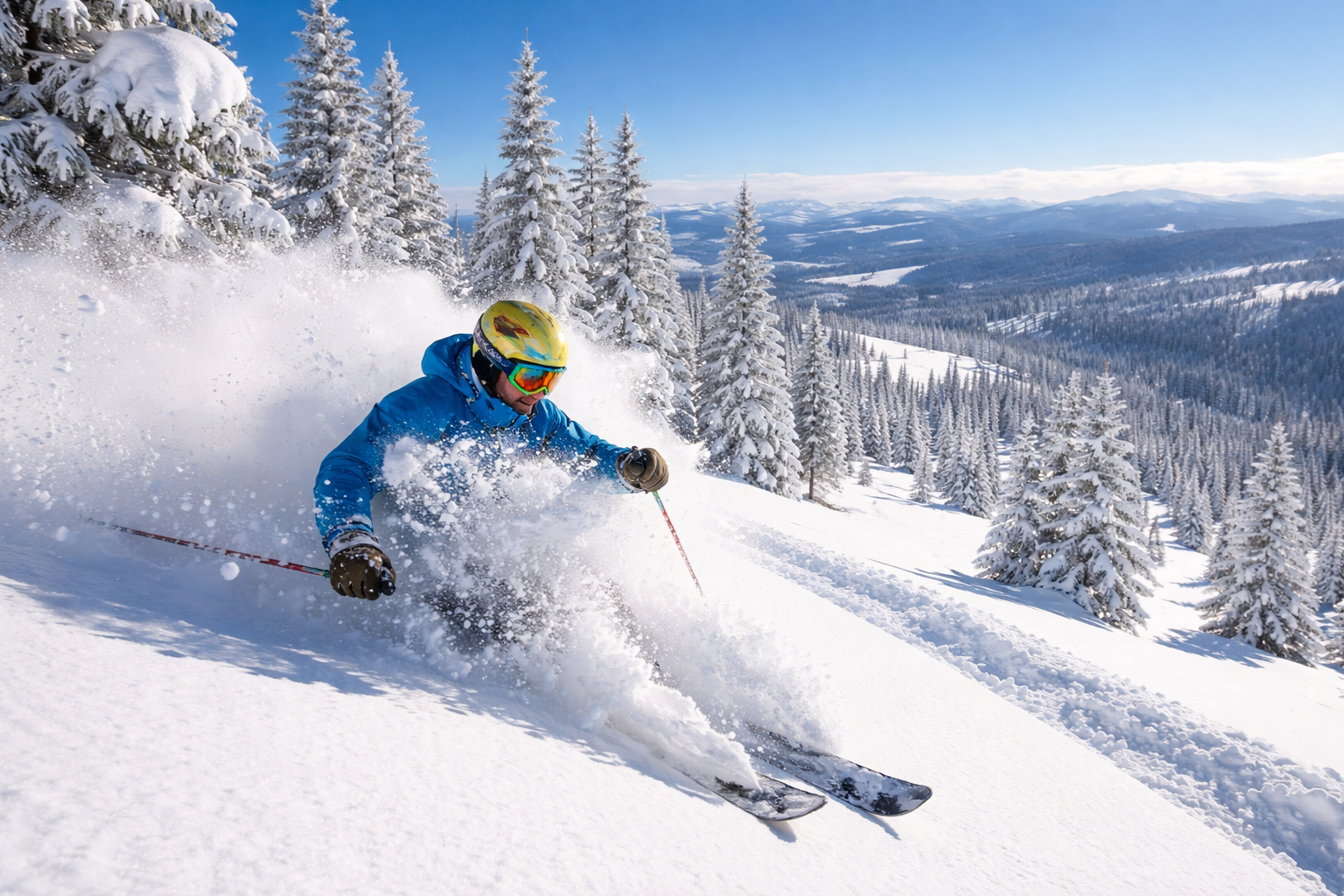
Brundage Mountain receives over 320 inches of annual snowfall while maintaining uncrowded slopes just 8 miles from McCall, Idaho. This combination of deep powder and minimal lift lines creates skiing conditions that surpass Sun Valley's 220 inches and Bogus Basin's 210 inches without the crowds that plague most Western resorts.
Brundage Mountain operates 1,500 skiable acres across two mountain faces with base depths exceeding 90 inches during peak winter months. The resort's elevation range of 5,800 to 7,600 feet generates optimal powder conditions through orographic lift, producing 15% more snowfall at upper elevations. February brings the snowiest conditions with monthly totals regularly exceeding 100 inches, creating the deep powder skiing that earned Brundage its "Best Snow in Idaho" reputation.
February marks the pinnacle of powder skiing at Brundage Mountain, with historical data showing monthly snowfall totals that regularly exceed 100 inches and exceptional years pushing past 150 inches in a single month. This concentrated snowfall creates the deep powder conditions that distinguish Brundage from other Idaho ski resorts, where February accumulations rarely match these impressive totals. The combination of consistent Pacific storms and cold temperatures preserves powder quality throughout the month, allowing skiers to find fresh tracks days after major storm cycles.
The resort's strategic location near McCall positions it perfectly to capture moisture from Pacific weather systems moving through central Idaho. These storm patterns intensify as they encounter the West Mountains, dumping heavy snow across Brundage's two mountain faces while leaving lower elevation resorts with significantly less accumulation. Local skiers know that when valley fog settles over McCall, Brundage often sits above the inversion layer in brilliant sunshine with fresh powder waiting on north facing slopes.
The elevation differential between Brundage's base at 5,800 feet and summit at 7,600 feet creates distinct snow zones that experienced skiers exploit for optimal conditions throughout the day. Upper elevation runs like Hidden Valley and Sergeant's consistently hold cold smoke powder while lower elevation glades develop perfect corn snow during spring afternoons. This vertical diversity allows skiers to follow ideal snow conditions as temperatures and sun angles change, maximizing quality turns from first chair to last run.
Brundage's two distinct mountain faces provide dramatically different skiing experiences based on aspect and exposure. The front side catches morning sun and southwest winds, creating variable conditions that range from wind buff to sun crust depending on recent weather patterns. The backside, accessible via the Centennial Triple chairlift, harbors protected powder stashes in north facing trees where cold snow lingers weeks after storms. Advanced skiers targeting fresh tracks focus efforts on backside glades like Sargent's and Engen's, where tree spacing allows aggressive lines through untouched powder.
McCall sits at the convergence of multiple storm tracks that funnel Pacific moisture directly into the West Mountains, creating the meteorological conditions responsible for Brundage's impressive snowfall statistics. Winter storms approaching from the northwest gain intensity as they move inland, picking up additional moisture from the Snake River Plain before colliding with Brundage's mountain faces. This geographic positioning generates more consistent snowfall than resorts dependent on single storm tracks or those shielded by upstream mountain ranges.
The surrounding topography amplifies snowfall through orographic lift as storms rise over the West Mountains, forcing moisture laden air upward where it cools and releases precipitation as snow. This process concentrates the heaviest snowfall between 6,500 and 7,600 feet elevation, precisely where Brundage's best terrain exists. Weather data confirms that upper mountain zones receive approximately 15% more snow than base areas, explaining why runs like Temptation and Inspiration consistently offer superior powder conditions compared to lower elevation alternatives.
Statistical analysis reveals Brundage Mountain's superiority in snowfall metrics compared to other Idaho destinations, with annual accumulations averaging 320 inches versus Sun Valley's 220 inches and Bogus Basin's 210 inches. These numbers translate directly into skiing quality, as deeper snowpacks allow aggressive skiing over rocks and stumps that would damage equipment at resorts with thinner coverage. The substantial snowfall advantage becomes even more pronounced during strong La Niña winters when Brundage can receive over 400 inches while southern Idaho resorts struggle to reach average totals.
Beyond raw snowfall numbers, Brundage maintains superior snow quality due to consistently cold temperatures and minimal sun exposure on key terrain. The resort's northern latitude and elevation combine to preserve powder texture longer than resorts at lower elevations or more southern locations. While Sun Valley battles temperature inversions that create icy conditions and Bogus Basin deals with rain events at base elevations, Brundage typically maintains cold, dry snow throughout the winter season from mid November through mid April.
The season runs from mid November through mid April, with January through March representing the golden window for powder skiing at Brundage Mountain. January establishes the deep base necessary for exploring off piste terrain, with consistent storms building coverage to safe levels for tree skiing and steep chutes. March extends the powder season with frequent spring storms that deliver heavy, moisture rich snow perfect for building stability in avalanche terrain while still providing excellent skiing on moderate angle slopes.
Peak powder conditions align with maximum base depths during February and early March, when the snowpack regularly exceeds 90 inches at base elevations. These months offer the ideal combination of deep coverage, frequent storms, and cold temperatures that preserve snow quality between weather systems. Experienced powder skiers plan trips during this window to maximize chances of catching fresh snowfall while benefiting from the deep base that opens advanced terrain normally too rocky for safe skiing.
McCall serves as an ideal base camp for exploring multiple skiing opportunities throughout central Idaho, with Brundage Mountain as the premier destination just 8 miles from downtown. The town offers diverse lodging options from budget motels to luxury vacation rentals, supporting extended ski trips without the inflated prices common at destination resorts. Local restaurants and breweries provide authentic Idaho hospitality while nearby Payette Lake offers additional winter recreation including Nordic skiing, snowmobiling, and ice fishing.
Tamarack Resort, located 20 miles south of McCall, provides an alternative skiing experience with 1,100 acres of terrain and modern high speed lifts. Little Ski Hill, just minutes from downtown McCall, operates as a community mountain with affordable lift tickets and night skiing perfect for families or quick afternoon sessions. This concentration of skiing options within a 30 mile radius creates flexibility for varying conditions and preferences while maintaining McCall as a central hub for accommodations and services.
Brundage Mountain operates on a completely different model than Sun Valley, prioritizing authentic skiing experiences over luxury amenities and celebrity culture. Where Sun Valley emphasizes groomed boulevards, high speed lifts, and five star dining, Brundage focuses on natural snow conditions, glade skiing, and maintaining an unpretentious atmosphere that celebrates powder skiing above social status. This philosophical difference attracts serious skiers seeking deep snow and challenging terrain without the crowds and attitude prevalent at glamour resorts.
The skiing itself differs dramatically between these resorts, with Brundage's 1,500 acres of largely ungroomed terrain contrasting sharply with Sun Valley's manicured runs and manufactured snow surfaces. Brundage's tree skiing through old growth forest provides intimate, technical challenges absent from Sun Valley's above treeline bowls and wide open groomers. Price comparisons reveal another stark difference, as Brundage lift tickets cost approximately half of Sun Valley's rates while delivering superior snow conditions and shorter lift lines throughout the season.
Skiing Brundage's deep powder requires specialized equipment optimized for flotation and maneuverability in three dimensional snow conditions. Wide powder skis measuring 110mm or greater underfoot provide necessary surface area to plane above deep snow while maintaining edge control in variable conditions. Modern reverse camber and rocker profiles enhance flotation while allowing quick pivots through tight trees where Brundage's best powder hides. Adjustable poles prove invaluable when transitioning between groomed runs and waist deep powder, preventing shoulder fatigue during long powder days.
Safety equipment becomes critical when venturing into Brundage's advanced terrain, particularly the backside glades and chutes where tree wells and terrain traps present serious hazards. Avalanche transceivers, probes, and shovels should accompany any exploration beyond marked boundaries, even though the resort conducts extensive avalanche control work. Tree well extraction gear, including whistles and buddy systems, provides essential protection in the deep snow conditions common after major storm cycles when base depths exceed 90 inches and snow accumulates dangerously around tree bases.
Strategic trip planning maximizes powder skiing opportunities at Brundage Mountain by aligning visits with historical snowfall patterns and avoiding peak holiday crowds. February delivers the most consistent deep powder conditions with regular storm cycles depositing fresh snow every few days. Midweek visits from Tuesday through Thursday encounter minimal crowds, allowing multiple runs through favorite powder stashes before tracks accumulate. The resort's relatively small size means powder gets tracked quickly on weekends, making timing crucial for experiencing Brundage at its best.
Accommodation planning requires booking McCall lodging well in advance for peak winter months, as the town's limited inventory fills quickly during powder alerts and holiday periods. Vacation rentals near the resort provide convenient access for early morning starts, essential for claiming first tracks after overnight snowfall. The drive from Boise takes approximately two and a half hours in good conditions but can extend significantly during storms, making arrival day flexibility important for capitalizing on optimal skiing conditions. Many experienced Brundage skiers maintain storm day flexibility by working remotely from McCall, allowing them to ski powder when conditions align rather than predetermined vacation dates.
Expert skiers discover Brundage's true character in the steep chutes and tight trees accessible from the Centennial Triple chairlift, where challenging terrain combines with deep powder to create genuinely difficult skiing. The Glades, marked as double black diamond terrain, offer multiple fall line options through old growth forest where tree spacing demands precise turn placement and speed control. Hidden Valley's north facing aspect preserves cold smoke powder days after storms, rewarding those willing to traverse along the ridge for untouched descents through perfectly spaced trees.
Local knowledge unlocks secret powder stashes that remain untracked long after obvious lines show heavy traffic. Sergeant's backside variations provide multiple entries into protected bowls where wind transported snow accumulates to depths exceeding six feet. These areas require careful route finding and avalanche awareness but deliver the kind of deep powder skiing that defines Brundage's reputation among serious skiers. The relatively small ski patrol and relaxed boundary policies create opportunities for exploration within bounds that larger resorts restrict, though this freedom demands respect for mountain hazards and personal responsibility for safety decisions.