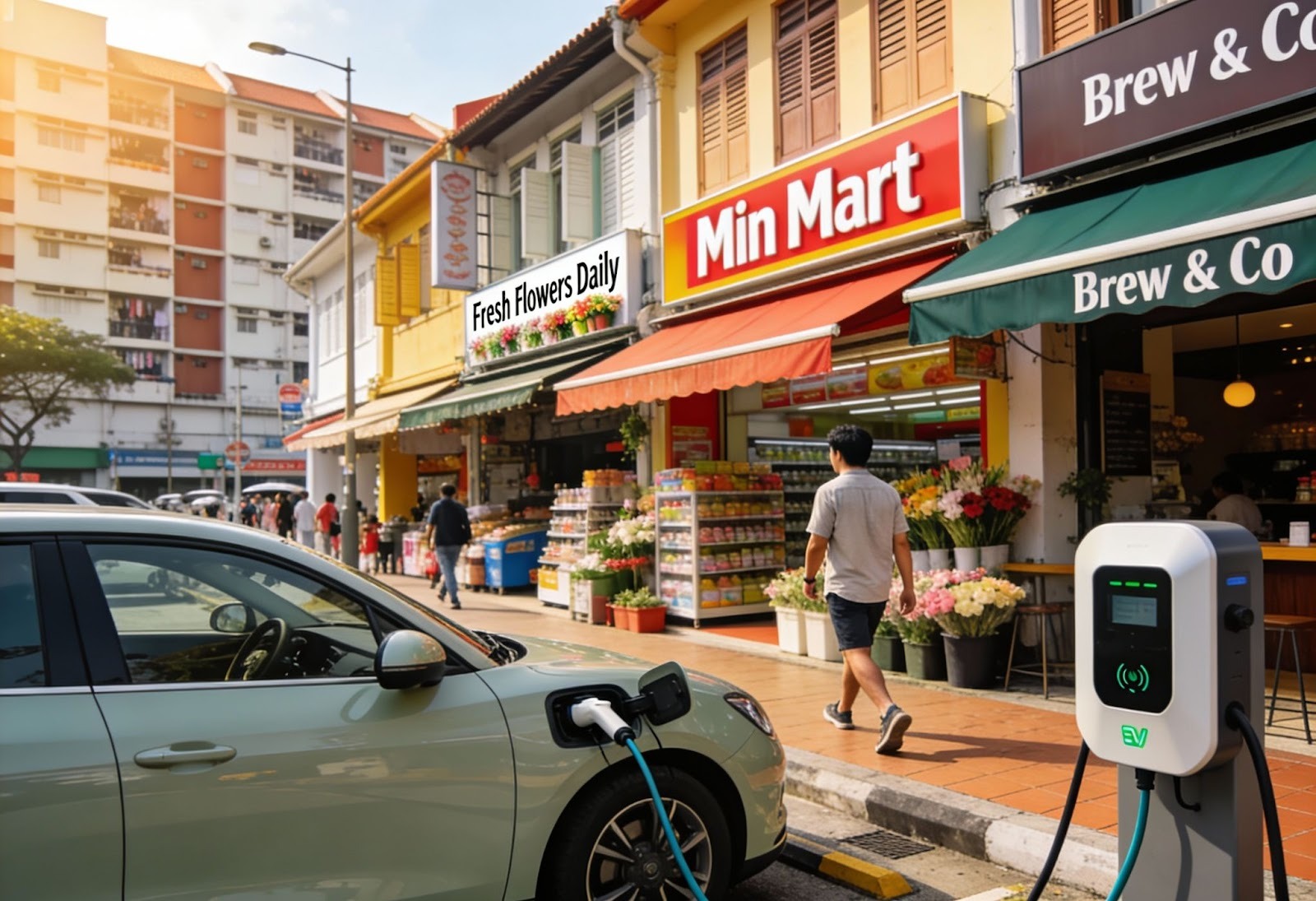
My neighbour runs a small cafe near Tanjong Pagar. Last year, a new EV charging station opened in the carpark next door. He didn't think much of it at first. Cars charge, people wait, nothing to do with his coffee business.
Within three months, his weekday afternoon revenue jumped 25%. EV owners were walking over while their cars charged. Grabbing coffee, buying pastries, sitting down for lunch. Some became regulars. A few started holding informal meetings there because they'd be waiting 30-45 minutes anyway.
He didn't plan for this. He didn't invest in EV infrastructure. He just happened to be in the right location when the neighbourhood got a charging station. Now he's actively looking for a second cafe location near other charging hubs.
That's the thing about Singapore's electric vehicle push. It's creating business opportunities in places most people aren't looking.
The government isn't messing around with their EV goals. The Land Transport Authority has laid out clear targets. All new car registrations must be cleaner-energy models by 2030. Internal combustion engine vehicles get phased out entirely by 2040. Every HDB town needs to be EV-ready by 2025.
These aren't vague aspirations. They're policy commitments backed by concrete action. EV registration numbers in Singapore have been climbing sharply. Charging infrastructure is expanding rapidly across the island.
For business owners and entrepreneurs watching these trends, the question isn't whether EVs will become mainstream in Singapore. That's already happening. The question is how to position yourself to benefit from this shift.
Electric vehicles change consumer behaviour in ways that petrol cars never did. Filling up a petrol tank takes five minutes. Charging an EV takes 30 minutes to an hour on most public chargers, sometimes longer.
That waiting time creates foot traffic. EV owners need something to do while their car charges. They walk around, browse nearby shops, grab food, run errands. Shopping centres with charging stations report increased dwell time from EV drivers.
This behaviour shift benefits businesses near charging locations. But it goes deeper than just proximity advantages.
Charging as a Service for Commercial Properties
If you own or manage commercial property, installing EV charging stations attracts tenants and customers. Office buildings with charging facilities become more attractive to companies whose employees drive EVs. Retail spaces with charging draw shoppers who might otherwise go elsewhere.
Property managers who install charging early gain competitive advantage. As EV adoption accelerates, tenants and visitors will increasingly choose locations with charging availability. Buildings without charging risk losing tenants to competitors who offer it.
Charging Network Operators
Running EV charging stations is a legitimate business model. You invest in charging hardware, secure locations through partnerships with property owners, and generate revenue from charging fees. The market is growing fast enough that early operators are establishing strong positions.
This isn't a get-rich-quick situation. Infrastructure costs are significant. But operators who build reliable networks now are positioning themselves for long-term recurring revenue as EV adoption grows.
Supporting Services and Maintenance
Charging stations require maintenance, software management, customer support, and technical servicing. These operational needs create opportunities for service businesses. Someone needs to install the hardware. Someone needs to maintain it. Someone needs to handle customer complaints when a charger malfunctions at midnight.
Specialised maintenance companies, customer service providers, and technical consulting firms are finding growing demand from charging network operators who want to focus on expansion rather than day-to-day operations.
Here's something that surprises most people entering the EV charging space. The biggest operational challenge isn't the charging hardware itself. It's connectivity.
Every modern charging station needs a constant Internet connection. Payment processing requires real-time connectivity to payment gateways. User authentication through apps needs reliable data connections. Station monitoring systems transmit operational data continuously. Tracking apps need live updates on station availability and status.
When connectivity fails, stations can't process payments. Users can't authenticate. Operators lose visibility into station performance. Charging sessions fail mid-way through.
A study found that over half of failed EV charging sessions result from poor connectivity rather than hardware problems. That's a staggering number when you think about it. More than half of all failures come down to bad Internet connections.
This creates significant challenges for operators trying to maintain reliability across dozens or hundreds of stations in various locations. Some spots have excellent mobile coverage. Others sit in connectivity dead zones. Weather, building interference, and network congestion all affect signal quality unpredictably.
Traditional approaches use single-carrier mobile data connections at each station. One SIM card, one network provider. If that network goes down or has poor coverage at that location, the station effectively goes offline.
Smarter operators are adopting multi-network solutions. Instead of depending on one carrier, stations connect through SIMs that can access multiple networks simultaneously. If one carrier's signal drops, the connection automatically switches to another carrier. Coverage gaps from one provider get filled by another.
This approach to electric vehicle charging stations in Singapore dramatically improves reliability. Stations stay connected even during carrier outages. Payment processing continues uninterrupted. Operators maintain visibility across their entire network.
For entrepreneurs and businesses entering the EV charging space, understanding this connectivity layer is crucial. Your charging hardware might be excellent. Your locations might be perfect. But if stations go offline because of connectivity issues, customers lose trust fast. And in a competitive market, trust is everything.
Several business models around EV charging are proving viable in Singapore.
Destination Charging Partnerships
Restaurants, hotels, shopping centres, and entertainment venues partner with charging operators to install stations on their property. The venue attracts EV-driving customers who stay longer and spend more. The charging operator gets prime locations with built-in foot traffic.
If you run a hospitality or retail business, exploring destination charging partnerships makes strategic sense. You're not investing in charging infrastructure directly. You're hosting it and benefiting from increased customer traffic.
Workplace Charging Solutions
Companies increasingly want to offer EV charging as an employee benefit. But most don't want to deal with installation, maintenance, and billing themselves.
Businesses that package workplace charging as a managed service find willing customers. You handle everything from hardware installation to energy management to employee billing. The employer gets a valuable perk without operational headaches.
Fleet Charging Services
Delivery companies, ride-hailing services, and logistics operators are gradually shifting to electric fleets. These businesses need reliable charging infrastructure at depots, warehouses, and distribution centres.
Fleet charging has different requirements than public charging. It needs to handle multiple vehicles simultaneously, often overnight. It requires scheduling and load management to avoid overwhelming electrical systems. Businesses that specialise in fleet charging solutions serve a growing and underserved market.
Consulting and Advisory
Property developers, building managers, and business owners need guidance on EV charging strategy. Where should stations go? What hardware suits their needs? How do they handle electrical load? What regulations apply?
Consultants who understand the technical, regulatory, and business aspects of EV charging find steady demand. This is especially true during this growth phase when many stakeholders are making their first EV infrastructure decisions.
Starting an EV charging business requires honest assessment of costs and timelines.
Hardware costs vary significantly depending on charger type. DC fast chargers that deliver rapid charging cost substantially more than AC chargers. Installation costs depend on electrical infrastructure, site preparation, and permitting requirements.
Revenue models typically combine charging fees, advertising on station displays, and data services. Some operators also generate revenue through partnerships with energy companies or vehicle manufacturers.
Government incentives help offset initial costs. Singapore offers various grants and subsidies for EV infrastructure development. These change periodically, so staying current with available programmes is important.
Break-even timelines for charging businesses typically run 3-5 years, depending on location quality, utilisation rates, and operating costs. Early entrants in high-traffic locations are reaching profitability faster as EV adoption accelerates.
If you're considering entering the EV charging space, here's what I'd recommend based on conversations with operators already in the market.
Start With Research
Understand the local landscape. Where are existing charging stations? Where are the gaps? What locations see high EV traffic? Which areas are expected to grow? Talk to EV owners about their charging habits and frustrations.
Understand the Regulations
Singapore has specific requirements for EV charging installation, electrical work, and safety standards. Building codes, fire safety regulations, and electrical licensing requirements all apply. Get familiar with these before committing capital.
Focus on Reliability
The operators winning in this market are the ones delivering consistent, reliable charging experiences. That means investing in quality hardware, redundant connectivity, regular maintenance, and responsive customer support.
Cutting corners on reliability saves money short-term but costs customers long-term. EV drivers share experiences. Bad reviews of unreliable stations spread fast through EV owner communities.
Think Long-Term
EV adoption in Singapore will keep growing for decades. The operators who build strong networks and good reputations now will have enormous advantages as the market expands. Short-term profit maximisation matters less than long-term market position.
Singapore's EV transition is creating a wave of business opportunities that extends far beyond just selling or servicing electric vehicles. Charging infrastructure, supporting services, technology solutions, and adjacent businesses all stand to benefit.
The timeline is clear. Government policy is firm. Consumer adoption is accelerating. Infrastructure needs are growing. For entrepreneurs and business owners willing to learn, invest, and execute well, the EV charging ecosystem offers genuine opportunity.
Smart business owners are already positioning themselves. My neighbour with the cafe didn't plan for the EV boom, but he's certainly planning around it now. His second location search specifically targets areas with planned charging infrastructure.
Sometimes the best business opportunities come from seeing connections that others miss. The EV charging boom in Singapore is full of them if you know where to look.