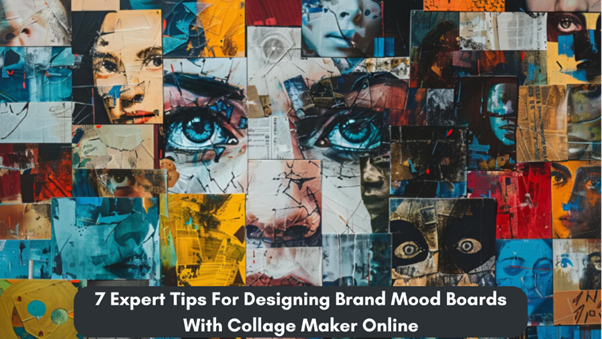
Creating a brand mood board can be more complex than it may seem. You can be familiar with your brand identity, but transforming that vision into a clear visual direction feels inconsistent.
Pictures conflict, colors do not match each other, and the board stops guiding decisions. This makes the mood board lose its meaning and become hard to incorporate into branding or marketing work.
That is where a collage maker changes the way mood boards work. When the design decisions are made based on principles of experts and backed by the collage maker online, visual concepts are transferred from scattered inspiration to a clear direction.
This means that images, colors, and references are able to support each other, not compete with each other, and therefore, the board is easier to organize, refine, and evaluate as a working brand reference.
Read on to discover seven expert tips to design effective mood boards using collage maker online based on the tone and purpose of your brand.
Before choosing visuals, it is useful to consider how a collage maker online provides a structured environment for arranging images, text, and layout elements into a single visual framework. This structure sets the visual relationships at an early stage, with features such as grid alignment, drag and drop overlay, spacing, and text overflow to help maintain order and consistency.
Starting with the layout flexibility, you establish a solid base. Instead of realigning ideas to a fixed format, visuals adjust themselves in a flexible layout. Consequently, the initial choices become more deliberate, and the mood board is created more consistently at the very beginning.
When direction is not clear, a mood board fails to work. That is why, prior to collecting any visuals, establish the objective of the board. Particularly, determine whether it establishes brand tone, advances a campaign, harmonizes internal teams, or directs long-term visual identity.
When this direction is set, the selection of visuals becomes more controlled. Every image helps to promote one purpose instead of occupying empty space. Due to this clarity, less time is spent on needless and unrelated inspiration as the board is able to communicate intent.

Color influences an emotional response more quickly than an image. This is why the structure of color should be defined at the beginning to enhance visual coherence. Firstly, it is important to pick a small core palette that resonates with a brand, and only add secondary colors when they reinforce the same direction.
Consequently, this organized method avoids visual clutter. Color consistency makes imagery more relatable, and the mood board portrays the tone throughout the visual components.
The use of imagery is central to brand perception. In addition to subject matter, lighting, composition, texture, and contrast are other elements that have a direct impact on emotional response. This is the reason why images need to be chosen based on the emotional intent and not on visual appeal only.
For example, high contrasts convey confidence and vitality, while softer tones indicate calmness and control. When emotional tone remains consistent across imagery, the mood board supports the brand identity and does not send conflicting or mixed messages.
Visual hierarchy defines ways in which information is assimilated. In the absence of hierarchy, the elements compete equally, making the board hard to read. Positioning, size, and spacing create order and direct attention in a natural way, which makes viewers comprehend priority naturally. Consequently, the board appears organized, not cluttered.
Place primary visuals where the eye lands first, then support them with secondary elements that reinforce the same message. Over time, this structure improves usability. Consequently, the board communicates focus immediately and functions as a reliable reference during creative discussions and ongoing brand development.
Although mood boards remain primarily visual, minimal text adds clarity. Strategic keywords describe tone, mood, or intent and help anchor interpretation.
Without these cues, visuals may be understood differently by different viewers, which leads to misalignment during review or execution. For this reason, carefully chosen words act as visual signposts that guide understanding without overpowering imagery.
In practice, use short descriptors placed near relevant visuals to reinforce meaning. At the same time, limit text to essential cues so the board remains visually led. As a result, this approach reduces ambiguity and strengthens communication, especially when the board supports collaborative branding or marketing decisions across teams.

Once the board appears complete, step back and review it as a whole. At this stage, look for inconsistencies in tone, color harmony, spacing, and emotional direction, since even small misalignments reduce clarity. If left unaddressed, elements that distract or contradict the main message weaken the board’s overall effectiveness.
In many cases, refinement involves removing visuals rather than adding more. By eliminating excess elements, visual relationships become clearer. As a result, the board gains focus and functions more effectively as a long-term brand reference.
Designing effective brand mood boards depends on structure rather than instinct. When expert principles guide visual decisions and a flexible online collage framework supports organization, mood boards move beyond inspiration and gain functional value that informs ongoing design choices and reduces visual inconsistency.
Through intentional planning, emotional consistency, and thoughtful refinement, your mood board becomes a practical tool that supports clearer decisions, stronger brand alignment, and more confident creative direction across projects and teams.